
Hydrolyzed protein formulas are the most medically sensitive category in the infant formula market. The terms "HA" (hypoallergenic), "hydrolyzed," and "sensitive" get used loosely in marketing, but medically they refer to noticeably different products with different indications. A parent sorting through them without understanding the distinction between partial and extensive hydrolysis can end up with the wrong product for their baby's actual situation. This explainer covers what each category does, when it's appropriate, and where the evidence currently sits.
What hydrolysis means
Cow-milk protein (casein and whey) is a mixture of long amino-acid chains. An infant with intact immune function and healthy gut barrier tolerates them without issue. An infant with cow-milk protein allergy (CMPA), roughly 2–3% of infants, mounts an immune response to specific epitopes on these proteins, producing symptoms from rashes and GI upset to (rarely) severe reactions.
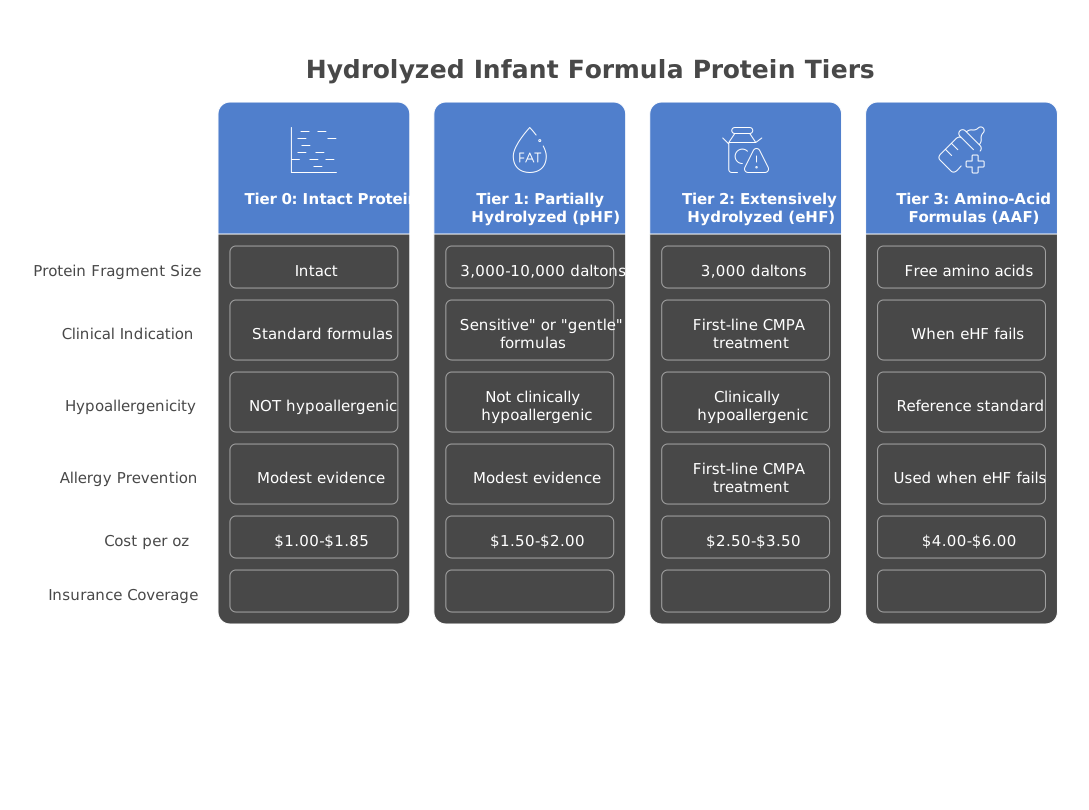
Hydrolysis breaks cow-milk proteins into smaller pieces:
- Partial hydrolysis (pHF). Proteins broken into peptides of roughly 3,000–10,000 daltons. Still contains some intact immunogenic epitopes; not suitable for confirmed CMPA but may reduce allergy incidence in at-risk infants. Examples: HiPP HA, Similac Total Comfort.
- Extensive hydrolysis (eHF). Proteins broken into peptides under 3,000 daltons (often under 1,500). Immune recognition is typically lost; suitable for most confirmed CMPA cases. Examples: Nutramigen, Alimentum, Puramino (this last one is amino-acid based rather than hydrolyzed).
- Amino acid formulas (AAF). Free amino acids rather than peptides. Used for severe CMPA or eHF failure. Examples: Neocate, Puramino, Elecare.
These three categories are not interchangeable. Using pHF where eHF is needed means the baby is still exposed to reactive epitopes.
Visual generated with Napkin AI, editorial review by María López Botín. See methodology for our use policy.
Which formula for which situation
- Healthy baby, no family history of allergy: standard formula. Hydrolyzed is not indicated.
- Family history of allergic disease, baby not currently symptomatic: opinion is split. Older guidelines suggested pHF for allergy prevention; more recent systematic reviews (EAACI 2016, ongoing updates) find the evidence weak and do not recommend routine prophylactic pHF use.
- Baby with mild sensitivity symptoms (gassiness, fussiness, occasional rash): pHF is sometimes tried empirically. The effect is as much from the reduced lactose in these formulas as from the hydrolyzed protein per se.
- Baby with confirmed CMPA (diagnosed by physician): eHF first-line; AAF if eHF is not tolerated or reactions persist.
- Baby with severe CMPA or multiple food allergies: AAF.
The Infant Formula Atlas categorizes specialty formulas
by product_type, hypoallergenic covers eHF and AAF formulas, while standard
formulas with pHF positioning get the standard category (they are not
medically hypoallergenic).
EU vs US regulation of hydrolyzed formulas
Both regulatory regimes treat extensively hydrolyzed and amino-acid formulas as "foods for special medical purposes" (FSMP in the EU, "exempt infant formulas" in the US). These require physician supervision and documented medical indication, though in practice parents in the US can buy them over the counter at most pharmacies.
Partially hydrolyzed formulas are regulated as standard infant formula in both jurisdictions, even though they are positioned for "sensitive" or "comfort" uses. The EU requires additional documentation of hypoallergenicity claims on the label; the FDA treats claims somewhat more permissively.
Common misconceptions parents should know
Several widely-held beliefs about hydrolyzed formulas are misleading:
- "HA" does not always mean extensively hydrolyzed. HiPP HA is partially hydrolyzed, for example. The marketing term varies by jurisdiction and brand. Always check whether a specific product is pHF or eHF.
- Lactose-free ≠ hypoallergenic. Some sensitivity formulas (Similac Sensitive, Enfamil Gentlease) reduce lactose without hydrolyzing protein. Useful for perceived lactose intolerance (which is actually rare in infants); not useful for CMPA. See our lactose intolerance in infants explainer for the nuance.
- Soy formula ≠ CMPA solution. Up to 30% of babies with CMPA are also allergic to soy protein. Soy formula is not a hypoallergenic option for CMPA.
- Partial hydrolysis for "colic" is not evidence-based. Colic has multiple causes; protein hydrolysis addresses one of them (possible CMPA) but not others. A pediatrician evaluation is a better first step than a formula switch.
- Plant-based ≠ hypoallergenic either. Else Nutrition (almond, tapioca, and buckwheat) is dairy-free but is not classified as hypoallergenic; it has not undergone the clinical validation required for that FDA designation, and tree-nut-allergic infants cannot use it. For confirmed CMPA, stay inside the pHF/eHF/AAF framework above.
Taste and tolerance challenges
Hydrolyzed formulas, especially eHF and AAF, taste notably different from standard formula. Many babies reject them initially, and transition can take several days. Some parents find mixing small amounts with standard formula (if tolerated) eases the switch. Amino-acid formulas taste the most unusual; extensive hydrolyzed less so; partial hydrolyzed closest to standard.
Cost is also a consideration: eHF and AAF are significantly more expensive than standard formula (often 2–3x per ounce). Medical necessity may qualify for insurance coverage in the US via WIC or private insurance when a physician prescribes them.
How this fits in the Atlas
Our Infant Formula Atlas includes the major pHF, eHF, and AAF formulas relevant to the US market. Filter by hydrolyzed protein to see options. Each specialty SKU documents the hydrolysis level and medical indication, with links to the manufacturer's clinical information sheets.
Frequently asked questions
What does 'hydrolyzed' mean in infant formula?
What's the difference between pHF, eHF, and AAF?
Is partially hydrolyzed formula appropriate for CMPA?
When does an infant need eHF vs AAF?
Why do hydrolyzed formulas taste different?
Are hydrolyzed formulas covered by insurance?
Primary sources
- Boyle RJ et al. Hydrolysed formula and risk of allergic or autoimmune disease: systematic review and meta-analysis. BMJ, 2016, the EAACI reference review. pubmed.ncbi.nlm.nih.gov/27344066
- FDA 21 CFR Part 107, exempt infant formula (including eHF and AAF) regulation. ecfr.gov
- EU Commission Delegated Regulation 2016/128, food for special medical purposes. eur-lex.europa.eu
- von Berg A et al. Prevention of allergy with hydrolysed formulas: meta-analysis update. Allergy, 2020. pubmed.ncbi.nlm.nih.gov/32010911
Related reading
This site provides research and comparisons, not medical advice. Consult your pediatrician before changing your baby's formula.