
"Organic" is not a single standard, it's a family of certifications with distinct farming, animal welfare, and processing requirements. Infant formula parents encounter at least four distinct logos on packaging: USDA Organic (US domestic), EU Organic (European Union), Demeter (biodynamic, the most stringent mainstream certification), and Bioland (a German private standard stricter than EU baseline but less than Demeter). Understanding what each actually guarantees helps parents weigh organic premiums against the specific attributes they care about, and recognize that "organic" does not protect against everything people assume it does.
USDA Organic, EU Organic, Demeter, and Bioland are the four organic certifications most relevant to US infant formula buyers. USDA Organic and EU Organic set the baseline for organic farming (no synthetic pesticides, no GMO feed, animal welfare minimums). Bioland adds stricter German standards including 100% organic feed and tighter biodiversity rules. Demeter biodynamic goes further with farm-as- closed-system requirements, cosmic rhythm planting calendars, and specific biodynamic preparations. None of these certifications address contamination with heavy metals, Cronobacter, or other microbiological safety, those are separate regulatory concerns under FDA and EU infant formula rules.
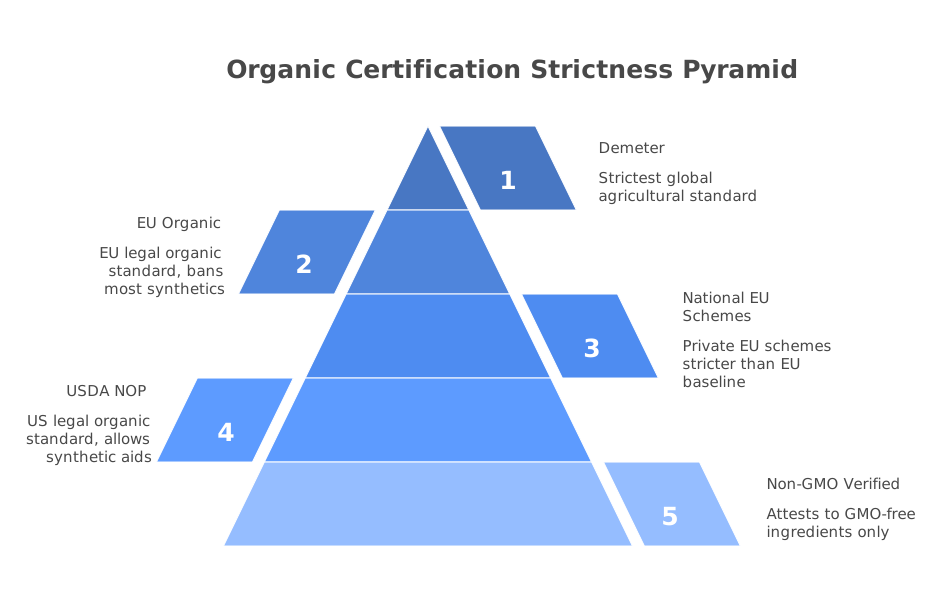
Visual generated with Napkin AI, editorial review by María López Botín. See methodology for our use policy.
The four certifications at a glance
| Certification | Jurisdiction | Stringency | Brands in Atlas |
|---|---|---|---|
| USDA Organic | US (USDA NOP) | Baseline | Bobbie, Happy Baby, Baby's Only, Earth's Best, Kendamil (US) |
| EU Organic | EU-wide | Baseline | HiPP, Holle, Lebenswert, Kendamil Organic, Löwenzahn, Loulouka |
| Bioland | Germany (private) | Moderate+ | Lebenswert, Löwenzahn (partial) |
| Demeter | International (private, biodynamic) | Strictest | Holle (most lines), Löwenzahn, Aurora (few US) |
Baseline (USDA Organic ~ EU Organic)
Both ban synthetic pesticides and fertilizers, prohibit GMO feed and ingredients, require organic feed for livestock, set minimum animal welfare standards, and prohibit ionizing radiation and sewage sludge.
Stricter private standards (Bioland, Naturland, etc.)
Add country-specific or association-specific rules: 100% organic feed (USDA/EU allow up to 5% non-organic feed in specific conditions), tighter biodiversity requirements, stricter animal density limits, more restrictive ingredient sourcing.
Strictest (Demeter)
Adds biodynamic farm-as-organism requirements: cosmic rhythm planting calendar, specific biodynamic preparations (BD preparations 500-508), closed-loop farm cycles where possible, minimum % of farm area as biodiversity zones, and specific compost methodology.
USDA Organic (National Organic Program)
What it requires
Under the USDA National Organic Program (NOP), established 1990 and operational since 2002:
- Land history: 3-year transition period before certification (no synthetic pesticides/fertilizers for 3 years)
- Prohibited inputs: synthetic pesticides, synthetic fertilizers, GMOs, ionizing radiation, sewage sludge, antibiotics for disease prevention
- Allowed inputs: organic-approved pesticides (list maintained by USDA), manure-based fertilizers, cover cropping, biological pest control
- Animal welfare: year-round access to outdoors for dairy cattle, 100% organic feed for dairy cattle, no antibiotics in certified animals, ruminants must graze during grazing season (at least 120 days)
- Record-keeping: detailed documentation of inputs, harvests, animal health, and processing
- Third-party certification: annual audit by USDA-accredited certifier
What the USDA Organic label guarantees
- 95%+ organic ingredients by weight (for "USDA Organic" label)
- Farming practices meet NOP standards
- Annual third-party verification
- No GMO ingredients
What USDA Organic does NOT guarantee
- No heavy metals or environmental contaminants (soil-derived lead, arsenic, cadmium can still be present)
- No Cronobacter or microbiological contamination (separate regulatory concern under FDA 21 CFR 107)
- Higher nutrient content than non-organic (organic and conventional are nutritionally similar)
- Better taste
- Better animal welfare than Bioland/Demeter standards
USDA Organic loopholes and caveats
- "Made with organic ingredients" is a lesser designation (70%+ organic, not 95%) and cannot use the full USDA Organic seal
- Supplements and additives for infant formula are heavily regulated, any synthetic vitamin, prebiotic, or preservative added must appear on the NOP list of approved substances
- Some processing aids are exempt from the 95% calculation
- Imported certifiers can be accredited to USDA standards; EU Organic products can sometimes be sold as "USDA Organic" in the US via equivalency agreements
For brand-specific applications, see Bobbie, Happy Baby Organic, and Baby's Only Organic — all USDA Organic certified, all US-made, with different specific formulations.
EU Organic (Regulation 2018/848)
What it requires
Under EU Regulation 2018/848, which replaced the earlier 834/2007:
- Land history: 2-3 year conversion period (depending on crop)
- Prohibited inputs: synthetic pesticides, synthetic fertilizers, GMOs, ionizing radiation, sewage sludge
- Allowed inputs: EU-approved organic pesticides, mineral fertilizers of natural origin, biological pest control
- Animal welfare: broader than USDA in some respects (stricter stocking density, grazing requirements); comparable in others
- Feed rules: minimum 95% organic feed for monogastric animals (pigs, poultry); 100% organic for ruminant dairy cattle
- Labeling: EU organic logo (leaf-and-stars) required on all certified products with control body number
- Inspection: annual certification by national authority or accredited private body
What the EU Organic label guarantees
- 95%+ organic ingredients by weight
- Compliance with EU organic rules
- National certifier identification
- GMO-free
Differences from USDA Organic
- EU Organic specifies country of origin of raw materials
- Stricter on antibiotics (prohibited for disease prevention; allowed for treatment but with long waiting periods before organic sale)
- Tighter on synthetic food additives (NOP approves some that EU does not, and vice versa)
- EU Organic logo is more recognizable to European consumers
EU Organic Equivalency with USDA
The EU and US have an equivalency agreement that allows certain products certified in one jurisdiction to be sold under the other's label. For infant formula specifically, equivalency allows imported European formulas to be marketed as effectively organic in the US context (though they are sold under enforcement discretion rather than formal 21 CFR 107 compliance, see our FDA infant formula regulation pillar).
Demeter Biodynamic
What it requires
Demeter International, based on biodynamic farming principles from Rudolf Steiner (1924):
- All EU Organic requirements plus:
- Biodynamic preparations (BD 500-508): nine specific plant and mineral preparations used in composting and field spraying
- Cosmic rhythm calendar: planting and harvesting according to astrological/astronomical timing
- Closed-loop farm system: farm viewed as a single organism; on-farm composting; minimization of external inputs
- Biodiversity zones: minimum percentage of farm area as hedges, flower strips, uncultivated wildlife habitat
- Animal husbandry: stricter stocking density; horn retention on cattle (not dehorned) where possible; on-farm breeding preferred
- Compost methodology: specific composting process using BD preparations to maintain microbial diversity
- Transition period: typically 3-year conversion including 2 years of EU Organic first
What the Demeter label guarantees
- Demeter is the oldest private organic certification (established 1928)
- Audited biodynamic farming practices
- Farm-as-organism commitment
- Typically pays farmers a premium above EU Organic
Demeter vs conventional organic: does it matter for infant formula?
This is contested. Scientific evidence on whether biodynamic farming produces measurably different outcomes (nutritional content, soil health, animal welfare) is mixed:
- Pro: some studies show biodynamic practices produce slightly higher soil microbial diversity and organic matter
- Con: the specific BD preparations and cosmic rhythm elements lack strong controlled-trial evidence
- Neutral: biodynamic farming is, in many measurable respects, similar to well-executed EU Organic, with or without the specific Steinerian additions
For infant formula specifically, Demeter certification indicates:
- Farmer commitment to biodynamic principles (a values signal)
- Stricter-than-EU-Organic farming practices on many dimensions
- Usually (not always) higher premium pricing
For brand examples, see Holle — most Holle lines are Demeter certified, and Löwenzahn which uses Demeter milk sourcing.
Bioland (Germany)
What it requires
Bioland e.V. is a private German organic farming association (founded 1971). Bioland standards are stricter than EU Organic:
- 100% organic feed for all livestock (EU Organic allows 5% non-organic in monogastrics)
- Tighter stocking density for livestock
- Local feed requirements, farmers should produce feed on-farm or regionally when possible
- Biodiversity requirements, minimum 5% of farm area as biodiversity zones (vs no explicit EU minimum)
- Herbicide restrictions even within organic-approved list
- Breed diversity, encouragement of traditional breeds
- Seed sources, organic or traditional seeds required
Bioland in the context of infant formula
Bioland-certified formulas (Lebenswert, some Löwenzahn variants) sit between EU Organic baseline and Demeter biodynamic. The practical distinction:
- Bioland: stricter organic farming and animal welfare
- Demeter: Bioland-level standards PLUS biodynamic preparations and cosmic calendar
Parents who care about organic-farming rigor but are agnostic or skeptical about biodynamic cosmic elements often prefer Bioland or Naturland (another German private standard) over Demeter.
Other certifications in the infant formula space
Non-GMO Project Verified
- US-based third-party verification
- Specifically focuses on GMO-free status
- Not a full organic certification; can exist alongside USDA Organic
- Present on Bobbie, Kendamil US variants, Baby's Only
Clean Label Project Purity Award
- US nonprofit third-party testing
- Tests finished products for heavy metal contamination
- Not a farming certification; complements USDA Organic
- Baby's Only has received the award
Red Tractor (UK)
- UK farming assurance scheme
- Not specifically organic but covers animal welfare and food safety
- Present on Kendamil Classic (UK)
Vegetarian Society
- UK-based certification of vegetarian-suitable products
- Indicates no fish-derived DHA, meat-derived ingredients, etc.
- Present on Kendamil
Swiss Bio
- Swiss equivalent of EU Organic
- Historically used by Holle (Swiss-based company); now Holle uses EU Organic labeling for EU market products
What organic does and doesn't protect against
Organic certification does address:
- Synthetic pesticide residues
- Synthetic fertilizer residues
- GMO ingredients
- Certain animal welfare baseline concerns
- Some soil and biodiversity concerns
Organic certification does NOT address:
- Heavy metals (lead, arsenic, cadmium, mercury), present in soil regardless of farming method; separate testing required. See the 2021 Healthy Babies Bright Futures report finding heavy metals in many baby foods including some organic.
- Cronobacter and microbiological contamination, regulated under FDA 21 CFR 107 separately; organic status doesn't prevent or detect contamination
- Packaging contaminants (BPA, phthalates)
- Added sugars in formula (even organic sugars are still added sugars)
- Nutritional composition, organic and conventional formulas have similar nutrient profiles
- Supply chain integrity, organic certification doesn't guarantee against falsified documentation (fraud occurs in organic supply chains and is a known regulatory concern)
For the broader label decoding context, see how to read a formula label.
How to weigh organic for infant formula specifically
Arguments for choosing organic infant formula
- Reduced pesticide residue in maternal milk supply (cow feed comes from organic or conventional fields)
- No GMO ingredients in feed or finished product
- Higher animal welfare standards on average
- Farming values alignment for some families
- Some evidence of better soil health with long-term organic farming
Arguments that organic is less decisive for infants than adults
- Infant formula is a highly processed, regulated product, the finished formulation differences between organic and conventional are often smaller than the farming differences
- FDA 21 CFR 107 infant formula rules address nutrient composition separately from organic status
- Heavy metal testing is independent of organic certification
- Organic formula premiums are significant (often 30-50%)
Mixed approach
Some families reasonably choose:
- Organic for standard formula when available within budget
- Non-organic certified (USDA or FDA-registered) when organic is unavailable or cost-prohibitive
- Prioritize specific features (no palm oil, whole milk fat, A2 protein, no maltodextrin) within the organic or conventional tier as separate decisions
Regional availability
US-made USDA Organic options
- Bobbie (Vermont, USDA Organic)
- Happy Baby Organic (Nurture, Danone subsidiary, USDA Organic)
- Baby's Only Organic (Nature's One, Ohio, USDA Organic and Clean Label Project)
- Earth's Best Organic (Hain Celestial, multiple manufacturing sites)
European imports via Organic's Best Shop
- HiPP (EU Organic, some Bioland lines)
- Holle (Demeter on most lines, EU Organic baseline)
- Kendamil Organic (EU Organic and UK Soil Association Organic)
- Lebenswert (Bioland)
- Löwenzahn (Demeter and EU Organic)
- Loulouka (EU Organic; Swiss-produced)
For the full Atlas of European organic options, see buying European formula USA.
FAQ
What's the difference between USDA Organic and EU Organic?
Is Demeter biodynamic formula better than regular organic?
What does Bioland certification mean?
Does organic formula mean fewer heavy metals?
Why do organic formulas cost more?
Can imported European organic formula be sold in the US as organic?
What's Non-GMO Project Verified vs USDA Organic?
Is organic formula healthier than non-organic formula?
Primary sources
- USDA National Organic Program: Standards, certification, and program information. ams.usda.gov
- EU Regulation 2018/848: On organic production and labelling of organic products. eur-lex.europa.eu
- Demeter International: Biodynamic farming and certification standards. demeter.net
- Bioland e.V.: German private organic association standards. bioland.de
- Healthy Babies Bright Futures: Heavy Metals in Baby Foods report, 2019-2021.
- FDA: Infant Formula guidance under 21 CFR 107 (organic status is separate from 21 CFR 107 compliance). fda.gov
Related reading
- Product choices expressing each certification tier, Bobbie Original vs Holle Cow Stage 1 (USDA Organic vs Demeter biodynamic), Bobbie Original vs Lebenswert Stage 1 (USDA Organic vs Bioland, the mid-tier between EU Organic and Demeter), Bobbie Original vs Loulouka Stage 1 (USDA Organic vs Swiss EU Organic with discontinuation context), and Earth's Best Dairy vs HiPP Dutch Stage 1 (USDA Organic vs EU Organic at the budget tier)
- Bobbie brand hub (USDA Organic, Non-GMO Project, and Clean Label)
- Holle brand hub (Demeter biodynamic and EU Organic)
- Kendamil brand hub (UK Red Tractor and EU Organic for Organic line)
This site provides research and comparisons, not medical advice. Consult your pediatrician before changing your baby's formula.
- HiPP Dutch Stage 1 vs Kabrita Stage 1 - EU Organic Cow Combiotik vs Dutch Goat with 2'-FL HMO
- HiPP German Stage 1 vs Stage 2 - German-Market HiPP Bio Stage Progression
- Holle Cow Stage 1 vs Earth's Best Dairy - Demeter Biodynamic EU Organic vs USDA Organic Budget
- Holle Goat Stage 1 vs Kendamil Goat Stage 1 - Demeter Biodynamic Minimalist vs UK Whole-Milk-Fat Goat
- Holle Goat Stage 1 vs Stage 2 - Demeter Biodynamic Goat-Milk Progression
- Jovie Goat Stage 1 vs Kendamil Goat Stage 1 - EU Organic Dutch Goat with GOS vs UK Whole-Milk-Fat Goat
- Kendamil Classic Stage 1 vs Lebenswert Stage 1 - UK Whole-Milk Fat vs German Bioland Organic
- Kendamil Organic Stage 1 vs Earth's Best Dairy - UK Organic Whole-Milk-Fat with HMO vs USDA Organic Budget
- Lebenswert Stage 1 vs Similac Pro-Advance - Bioland Minimalist EU Organic vs US 2'-FL HMO
- Loulouka Stage 1 vs Similac Pro-Advance - Swiss EU Organic No-Palm No-Soy vs US 2'-FL HMO Mainstream
- Is organic baby formula worth the extra money?
- What's the difference between HiPP Dutch and HiPP German?
- Best Non-GMO Baby Formulas for US Families (2026 Buying Guide)
- USDA NOP Audit Cycle — How USDA Organic Infant Formula Gets Verified
- Decoding Infant Formula Marketing Claims — What 'Premium', 'Advanced', and 'Natural' Actually Mean