
Best Baby Formula for Combination Feeding (Breast + Formula) — 2026 Buying Guide
Last updated 2026-04-26 · María López Botín
This site provides research and comparisons, not medical advice. Consult your pediatrician before changing your baby's formula.
Combination feeding — supplementing breastfeeding with formula — is the feeding pattern of approximately 35-40% of US infants by 3 months, increasing to 50-60% by 6 months. The pattern includes families who started formula at birth and continued partial breastfeeding, families who started breastfeeding and added formula at various transition points (return to work, milk supply challenges, twins, or simply preference), and families who strategically alternate based on logistics. Combo feeding has its own formula-selection considerations distinct from exclusive formula feeding.
This guide ranks formulas best suited to combination feeding — prioritizing breast-milk-similar composition, gentle digestion to minimize stool-pattern disruption when alternating with breast milk, and bioactive layering that complements (rather than duplicates) what breast milk provides.
For combination feeding, the six-pick framework: Kendamil Organic for whole-milk-fat + HMO + organic at FDA retail (closest fat profile to breast milk); HiPP Dutch for EU Organic Combiotik probiotic; Kabrita for goat-milk + HMO with breast-milk-reference 60:40 whey:casein; Bobbie Original for USDA Organic US-domestic; Kendamil Classic for whole-milk-fat at lower price; Kendamil Goat for whole-milk-fat + goat-milk hybrid. Lactose-only carbohydrate and HMO inclusion are the highest-impact criteria.
What makes a formula well-suited to combination feeding
The clinical considerations for combo feeding differ from exclusive formula feeding because the formula complements breast milk rather than replacing it. AAP and WHO guidance on combo feeding emphasize the importance of protecting breast milk supply while ensuring the infant's total nutrition is adequate. Formula choice can support or undermine this balance.
Composition similarity to breast milk. The closer the formula matches breast milk in fat profile, carbohydrate composition, and bioactive layering, the smoother the alternation between feeds. Whole-milk-fat formulas (Kendamil Organic, Kendamil Classic, Kendamil Goat) preserve native MFGM with sphingomyelin, gangliosides, cholesterol, and ~150 proteins — the closest available fat profile to breast milk. 2'-FL HMO inclusion (Kendamil Organic, Bobbie, Kabrita, Gerber Good Start GentlePro, Similac Pro-Advance) provides the dominant breast-milk oligosaccharide. Lactose-only carbohydrate (EU formulas mandatorily, Bobbie and Kendamil voluntarily in the US) matches breast milk's primary carbohydrate.
Gentle digestion to avoid stool-pattern disruption. Formula and breast milk produce different stool patterns — breast milk stools are typically softer, yellow, and seedy; formula stools are firmer and tan. Combo-feeding families often see fluctuating stool patterns as the proportion shifts. Lactose-primary formulas with prebiotic layering (GOS, FOS, 2'-FL HMO) produce softer stools closer to breast-milk stool consistency, reducing the alternation jolt.
Bioactive complementarity. Some formulas duplicate the bioactive coverage of breast milk (probiotic strains, HMO, nucleotides) while others add bioactives breast milk also provides. For combo feeding, this is generally beneficial — the formula's bioactive layering provides similar coverage to what the infant would have received entirely from breast milk during a formula-feed.
Avoid composition that conflicts with breast milk. Formulas with heavy maltodextrin or corn syrup solids carbohydrate bases, formulas with palm-oil-dominant fat blends, and formulas with soy-protein bases all introduce composition that diverges significantly from breast milk. For combo-feeding, this divergence can produce more pronounced stool-pattern alternation and occasional GI fussiness during the transition between feed types.
The ranking
1. Best overall for combo feeding: Kendamil Organic Stage 1
Kendamil Organic combines the closest available fat profile to breast milk (whole-cow-milk-fat preservation with native MFGM, natural sn-2 palmitate, no added palm) with 2'-FL HMO plus GOS+FOS dual prebiotic and lactose-only carbohydrate. EU + UK Soil Association Organic certifications. FDA-registered for US retail at next-day delivery without import logistics.
For combo-feeding families wanting the formula composition closest to breast milk, Kendamil Organic is the master default. The whole-milk-fat foundation plus HMO plus prebiotic plus lactose- only carbohydrate is the most breast-milk-similar combination available at FDA-registered US retail.
2. Best EU Organic + probiotic: HiPP Dutch Stage 1
HiPP Dutch Stage 1 carries the EU Organic Combiotik bioactive stack including live Limosilactobacillus fermentum hereditum probiotic plus GOS prebiotic plus Metafolin bioactive folate. Lactose-only carbohydrate (EU mandatory). The probiotic-included EU Organic formula for combo-feeding families wanting documented probiotic strain delivery. Personally imported via Organic's Best Shop.
3. Best goat-milk for combo feeding: Kabrita Stage 1
Kabrita Stage 1 delivers Dutch goat-milk with the 60:40 whey:casein ratio that matches breast-milk reference (cow-milk formulas typically use the same ratio but require adjustment from 80:20 in native cow-milk; goat-milk's natural ratio aligns more closely). With sn-2 palmitate, 2'-FL HMO, GOS prebiotic, no soy. Goat-milk's smaller fat globules and softer curd provide a gentler complement to breast milk for non-allergic infants. FDA-enforcement-discretion US retail. NOT a CMPA substitute.
4. Best USDA Organic US-domestic: Bobbie Original
Bobbie Original is the independent USDA Organic challenger with voluntary lactose-only carbohydrate composition, no added palm, no soy. USDA Organic + Non-GMO Project + Clean Label Project Purity Award. FDA-registered, no recall history. The cleanest USDA Organic at next-day US retail for combo-feeding families weighting US-domestic manufacturing alongside continued breastfeeding.
5. Best whole-milk-fat budget option: Kendamil Classic Stage 1
Kendamil Classic carries the whole-milk-fat MFGM-preservation philosophy at non-organic pricing. UK Red Tractor + Vegetarian Society marks. GOS+FOS 9:1 prebiotic. Lactose-only carbohydrate. No added palm, no soy. FDA-registered for US retail at next-day delivery. The whole-milk-fat philosophy at lower price for budget- conscious combo-feeding families.
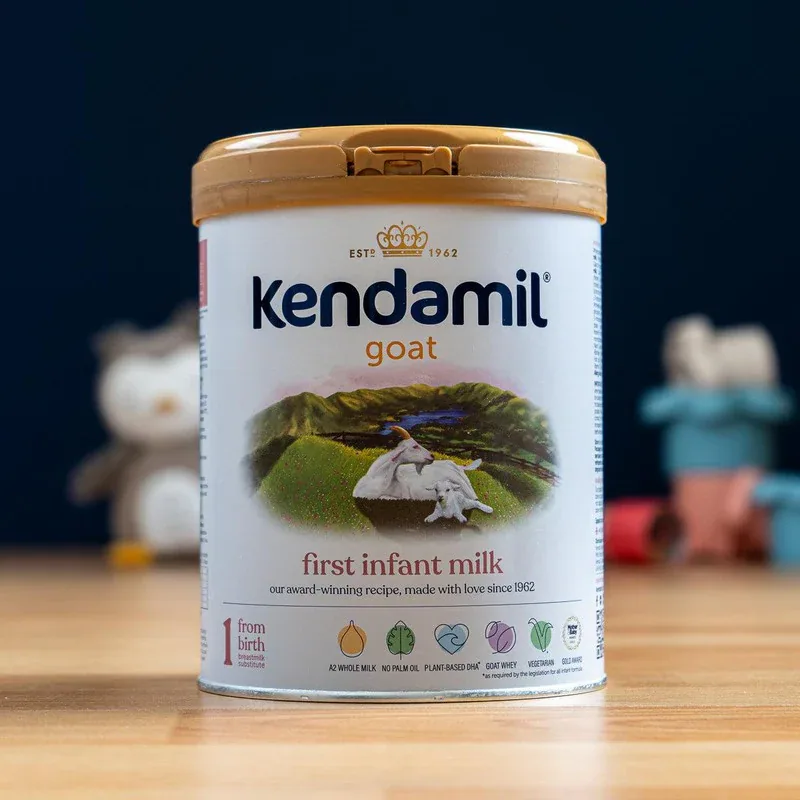
6. Best whole-milk-fat goat-milk: Kendamil Goat Stage 1
Kendamil Goat Stage 1 combines the Kendamil whole-milk-fat preservation philosophy with goat-milk protein source. Naturally A2-only. With 2'-FL HMO plus GOS+FOS prebiotic blend, no added palm. FDA-registered for US retail. The whole-milk-fat plus goat-milk hybrid for combo-feeding families wanting both axes.
Practical considerations for combo feeding
Protect milk supply during the transition. Adding formula during a previously exclusive-breastfeeding pattern can reduce milk supply if the breastfeeding frequency drops. The standard guidance to protect supply: maintain breastfeeding frequency at the breast where possible, supplement with formula only after the breast is emptied, and pump in place of feeds-replaced-with-formula to maintain demand signal. Lactation consultant input is helpful for families adding formula to an established breastfeeding pattern.
Bottle-feeding technique matters. Paced bottle feeding — holding the bottle horizontal rather than upright, taking pauses during the feed, allowing the infant to control the pace — reduces the risk of bottle preference (the infant preferring the faster- flowing bottle over the breast) that can undermine supply. Slow- flow nipples support paced feeding.
Stool pattern fluctuations are normal. During the early weeks of combo feeding, expect fluctuating stool consistency as the proportion of breast milk vs formula shifts. This typically stabilizes within 2-4 weeks as the gut microbiome adapts to the mixed feeding pattern. Significant changes (blood/mucus in stool, severe constipation, persistent diarrhea) warrant pediatric consultation.
Don't switch formulas frequently during combo feeding. The combination of breast milk plus formula already creates feeding- pattern variation; adding formula-brand variation on top makes it difficult to read the infant's response signals. Pick one formula suited to combo feeding and stay with it for at least 4-6 weeks before considering a switch.
Formula timing matters. Many combo-feeding families schedule formula bottles for specific feeds — typically the bedtime feed (formula's slower digestion supports longer sleep stretches) or specific daytime feeds when the breastfeeding parent is unavailable (work, travel). The other feeds remain breast. This pattern is defensible and supports both supply preservation and the infant's acclimation to combination feeding.
Travel-friendly formats matter. Combo-feeding families often need formula in shelf-stable formats for situations where refrigeration isn't available. Ready-to-feed (RTF) formulas (some Similac, Enfamil, Bobbie offerings) are more travel-friendly than powder. EU-imported formulas are typically powder-only, which works for in-home combo feeding but requires planning for travel.
Subscription pricing is more impactful for combo feeding. Combo feeders consume less formula per month than exclusive formula feeders (typically 30-50% of full-feeding-volume formula cost). At lower volumes, the per-tin cost matters more than total monthly cost. Subscribe-and-save discounts (5-10%) plus bulk-purchase discounts (often available for 6+ tin orders) provide meaningful savings even for combo-feeding's reduced volumes.
Why some formulas alternate better with breast milk than others
The infant's gastrointestinal tract adapts to specific formula compositions over weeks of consistent exposure, and abrupt composition shifts during combo feeding can produce stool-pattern disruption, gas, or transient fussiness. Formula composition that diverges sharply from breast milk produces more pronounced alternation effects; composition that closely mirrors breast milk produces smoother alternation.
Fat-blend continuity matters most. Breast milk fat is dominated by triglycerides with palmitic acid in the sn-2 position (the middle position of the glycerol backbone), surrounded by unsaturated fatty acids in sn-1 and sn-3 positions. This structure favors complete absorption with minimal soap-formation in the stool. Formulas using whole-cow-milk-fat (Kendamil family) preserve some of this natural sn-2 palmitate position; formulas using structured palm oil with sn-2 palmitate added (Kabrita) explicitly reproduce the breast-milk pattern; formulas using all-vegetable-oil blends without sn-2 palmitate (typical US-domestic and EU formulas without specific structured-fat formulation) have less continuity. For combo feeding, the fat-blend continuity is the largest single composition axis affecting smoothness of alternation.
Protein-source alternation effects. Cow-milk protein and breast milk protein differ in casein:whey ratio (cow milk is ~80:20 native; breast milk is ~40:60 in mature milk), in specific protein fractions (alpha-S1 casein dominant in cow vs alpha-S2 dominant in human), and in protein-derived bioactive peptides. Formulas adjusting cow-milk to 60:40 whey:casein (most modern Stage 1 formulas) reduce the gap; formulas using goat-milk's natural 60:40 ratio (Kabrita, Kendamil Goat) start closer; partially hydrolyzed formulas (Enfamil Gentlease, HiPP HA) reduce intact-protein exposure but lose some of the bioactive peptide profile.
Bioactive complementarity. Breast milk contains live Bifidobacterium infantis and other commensal microbes, oligosaccharides (HMOs) supporting microbiome development, secretory IgA, lactoferrin, and other bioactives. Formulas with matching bioactive layering (HiPP Dutch with probiotic + GOS; Kendamil Organic with HMO + GOS+FOS; Bobbie with HMO; Kabrita with HMO + GOS) provide the closest bioactive continuity. Formulas with limited or absent bioactive layering create a more pronounced gap between feeds.
Carbohydrate-source continuity. Breast milk's primary carbohydrate is lactose (~7g per 100ml of breast milk), with no maltodextrin or corn syrup solids. Lactose-only formulas (EU formulas mandatorily, Bobbie and Kendamil voluntarily in the US) match breast milk's carbohydrate base. Formulas with significant maltodextrin or corn syrup solids deviate compositionally — the divergence affects digestion and stool consistency.
Practical implication. For combo-feeding families, the formulas ranked highest in this guide (Kendamil Organic, HiPP Dutch, Kabrita, Bobbie Original) are not coincidentally the formulas with the highest combined fat-blend, protein-ratio, bioactive, and carbohydrate continuity to breast milk. The ranking reflects the practical alternation experience that combo-feeding families report.
Frequently asked questions
Which baby formula is closest to breast milk for combo feeding?
Can I mix breast milk and formula in the same bottle?
Will giving my baby formula reduce my breast milk supply?
What is the best formula for breastfed babies who refuse the bottle?
How much formula should a combo-fed baby drink?
Which formula has DHA and ARA closest to breast milk?
Can I switch back and forth between formulas during combo feeding?
FDA 21 CFR Part 107, AAP combined breastfeeding and formula feeding guidance, CDC infant nutrition guidance covering combo feeding, and the WHO breastfeeding policy framework provide the regulatory and clinical foundation for combination feeding patterns including supplementation considerations.
Related reading
- Combining formula and breastfeeding pillar
- Weaning to formula pillar
- Best formulas closest to breast milk
- Best formula for newborns
- MFGM explainer
- 2'-FL HMO explainer
- Formula-Fed vs Breastfed Gut Microbiome — What Differs and Why It Matters
The ranked picks
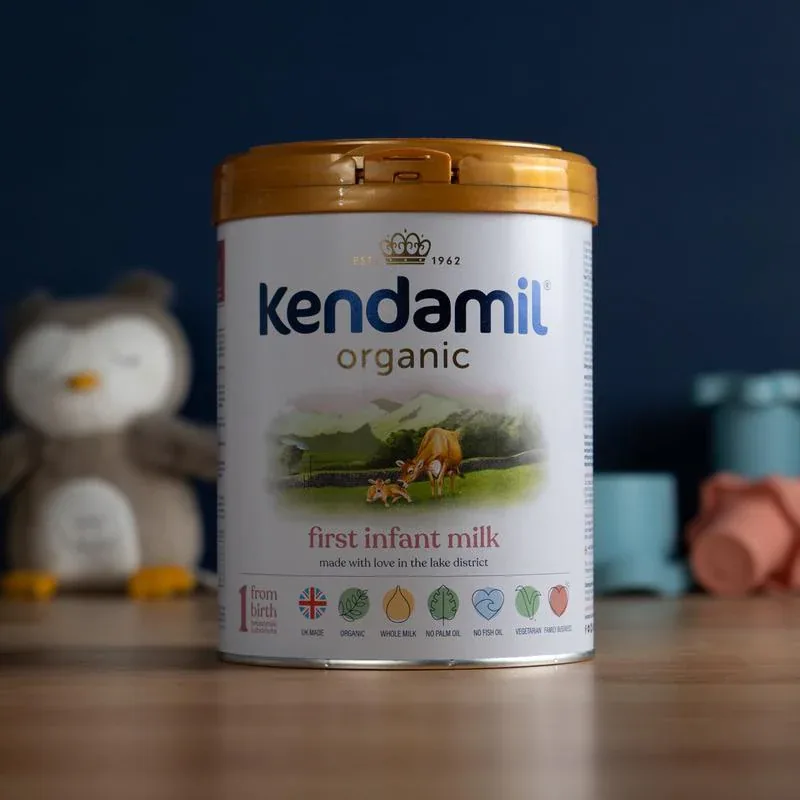
#1 · Best overall for combo feeding (whole-milk-fat + HMO + organic)
Kendamil Organic Stage 1
EU + UK Soil Association Organic with whole-cow-milk-fat preserving native MFGM. 2'-FL HMO plus GOS+FOS dual prebiotic. The closest match to breast-milk fat profile available at FDA-registered US retail. Lactose-only carbohydrate. ~$1.95/oz.

#2 · Best EU Organic + probiotic for combo feeding
HiPP Dutch Stage 1
EU Organic Combiotik with live Limosilactobacillus fermentum hereditum probiotic plus GOS prebiotic plus Metafolin folate. The bioactive-rich EU import for families weighting probiotic-strain inclusion alongside breast feeding. Personally imported via Organic's Best. ~$1.77/oz.
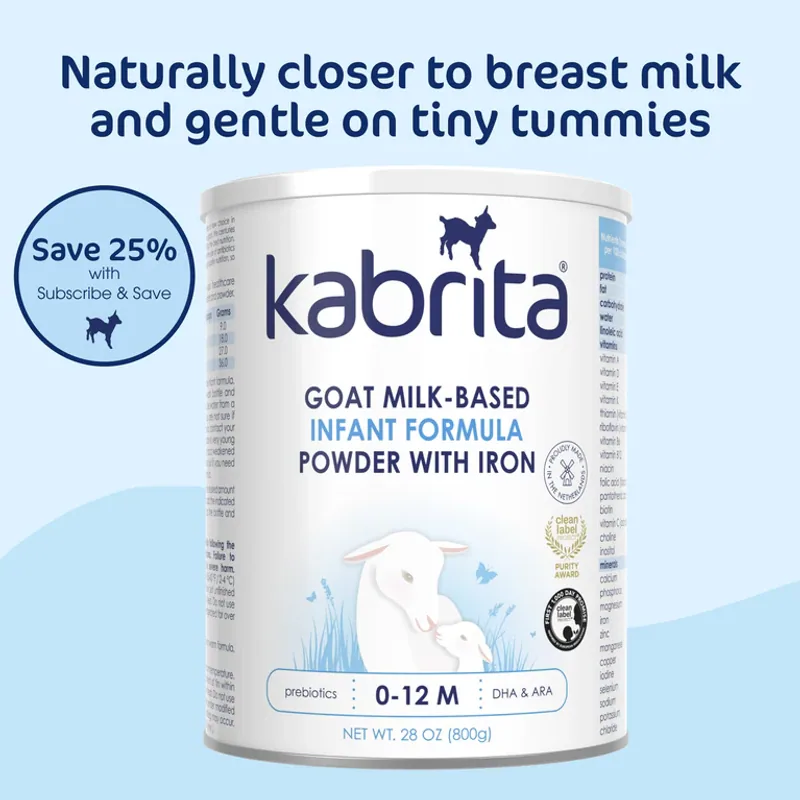
#3 · Best goat-milk for combo feeding
Kabrita Stage 1
Dutch goat-milk Stage 1 with sn-2 palmitate plus 2'-FL HMO plus GOS prebiotic. 60:40 whey:casein matching breast-milk reference. Goat-milk's smaller fat globules and softer curd provide a gentler complement to breast milk. NOT a CMPA substitute. FDA-enforcement-discretion US retail. ~$2.71/oz.
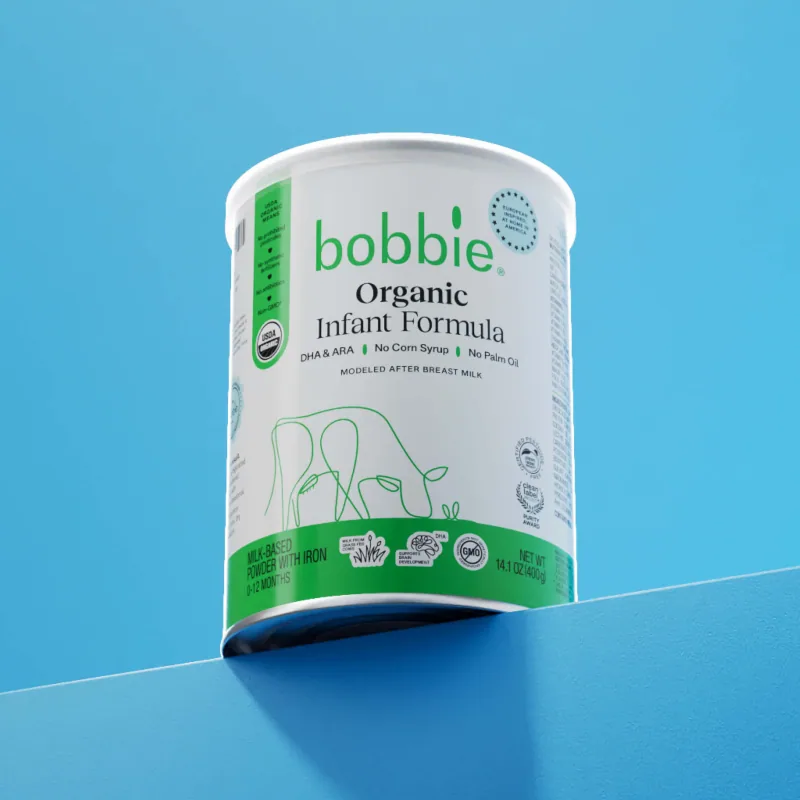
#4 · Best USDA Organic US-domestic for combo feeding
Bobbie Original
Independent USDA Organic challenger. Lactose-only carbohydrate, no added palm, no soy. Clean Label Project Purity Award. FDA-registered, no recall history. The cleanest USDA Organic at next-day US retail for families wanting domestic manufacturing alongside continued breastfeeding. ~$2.94/oz.
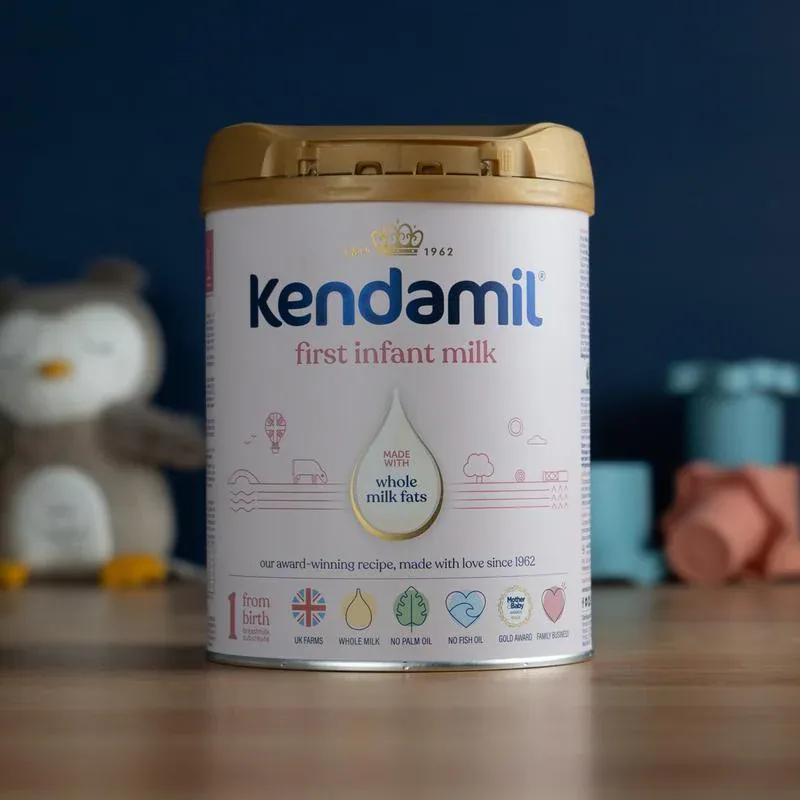
#5 · Best whole-milk-fat at lower price for combo feeding
Kendamil Classic Stage 1
Whole-cow-milk fat preservation at non-organic pricing. UK Red Tractor mark. GOS+FOS 9:1 prebiotic. No added palm, no soy. FDA-registered for US retail. The whole-milk-fat philosophy at lower price for budget-conscious combo-feeding families. ~$1.63/oz.
#6 · Best whole-milk-fat goat-milk for combo feeding
Kendamil Goat Stage 1
UK whole-cow-milk-fat-equivalent goat-milk Stage 1 with 2'-FL HMO plus GOS+FOS. Naturally A2-only. The whole-milk-fat philosophy applied to goat-milk for families wanting both axes. FDA-registered for US retail. ~$2.45/oz.