
Best Baby Formulas Closest to Breast Milk (2026 Buying Guide)
Last updated 2026-04-25 · María López Botín
"Closest to breast milk" is the most-asked formula question — and the answer depends on which axes you're matching. Breast milk has at least eight structural features formula manufacturers try to replicate: palmitic acid at the sn-2 triglyceride position, native milk fat globule membrane (MFGM) bioactives, ~25% palmitic acid in total fat, 60:40 whey:casein protein ratio, lactose as the primary carbohydrate, human milk oligosaccharides (HMOs), live bacterial strains contributing to early gut microbiome, and a specific omega-6:omega-3 PUFA ratio.
No formula matches breast milk on all eight axes. The ranking below prioritizes formulas that match on the most axes simultaneously rather than excelling on a single axis. Per current literature, the master pick is Kendamil Organic — combining whole-milk-fat preservation with 2'-FL HMO, 60:40 ratio, lactose-only carb, and EU Organic certification.
The breast-milk-similarity axes formulas can match: sn-2 palmitic acid position, native MFGM, ~25% palmitic acid, 60:40 whey:casein, lactose primary, HMO inclusion, probiotic strain, balanced omega-6:omega-3. Whole-milk-fat formulas (Kendamil family, ByHeart) match on fat-blend axes naturally; HMO-fortified formulas (Kendamil Organic, Similac Pro-Advance, Kabrita) match on bioactive axis; HiPP Dutch Combiotik adds the breast-milk-isolated probiotic. Kendamil Organic is the most-axes-simultaneously match.
How "closest to breast milk" actually translates
Eight structural axes formulas can match (or fail to match) breast milk on, with each axis carrying its own clinical evidence weight. The best-overall formulas are simply those covering the most axes simultaneously without sacrificing the regulatory baseline:
1. sn-2 palmitate position. Breast-milk fat has palmitic acid at the sn-2 triglyceride position. Standard palm oil places it at sn-1 and sn-3 (suboptimal). Whole-milk-fat (Kendamil family, ByHeart) delivers natural sn-2 position; sn-2 palmitate (Kabrita) delivers structured-palm sn-2; standard RSPO palm formulas miss this axis.
2. Native MFGM presence. Breast milk fat globules are surrounded by milk fat globule membrane (MFGM) — a complex of phospholipids, sphingomyelin, cholesterol, gangliosides, and ~150 proteins. Whole- milk-fat preservation retains native MFGM; some formulas add MFGM back as ingredient (Enfamil Enspire, Enfamil NeuroPro); skim-milk- plus-vegetable-oil formulas lose it during processing.
3. ~25% palmitic acid in fat. Breast milk fat is ~20-25% palmitic acid. Formulas that exclude palm and don't use whole-milk-fat are palmitic-acid-poor (Bobbie, Loulouka, Aptamil UK use coconut + sunflower + rapeseed only — palmitic-acid-poor). Whole-milk-fat formulas deliver ~25% palmitic acid naturally.
4. 60:40 whey:casein protein ratio. Breast milk is roughly 60:40 whey:casein in mature lactation (closer to 80:20 in early lactation, shifting toward 60:40 as the infant grows). Most modern Stage 1 formulas adjust to 60:40 via whey concentrate. Kabrita and Similac Pro-Advance are 60:40; goat-milk Kendamil Goat and Holle Goat use native goat-milk ratio (closer to 20:80).
5. Lactose as primary carbohydrate. Breast milk uses lactose as the carbohydrate. EU 2016/127 mandates lactose predominance in Stage 1 formulas. US 21 CFR 107 permits maltodextrin or corn-syrup- solids; some US formulas (Happy Baby Organic Infant) list these before whey on the ingredient list. Lactose-only formulas (Kendamil family, HiPP, Holle, Loulouka, Bobbie) match this axis.
6. HMO inclusion. Breast milk contains 150+ distinct human milk oligosaccharides (HMOs). 2'-FL is the most abundant in 80% of women. Formulas with HMO inclusion (Kendamil Organic, Similac Pro-Advance, Similac 360 Total Care, Enfamil NeuroPro, Enfamil Enspire, ByHeart, Kabrita) match this axis to varying degrees; 5-HMO blends (Similac 360) approximate broader breast-milk HMO diversity than single 2'-FL.
7. Live probiotic strain. Breast milk contains bacterial strains that establish in the infant gut. HiPP Dutch's Combiotik delivers Limosilactobacillus fermentum hereditum CECT5716 — a strain originally isolated from human breast milk. Few other Stage 1 formulas include live probiotics; HiPP family is the principal source.
8. Balanced omega-6:omega-3 PUFA ratio. Breast milk has a relatively low linoleic acid (omega-6) load compared to seed-oil- heavy formulas. Whole-milk-fat formulas balance this axis better than all-seed-oil "palm-free" constructions which are PUFA-heavy.
The "closest to breast milk" question is really "which axes do you weight most?" Kendamil Organic matches on axes 1, 2, 3, 4, 5, 6, 8 — seven of eight, missing only the live probiotic strain. ByHeart matches on the same seven. HiPP Dutch matches on 4, 5, 6 (single 2'-FL via Combiotik partial), 7, but not 1, 2, 3 (palm-inclusive skim-milk-plus-oils). Kabrita matches 4, 5, 6, plus partial 1 (structured palm sn-2) but not 2 (no MFGM) or 3 (palmitic-acid- adequate via structured palm).
The ranking
1. Best overall match: Kendamil Organic Stage 1
Kendamil Organic matches breast milk on seven of eight axes simultaneously — the most-axes-matched Stage 1 formula at FDA- registered US retail. Whole-cow-milk fat delivers natural sn-2 palmitate + native MFGM + ~25% palmitic acid in fat. 60:40 whey: casein matches breast-milk reference. Lactose-only carbohydrate (EU 2016/127 mandatory). 2'-FL HMO + GOS prebiotic. EU Organic + UK Soil Association Organic. The single-formula combination that delivers breast-milk-similarity across multiple structural axes. ~$1.95/oz at FDA-registered US retail. Missing only the live probiotic strain (HiPP Dutch's Combiotik addresses this axis).
2. Best US-domestic match (with caveat): ByHeart Whole Nutrition
ByHeart Whole Nutrition matches breast milk on the same seven axes as Kendamil Organic, plus delivers lactoferrin (a breast-milk iron-binding protein) which Kendamil Organic doesn't include. Whole- cow-milk fat + 2'-FL HMO + lactoferrin + GOS + 60:40 + lactose-only. The deepest single-formula bioactive-match in any whole-milk-fat US Stage 1. Non-organic.
Caveat: 2025 botulism recall affected specific lots. Recall was addressed and current stock is not under active recall, but families should verify current production-batch status before purchase. Bobbie's clean recall history is the principal trade-off relative to ByHeart's bioactive depth advantage.
3. Best EU Organic with breast-milk probiotic: HiPP Dutch Stage 1
HiPP Dutch Stage 1 is the only EU-imported Stage 1 cow-milk formula delivering Limosilactobacillus fermentum hereditum CECT5716 — a probiotic strain originally isolated from human breast milk. Plus GOS prebiotic + Metafolin (the bioactive form of folate found in breast milk). EU Organic Combiotik. Lactose-only carbohydrate. RSPO palm in fat blend (misses the sn-2 palmitate and MFGM axes). ~$1.77/oz delivered.
For families weighting probiotic-strain inclusion specifically, HiPP Dutch is the unique match. The Combiotik approach was specifically designed around breast-milk-derived bacterial strains plus prebiotic- substrate provision — HiPP's heritage on this approach goes back two decades.
4. Best non-organic whole-milk-fat match: Kendamil Classic Stage 1
Kendamil Classic carries the same whole-milk-fat MFGM-preservation philosophy as Kendamil Organic — whole-cow-milk fat + native MFGM
- natural sn-2 palmitate + ~25% palmitic acid + 60:40 whey:casein + lactose-only. Difference vs Kendamil Organic: no organic certification + GOS+FOS 9:1 prebiotic instead of 2'-FL HMO. ~$1.63/oz at FDA-registered US retail.
For families weighting fat-blend match plus protein-ratio match plus carbohydrate match at lower price than Organic, Kendamil Classic is the in-family answer.
5. Best WIC-eligible match: Similac Pro-Advance
Similac Pro-Advance matches breast milk on bioactive axis (2'-FL HMO
- GOS), protein-ratio axis (60:40 whey:casein), and carbohydrate axis (lactose-primary). Misses fat-blend axis (skim-milk-plus-soybean-oil construction, no whole-milk-fat MFGM, no sn-2 palmitate). FDA- registered Abbott formula at US retail. WIC-eligible in many states (effectively $0 for WIC families). ~$1.51/oz.
For WIC-eligible families wanting breast-milk-similarity at $0 net cost, Similac Pro-Advance is the practical answer. The fat-blend gap is the principal trade-off vs whole-milk-fat alternatives.
6. Best goat-milk match: Kabrita Stage 1
Kabrita Stage 1 is the goat-milk Stage 1 with the closest match to breast milk on multiple axes: sn-2 palmitate (structured palm in breast-milk position), 60:40 whey:casein (matching breast-milk reference), lactose-primary, 2'-FL HMO + GOS. Whole goat milk plus goat-milk-whey concentrate enables the 60:40 ratio rather than goat- milk's native ~20:80 ratio. ~$2.71/oz at US retail.
For families committing to goat-milk protein who also want breast- milk-similar fat positioning, protein ratio, and bioactive inclusion, Kabrita is the only goat-milk Stage 1 matching all four axes simultaneously at US-accessible distribution.
What about "closest to breast milk" claims by other brands?
Several brands market themselves as "closest to breast milk." The specific axis each one is optimizing for is worth understanding because most of these claims are partially true on one axis but silent on the others, which is why the ranking above considers the full eight-axis composition rather than any single feature. Quick survey of the major contenders:
Similac 360 Total Care advertises 5-HMO blend (2'-FL + 3-FL + LNT + 3'-SL + 6'-SL) as broader HMO match than single 2'-FL. This is structurally accurate — multi-HMO matches breast-milk HMO diversity better than single-HMO. But 360 Total Care misses fat- blend axes (palm + soy in fat blend, no whole-milk-fat, no MFGM).
Enfamil Enspire advertises MFGM + lactoferrin + 2'-FL HMO as deepest US bioactive stack. This is also accurate. But Enspire uses palm + soy in fat blend (misses sn-2 palmitate axis).
Bobbie Original advertises USDA Organic + clean-label + palm- free as breast-milk-similar. This misses fat-blend axes specifically because palm-free + all-seed-oil construction is palmitic-acid-poor relative to breast milk and lacks native MFGM.
The "closest to breast milk" framing is brand-specific marketing, not a single objective measure. The ranking above prioritizes formulas matching on the most axes simultaneously rather than excelling on a single advertised feature.
Comparison summary across breast-milk-similarity axes
| Pick | sn-2 palmitate | Native MFGM | ~25% palmitic | 60:40 ratio | Lactose-only | HMO | Probiotic | PUFA balance |
|---|---|---|---|---|---|---|---|---|
| Kendamil Organic | ✓ (natural) | ✓ (native) | ✓ | ✓ | ✓ | ✓ (2'-FL) | ✗ | ✓ |
| ByHeart | ✓ (natural) | ✓ (native) | ✓ | ✓ | ✓ | ✓ (2'-FL + lactoferrin) | ✗ | ✓ |
| HiPP Dutch | ✗ | ✗ | ✓ (palm) | ✓ | ✓ | ✗ | ✓ (L. fermentum) | partial |
| Kendamil Classic | ✓ (natural) | ✓ (native) | ✓ | ✓ | ✓ | ✗ | ✗ | ✓ |
| Similac Pro-Advance | ✗ | ✗ | partial | ✓ | ✓ | ✓ (2'-FL) | ✗ | partial |
| Kabrita | ✓ (sn-2 palmitate) | ✗ | ✓ | ✓ | ✓ | ✓ (2'-FL) | ✗ | partial |
| Bobbie Original | ✗ | ✗ | ✗ (palmitic-acid-poor) | ✓ | ✓ | ✗ | ✗ | partial |
| Holle Cow | ✗ | ✗ | ✓ (palm) | ✓ | ✓ | ✗ | ✗ | partial |
Kendamil Organic, ByHeart, and Kendamil Classic match on 7-of-8 axes (missing only probiotic). HiPP Dutch matches probiotic axis that the whole-milk-fat formulas miss. The "closest" depends on which axes you weight.
Frequently asked questions
What's the closest formula to breast milk for newborns?
Why does whole-milk fat matter for breast-milk similarity?
Is Kendamil Organic really closer to breast milk than Bobbie?
Is HiPP Dutch's probiotic the same strain in breast milk?
What does '60:40 whey:casein' mean and why does it matter?
Are formulas with multi-HMO blends closer to breast milk than single-2'-FL HMO formulas?
Why aren't there formulas matching breast milk on all axes?
Related reading
- Best baby formulas — overall flagship ranking
- Best whole-milk-fat formulas
- Best formulas with probiotics
- Palm oil explainer — why fat-blend axes matter
- MFGM explainer
- 2'-FL HMO explainer
- sn-2 palmitate explainer
- Bobbie Original vs Kendamil Organic Stage 1
- Bobbie Original vs ByHeart Whole Nutrition
- HiPP Dutch Stage 1 vs Holle Cow Stage 1
- Best Baby Formula for Combination Feeding (Breast + Formula)
- Formula-Fed vs Breastfed Gut Microbiome — What Differs and Why It Matters
- Choline
Primary sources
- Koletzko B et al. Palm oil and palmitic acid supply in infant formula: a systematic review. European Journal of Nutrition, 2019. pubmed.ncbi.nlm.nih.gov/30545042
- EU Regulation 2016/127 on infant formula composition. eur-lex.europa.eu
- FDA 21 CFR Part 107: US infant formula regulation. ecfr.gov
- Kennedy K et al. Double-blind randomized trial of sn-2 palmitate vs standard palm olein in term infants. pubmed.ncbi.nlm.nih.gov/12586971
This site provides research and comparisons, not medical advice. Consult your pediatrician before changing your baby's formula.
The ranked picks
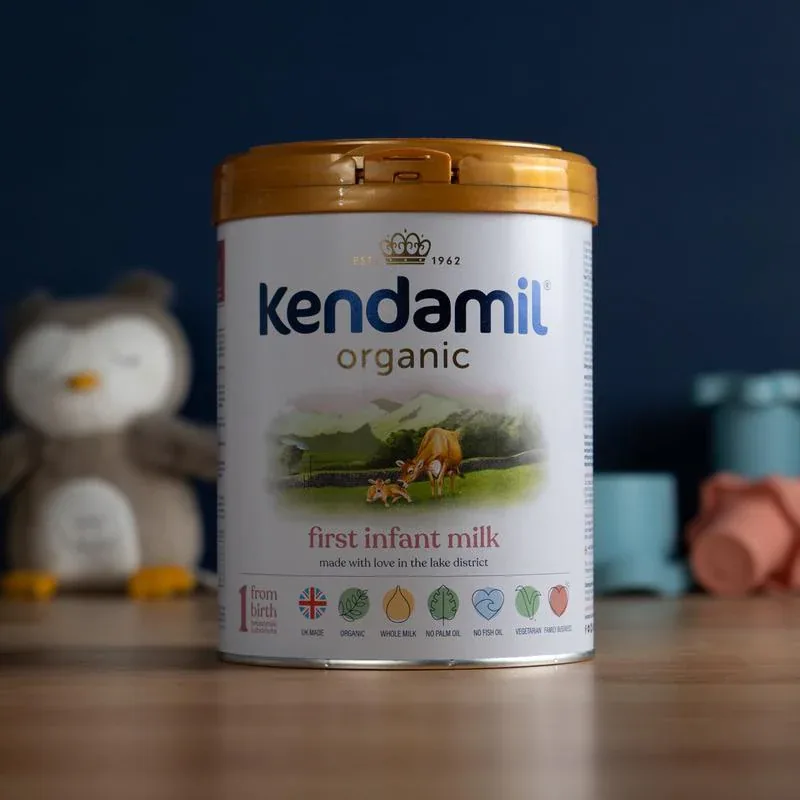
#1 · Best overall match to breast milk (multiple axes)
Kendamil Organic Stage 1
Whole-cow-milk fat preserves natural sn-2 palmitate + native MFGM (closest fat profile). 60:40 whey:casein matches breast-milk reference. Lactose-only (mandatory in EU). Adds 2'-FL HMO + GOS prebiotic. EU + UK Soil Association Organic. FDA-registered for US retail. The unique combination on multiple breast-milk-similarity axes simultaneously. ~$1.95/oz.
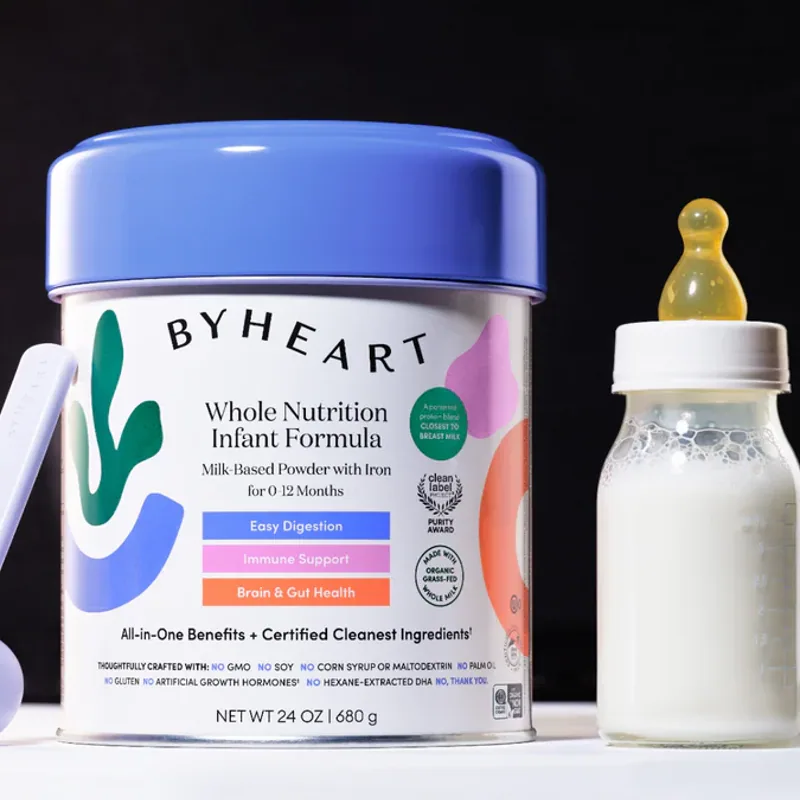
#2 · Best US-domestic with deepest bioactive match (recall caveat)
ByHeart Whole Nutrition
Whole-cow-milk fat (sn-2 palmitate + MFGM) + 2'-FL HMO + lactoferrin + GOS — deepest bioactive stack matching breast-milk components in any whole-milk-fat US Stage 1. No added palm, no soy. Caveat: 2025 botulism recall — verify current production-batch status before purchase. ~$2.59/oz.
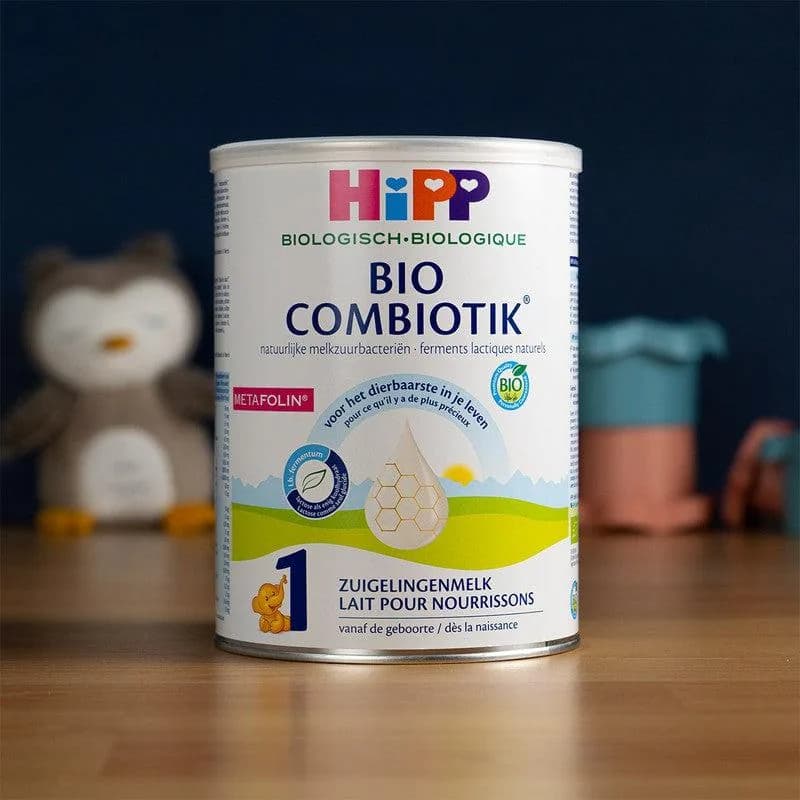
#3 · Best EU Organic with breast-milk-derived probiotic
HiPP Dutch Stage 1
Limosilactobacillus fermentum hereditum CECT5716 — strain originally isolated from human breast milk. Plus GOS prebiotic + Metafolin bioactive folate (the form found in breast milk). Lactose-only carbohydrate (EU 2016/127 mandatory). EU Organic Combiotik. RSPO palm in fat blend. ~$1.77/oz delivered.
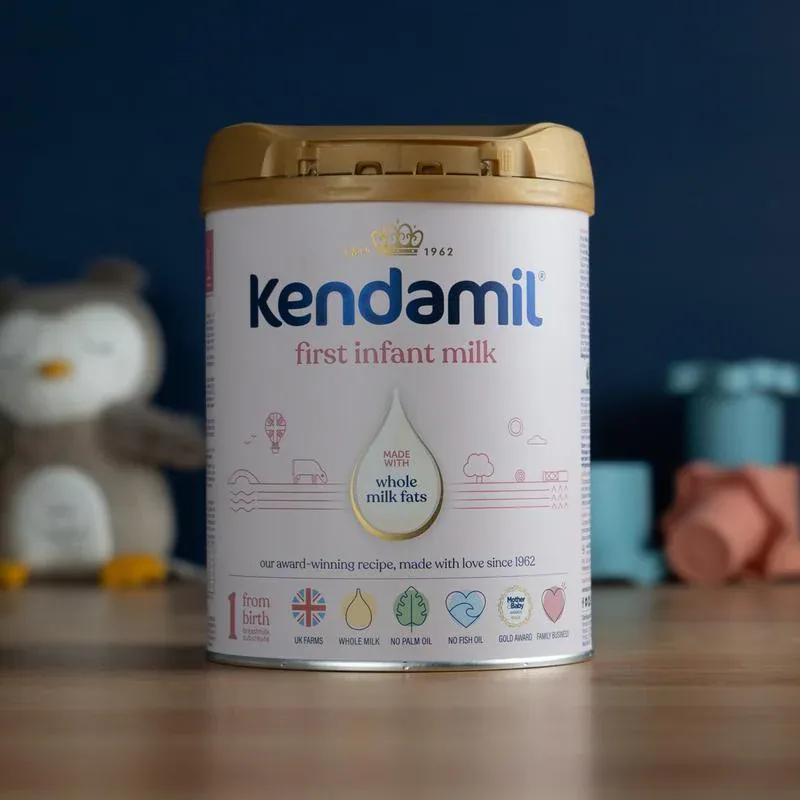
#4 · Best non-organic whole-milk-fat at lower price
Kendamil Classic Stage 1
Same whole-milk-fat MFGM-preservation philosophy as Kendamil Organic at lower price. GOS+FOS 9:1 prebiotic blend. No added palm, no soy. FDA-registered. Lactose-only carbohydrate. ~$1.63/oz at US retail.
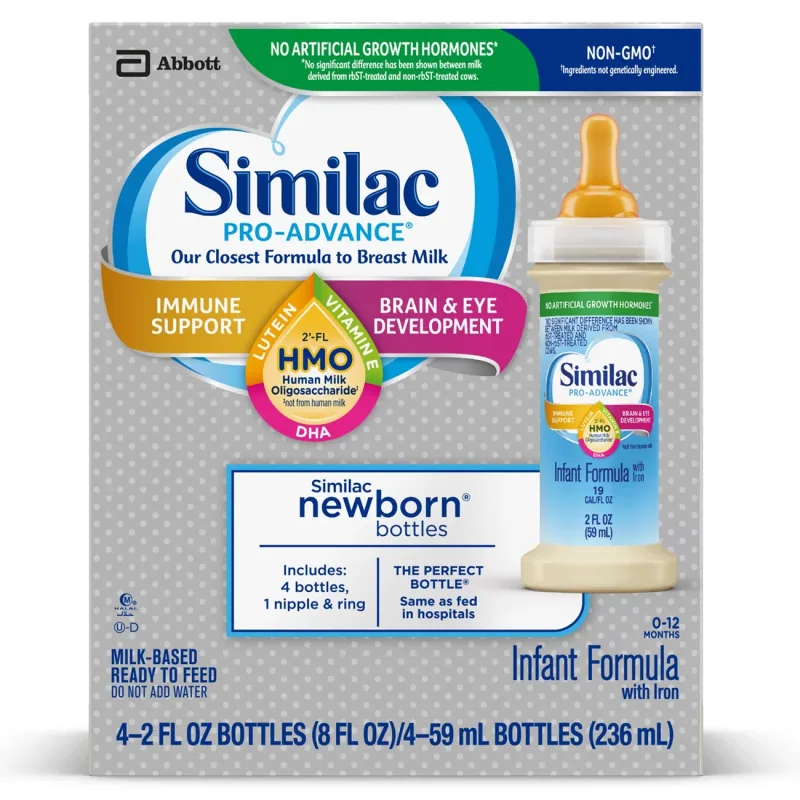
#5 · Best WIC-eligible breast-milk-similar with HMO
Similac Pro-Advance
FDA-registered Abbott formula with 2'-FL HMO + GOS, palm-olein-free fat blend (uses soybean oil). 60:40 whey:casein matching breast-milk reference. Lactose-primary. Broad WIC eligibility (effectively $0 for WIC families). ~$1.51/oz at standard retail.
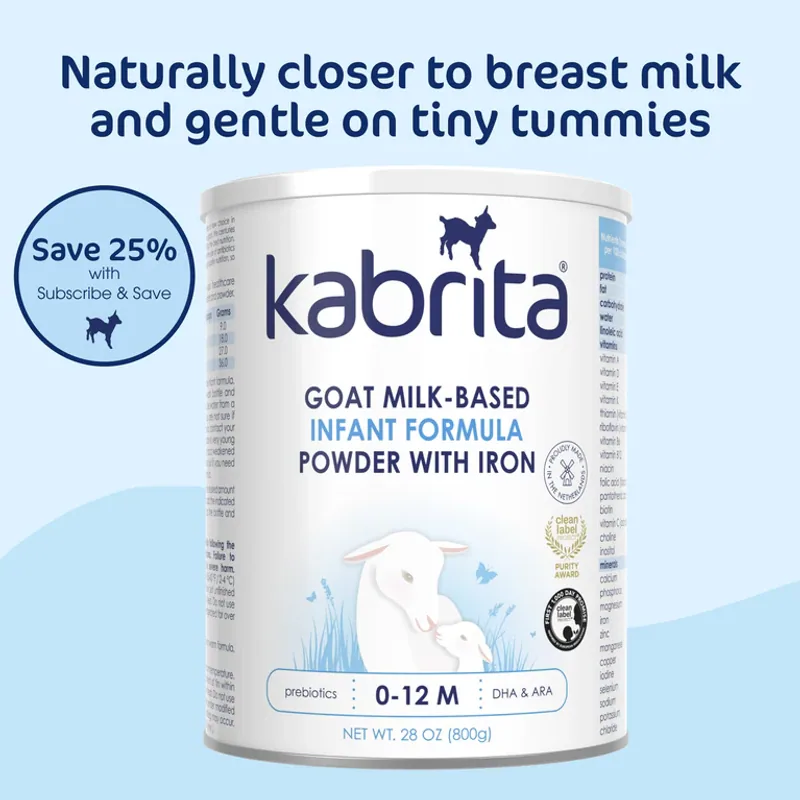
#6 · Best goat-milk match to breast milk
Kabrita Stage 1
Whole goat milk + 60:40 whey:casein matching breast-milk reference. sn-2 palmitate (structured palm in breast-milk position). 2'-FL HMO + GOS. Lactose-primary. The unique combination of breast-milk-position sn-2 palmitate + 60:40 ratio + HMO in goat-milk format. ~$2.71/oz at US retail.