

Most infants spit up. Some do it spectacularly, several times a day, for months on end. Parents encountering this for the first time understandably look for causes and interventions, and the formula aisle is ready with "anti-reflux" products, thickened formulations, and hydrolyzed variants that all claim to help. The evidence-based picture is narrower than the marketing suggests. Normal physiological reflux (GER) affects roughly two-thirds of healthy infants, resolves spontaneously, and does not benefit from formula change. Pathological reflux (GERD) is clinically different, affects fewer infants, and has specific interventions that work, some of which involve formula and some of which do not.
This article walks through the distinction, what the joint AAP and NASPGHAN-ESPGHAN guidelines actually say about formula interventions, and how to evaluate whether a formula change is worth trying.
Gastroesophageal reflux (GER), "spitting up", affects about two-thirds of healthy infants, peaks at 3-4 months, and typically resolves by 12-18 months without treatment. Gastroesophageal reflux disease (GERD) is the pathological form involving poor weight gain, feeding refusal, respiratory symptoms, or severe discomfort. For GER, formula change is generally not recommended. For GERD, anti-reflux (thickened) formulas, smaller more frequent feeds, and in some cases hydrolyzed formulas for suspected CMPA-associated reflux are evidence-supported interventions. Pediatric assessment is the right starting point for any infant with feeding or growth concerns.
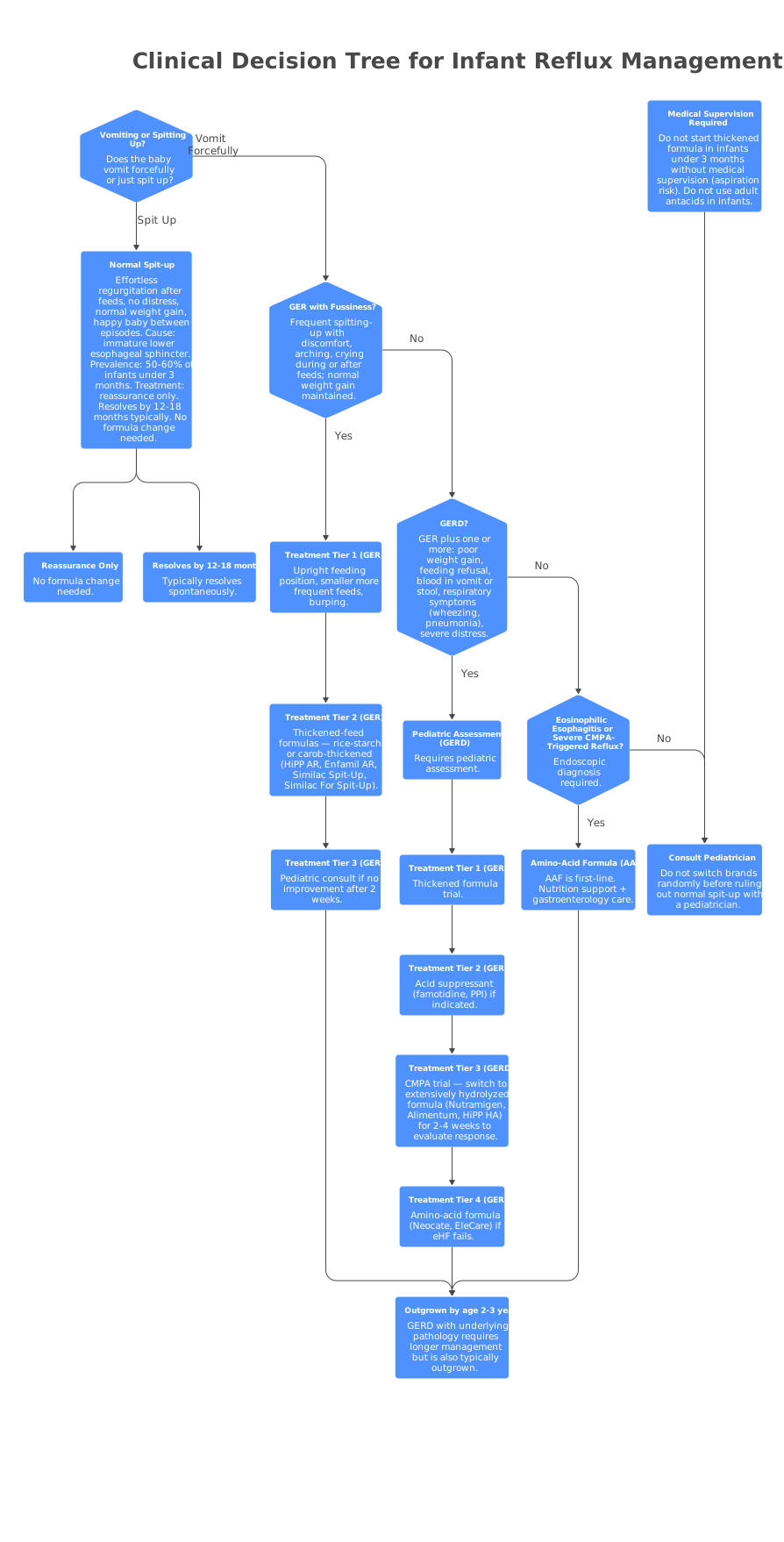
Visual generated with Napkin AI, editorial review by María López Botín. See methodology for our use policy.
GER vs GERD: the clinical distinction
The joint AAP, NASPGHAN, and ESPGHAN framework separates two conditions that share the word "reflux":
GER: gastroesophageal reflux (physiological)
- Stomach contents reflux back into the esophagus and often out of the mouth (spitting up, posseting)
- Normal physiological process, the lower esophageal sphincter is immature in early infancy
- Peaks at 3-4 months, typically resolves by 12-18 months
- No pathological consequences in the great majority of cases
- Does not require treatment; does not respond to formula change in the sense of resolving the underlying physiology
GERD: gastroesophageal reflux disease (pathological)
- Reflux associated with troublesome symptoms or complications
- Feeding refusal, poor weight gain, growth failure
- Choking, gagging, or coughing during or after feeds
- Arched back, distressed posture during or after feeds
- Respiratory symptoms (recurrent pneumonia, chronic cough, asthma exacerbation)
- Hematemesis (blood in vomit)
- Persistent irritability beyond typical infant fussiness
- Affects a smaller subset of infants; requires medical assessment
The clinically useful question is not "does my baby spit up?" but "is the spitting up causing a problem?"
The AAP and NASPGHAN-ESPGHAN framework
The 2013 AAP Clinical Report and the 2018 NASPGHAN-ESPGHAN GERD Guidelines align on core points:
For uncomplicated GER ("the happy spitter")
- Reassure parents; no intervention needed
- Not an indication for formula change
- Not an indication for H2 blockers (famotidine) or PPIs (omeprazole)
- Typically self-resolves by 12-18 months
Studies show routine PPI use in infants with uncomplicated GER produces no symptom benefit over placebo but carries real risks — increased respiratory infections, gastroenteritis, and fracture risk with long-term exposure. This is a meaningful overtreatment concern in US pediatric practice.
For infants with GERD features
A stepwise approach:
- Conservative measures first. Upright positioning after feeds, smaller more frequent feeds, thickened feeds, and ruling out overfeeding.
- If cow milk protein allergy is suspected. Trial of extensively hydrolyzed formula for 2-4 weeks. CMPA-associated reflux is a recognized entity and responds to protein modification, see our CMPA explained guide.
- Acid-suppressing medication (H2 blocker or PPI). Reserved for infants with confirmed erosive GERD or complications, not for routine spit-up.
- Specialist referral. Pediatric gastroenterology if symptoms persist despite conservative and medical measures.
Where formula change fits in
Given the framework above, formula change is not a first-line intervention for ordinary GER. It may help in three specific scenarios:
Scenario 1: Anti-reflux (thickened) formula for GERD with volume-related symptoms
Anti-reflux formulas contain added thickening agents, typically carob bean gum, rice starch, or locust bean gum, that increase viscosity when the formula mixes with stomach acid. This reduces the frequency of regurgitation (measurable) and the visible volume spitted up.
Evidence: Multiple randomized controlled trials show anti-reflux formulas reduce regurgitation frequency and volume. However, the evidence for symptomatic improvement in GERD (crying, feeding refusal, weight gain) is weaker.
When it's worth trying:
- Frequent visible spit-up causing feeding volume loss
- Parental stress from repeated clothing changes and soiled environments
- As adjunct to smaller, more frequent feeds
When it won't help much:
- Silent reflux (acid reaches esophagus but doesn't exit mouth)
- CMPA-associated GERD
- GERD with respiratory complications
Products: HiPP Anti-Reflux (AR), Enfamil A.R., and similar European/US anti-reflux formulas.
Scenario 2: Hydrolyzed formula if CMPA is suspected
Cow milk protein allergy (CMPA) can present as GERD-like symptoms. If an infant has GERD-pattern symptoms alongside other CMPA signs (eczema, blood in stool, diarrhea, or strong family allergy history), a 2-4 week trial of extensively hydrolyzed formula (Nutramigen, Alimentum, Gerber Extensive HA) can confirm or rule out this pathway.
See cow milk protein allergy explained for the full diagnostic framework. Partial hydrolysates (HiPP HA, Gerber GentlePro) are not sufficient for diagnosed CMPA but may help some sensitivity-spectrum cases.
Scenario 3: Smaller, more frequent feeds (not a formula change per se)
Often overlooked. Overfeeding is a frequent cause of apparent reflux. A 4-month-old taking 7 oz every 4 hours may regurgitate the "excess" volume and appear reflux-prone, when reducing feed size to 5 oz every 2.5-3 hours eliminates the issue. This is a feeding-pattern change, not a formula change.
For preparation and feeding frequency guidance, see how to prepare baby formula safely.
What formula features don't help much
Marketing claims that are not supported by strong evidence for GER or uncomplicated GERD:
- "Gentle," "sensitive," "easy to digest", broad marketing terms. Often refer to partially hydrolyzed protein, which helps some infants marginally but is not a reflux intervention per se.
- "For fussiness and gas", usually refers to partially hydrolyzed or reduced-lactose formulas. Unless the infant has diagnosed CMPA or secondary lactose intolerance (both uncommon), these are unlikely to help reflux specifically.
- "Probiotic-added formulas", some evidence in colic; limited evidence in GERD.
- "A2-only formulas", no specific GERD evidence.
For the underlying discussion of what "sensitive" formulas actually are, see infant lactose intolerance.
Non-formula interventions that do help
These interventions are cheaper, easier, and often more effective than formula change for ordinary reflux:
Upright positioning after feeds
Hold baby upright for 20-30 minutes after each feed. This uses gravity to keep stomach contents where they belong. The most evidence-based, cost-free intervention.
Smaller, more frequent feeds
Reduce feed volume by 20-25% and increase frequency proportionally. Overfilling the stomach mechanically promotes reflux; smaller feeds reduce this.
Paced bottle feeding
Slow the bottle-feed so it takes 15-20 minutes rather than 5-10. Reduces air swallowing and allows satiety signals to register before overfilling.
Frequent burping
Every 1-2 oz during the feed plus after. Removes swallowed air that contributes to reflux.
Adequate burping before laying flat
Particularly at night. A gassy stomach contents is more likely to reflux when horizontal.
Elevated sleeping surface? No
Despite persistent parental interest, the AAP does not recommend inclined sleepers or crib wedges for reflux management. These products have been associated with infant deaths and were recalled from the US market in 2019. Safe sleep (flat, firm, back) takes priority over reflux-positioning strategies.
When to see a pediatrician
Schedule a consultation if your infant shows:
- Weight loss or failure to gain weight
- Refusing feeds or clearly distressed during feeds
- Projectile vomiting (different from spitting up)
- Blood or coffee-ground material in vomit
- Persistent irritability beyond typical infant fussiness patterns
- Recurrent respiratory symptoms (cough, wheeze, pneumonia)
- Arching back, severe discomfort during or after feeds
- Green or yellow (bile) vomit, indicates possible intestinal obstruction, urgent
Most spit-up doesn't need a pediatric visit. These symptoms do.
The "sensitive stomach" confusion
parents frequently encounter the "sensitive formula" category (Similac Sensitive, Enfamil Sensitive, Gentlease, Pro-Sensitive) and wonder whether these are appropriate for reflux. A few clarifications:
- These are typically reduced-lactose or hydrolyzed-protein formulas marketed for "fussiness, gas, and crying"
- They may help infants with secondary lactose intolerance (rare, typically post-gastroenteritis) or mild protein sensitivity
- They are not specifically formulated for reflux
- They may help some reflux-adjacent symptoms via their underlying mechanisms (reduced gas → less pressure → less reflux) but aren't first-line reflux interventions
The anti-reflux (AR) category is distinct and explicitly designed for regurgitation. For reflux specifically, an AR formula is more logical than a sensitive formula.
What HiPP AR actually is
HiPP Anti-Reflux (AR) is a thickened Stage 1 formula designed to reduce regurgitation:
- Thickener: locust bean gum (carob bean gum)
- Protein: intact cow milk whey-predominant (not hydrolyzed)
- Base nutrition: matches HiPP Dutch/German Stage 1 with thickener added
- Preparation: specific instructions, cooler water, non-vigorous mixing, thickener activates in stomach
HiPP AR is an evidence-supported intervention for visible regurgitation frequency. It is not indicated for CMPA-associated reflux (hydrolyzed formulas are preferred for that) or for uncomplicated GER (no intervention needed).
For the full HiPP product line context, see the HiPP brand hub.
What to track if you're troubleshooting
If you're working with a pediatrician on reflux symptoms, keep:
- Feeding log: time, volume, spit-up yes/no, spit-up volume estimate, baby's affect
- Stool log: frequency, consistency, color, any blood or mucus
- Sleep log: position, duration, disruptions
- Growth data: weight and length at each pediatric visit
- Interventions tried: specific formula, feeding-pattern changes, positioning, duration of trial
This data makes the pediatric consultation much more productive than showing up with a general sense of "baby is fussy."
FAQ
Does my baby have reflux or GERD?
Will changing formula stop my baby from spitting up?
What is anti-reflux (AR) formula and does it work?
Is it safe to thicken formula at home with rice cereal?
Should I use acid-blocking medication for my baby's reflux?
Can cow milk protein allergy cause reflux symptoms?
Are inclined sleepers safe for reflux babies?
At what age should reflux improve?
Primary sources
- American Academy of Pediatrics: Clinical Report: Pediatric Gastroesophageal Reflux Clinical Practice Guidelines. Pediatrics, 2013. publications.aap.org
- NASPGHAN-ESPGHAN: Pediatric Gastroesophageal Reflux Clinical Practice Guidelines: Joint Recommendations. JPGN, 2018. naspghan.org
- AAP Safe Sleep Recommendations: Flat, firm, back sleep; no inclined sleepers. aap.org
- FDA: Infant Formula Guidance and Regulation. fda.gov
- Cochrane Review: Feed thickener for infants up to six months of age with gastro-oesophageal reflux. cochranelibrary.com
This site provides research and comparisons, not medical advice. Consult your pediatrician before changing your baby's formula.