
Best Baby Formula for Reflux — 2026 Buying Guide
Last updated 2026-04-26 · María López Botín
This site provides research and comparisons, not medical advice. Consult your pediatrician before changing your baby's formula.
Infant reflux — the upward movement of gastric contents into the esophagus — is extremely common in the first 4-6 months of life and resolves spontaneously in the majority of infants by 12-18 months without specialty formula. The first-line management is not typically a formula switch; it is positional adjustment, smaller more-frequent feeds, and pediatrician consultation to distinguish physiologic reflux (normal) from gastroesophageal reflux disease (GERD, requiring intervention).
For infants with persistent symptoms, anti-reflux (AR) formulas contain added thickeners — typically locust bean gum in EU formulas or rice starch in US formulas — that thicken in the stomach to reduce regurgitation. This guide ranks AR formulas plus the comfort and partially hydrolyzed alternatives that pediatricians commonly recommend for the reflux-plus-fussiness subset.
For non-allergic reflux in infants, the six-pick framework: HiPP AR Stage 1 for EU Organic locust-bean-gum thickener + bioactive stack; Enfamil AR for FDA-registered rice-starch thickener at US retail; Gerber Extensive HA for reflux+CMPA combination (faster gastric emptying); Enfamil Gentlease and HiPP HA for the partially hydrolyzed comfort positioning; Kendamil Classic for whole-milk- fat as a non-AR alternative. Pediatrician consultation required before specialty switch.
When reflux warrants a specialty formula vs lifestyle adjustment
Approximately 50% of infants spit up at least once daily during the first 3 months. Most of this is physiologic reflux — normal, self-resolving, and not requiring formula intervention. The clinical distinction between physiologic reflux and gastroesophageal reflux disease (GERD) determines whether a specialty formula is appropriate. NASPGHAN and AAP guidance both prioritize lifestyle adjustments as first-line management before specialty formula consideration.
Lifestyle adjustments that often resolve reflux without formula switching. Keeping the infant upright for 20-30 minutes after feeds, smaller more-frequent feeds (5-6 smaller bottles instead of 3-4 larger ones), avoiding overfeeding (use AAP-recommended volumes per body weight), and pacing the bottle (paced bottle feeding technique) resolve reflux symptoms in the majority of cases without any formula change. For exclusively-formula-fed infants, switching to a slow-flow nipple often reduces air swallowing that exacerbates reflux.
When a specialty formula is appropriate. Persistent reflux past 6 months, blood in vomit, poor weight gain, severe back-arching with apparent pain, or pediatric diagnosis of GERD warrant pediatric consultation about specialty formula. Specialty formula categories appropriate for reflux are: anti-reflux (AR) formulas with added thickeners; partially hydrolyzed (pHF) formulas if the infant has both reflux and general fussiness; extensively hydrolyzed (eHF) formulas if CMPA is also suspected (CMPA frequently presents with reflux as one of multiple symptoms).
What is NOT appropriate for reflux. Soy formula is not indicated for reflux. Lactose-free formula is not indicated for reflux unless lactose intolerance is also confirmed (rare in infants). Goat-milk formula has no clinical evidence advantage for reflux specifically.
The ranking
1. Best EU anti-reflux: HiPP AR Stage 1
HiPP AR Stage 1 uses locust bean gum (carob bean gum) as the thickener — the EU-preferred AR thickener with strong evidence for reflux symptom reduction without significantly affecting nutrient absorption. EU Organic certification, lactose-only carbohydrate, GOS prebiotic, no probiotic in this AR variant. Personally imported via Organic's Best Shop.
For families weighting EU regulatory composition (lactose-only mandatory, no corn syrup) plus the bioactive layer that EU AR formulas typically retain, HiPP AR is the differentiated AR pick. The locust bean gum is gentler on the GI tract than rice starch in some infant studies.
2. Best US-retail anti-reflux: Enfamil AR
Enfamil AR is the most-prescribed anti-reflux formula in US pediatric practice. Added rice starch thickens in the stomach to reduce regurgitation, with broad clinical evidence base for AR efficacy. FDA-registered, broad US retail (Target, Walmart, Amazon), broad insurance coverage including FSA/HSA eligibility with prescription. Contains corn syrup solids in carbohydrate base — the non-EU regulatory composition.
For families wanting the AR pathway at FDA-registered US retail without import logistics, Enfamil AR is the master default. Insurance coverage with pediatrician documentation of reflux/GERD typically reimburses 60-100%.
3. Best for reflux + CMPA: Gerber Extensive HA
For infants with both reflux symptoms and suspected or diagnosed CMPA, Gerber Extensive HA's whey-hydrolysate composition empties from the stomach faster than casein-based alternatives — addressing both CMPA reactivity and reflux mechanics simultaneously. With Bifidobacterium lactis Bb12 probiotic. FDA-registered, FSA/HSA eligible, insurance-covered with prescription.
This is the niche dual-indication pick: pediatrician-prescribed when CMPA and reflux co-present. Not appropriate for reflux without suspected CMPA — the eHF cost premium isn't justified for reflux alone.
4. Best comfort formula for non-AR reflux: Enfamil Gentlease
Enfamil Gentlease is partially hydrolyzed milk-based with reduced lactose, positioned for the comfort/gentle feeding category. NOT a true anti-reflux formula (no thickener) but commonly recommended for mild reflux plus general fussiness. Broad US retail availability, less expensive than AR formulas, no prescription required.
For families with mild reflux symptoms in non-allergic infants who also have generalized fussiness, Gentlease is the lower-cost first- try before escalating to true AR or eHF formulas.
5. Best whole-milk-fat for mild reflux: Kendamil Classic Stage 1
Whole-cow-milk-fat formulas can affect gastric emptying differently than all-vegetable-oil blends. For some infants, the slower emptying of whole-milk-fat reduces reflux frequency; for others, it can exacerbate it. Kendamil Classic offers the whole-milk-fat alternative without organic premium, no added palm, no soy, FDA-registered for US retail.
This is the experimental swap for families whose reflux correlates with the standard all-vegetable-oil base. A 2-week trial under pediatric guidance assesses whether whole-milk-fat helps the specific infant.
6. Best EU partially hydrolyzed: HiPP HA Stage 1
For non-allergic infants with mild reflux symptoms whose families prefer EU regulatory composition over US-domestic formulas, HiPP HA delivers partially hydrolyzed whey with EU Organic certification plus GOS prebiotic plus live Limosilactobacillus fermentum probiotic. Personally imported via Organic's Best. Same critical caveat as in the hypoallergenic guide: pHF is NOT a substitute for diagnosed CMPA.
Practical considerations for reflux formula selection
Try lifestyle adjustments first. AAP and NASPGHAN both prioritize positional management (upright after feeds), feed pacing (smaller more-frequent volumes), and slow-flow nipples before recommending a specialty formula switch. Approximately 60-70% of infants with reflux symptoms improve with lifestyle adjustment alone within 2-4 weeks.
Two-week trial windows. When a specialty formula is appropriate, a 2-week trial assessment is the standard. Document baseline reflux frequency, switch gradually (25%/50%/75%/100% over 4-6 days), then assess at 2 weeks. If symptoms haven't improved, escalate or revert under pediatric guidance.
AR formulas need the right bottle nipple. Locust bean gum and rice starch thickeners require a faster-flow nipple than standard formulas because the thickened formula is more viscous. Slow-flow nipples can lead to air swallowing as the infant struggles to draw the thickened formula. Most AR-formula manufacturers specify nipple flow recommendations on the packaging.
GERD requires pediatric supervision. True GERD with poor weight gain, blood in vomit, or persistent severe symptoms past 6 months requires pediatric or gastroenterology consultation. The pediatric protocol may include H2 blockers, proton pump inhibitors, or specialty formulas including eHF or AAF. Self-management of severe reflux with formula alone is not appropriate.
Reflux often resolves regardless of formula. Approximately 90% of infants with physiologic reflux resolve symptoms by 12-18 months of age regardless of formula intervention. The motility and sphincter development that drives reflux is developmental, not typically formula-driven. Formula choice can mitigate symptoms but rarely resolves them — time is the principal cure.
How AR formulas affect feeding mechanics
Anti-reflux formulas behave differently in the bottle and in the infant's stomach than standard formulas, and these differences affect practical feeding considerations. Understanding the mechanics helps families optimize the AR-formula experience and avoid the common pitfalls that lead to frustrated infants and rejected bottles.
Viscosity changes once the bottle is poured. Locust bean gum and rice starch are activated by stomach acid in vivo, but they also slowly thicken at room temperature once the bottle is mixed. This means the formula in the bottle becomes progressively thicker the longer it sits — bottles should be prepared and used within 30 minutes rather than batch-prepared for the day. Cold-prepared batches stored in the fridge for the day's feeds are the standard workaround in most families.
Nipple flow matters significantly. Standard slow-flow nipples designed for typical formula viscosity often clog or restrict flow with thickened AR formula, leading to infant frustration and air swallowing as they work too hard at the nipple. Most AR-formula manufacturers specify medium-flow or AR-specific nipples — Enfamil markets a specific AR nipple, and HiPP recommends Stage 2 / 6m+ flow nipples even for Stage 1 AR feeds. Families switching to AR formula often need to also switch nipple flow rate.
Reduced post-feed regurgitation, not eliminated. AR formulas typically reduce visible spit-up frequency by 30-50% in clinical trials, not 100%. The expectation should be meaningful improvement, not complete elimination. Continued small-volume regurgitation on AR formula is normal and not an indication that the formula is failing.
Calorie density is preserved. AR formulas contain the same calorie density (~20 kcal/oz) as standard formulas — the thickener displaces water, not nutrient content. The infant should not be adjusted to higher feeding volumes to "compensate" for AR thickening.
Frequently asked questions
Should I switch to anti-reflux formula if my baby spits up?
What is the difference between locust bean gum and rice starch in anti-reflux formula?
Can I use anti-reflux formula long-term?
Will switching to goat-milk formula help with my baby's reflux?
Is reflux a sign of CMPA?
Does whole-milk-fat formula cause reflux?
Should I add rice cereal to formula to reduce reflux?
FDA 21 CFR Part 107 governs all infant formula composition including AR formulas. American Academy of Pediatrics formula-feeding guidance covers infant reflux clinical management. NASPGHAN clinical resources provide the evidence-based protocol for distinguishing physiologic reflux from GERD requiring intervention.
Related reading
- Reflux formula babies pillar
- Colic and formula choice
- Best hypoallergenic formulas
- Best formula for CMPA
- HiPP HA vs Nutramigen
- Locust bean gum explainer
- Best Baby Formula for Colic
- Locust Bean Gum
The ranked picks
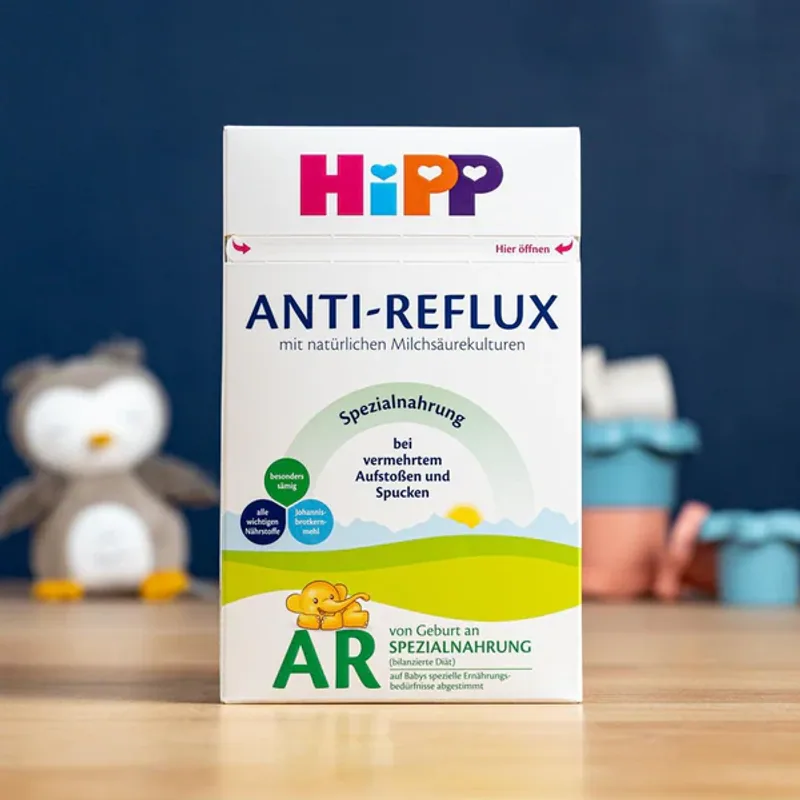
#1 · Best EU anti-reflux (locust bean gum thickener + organic)
HiPP AR Stage 1
EU Organic Stage 1 with locust bean gum thickener — locust bean gum is the EU-preferred AR thickener vs the rice starch used in Enfamil AR. Lactose-only carbohydrate, GOS prebiotic. The bioactive-rich AR pick. Personally imported via Organic's Best. ~$1.95/oz.
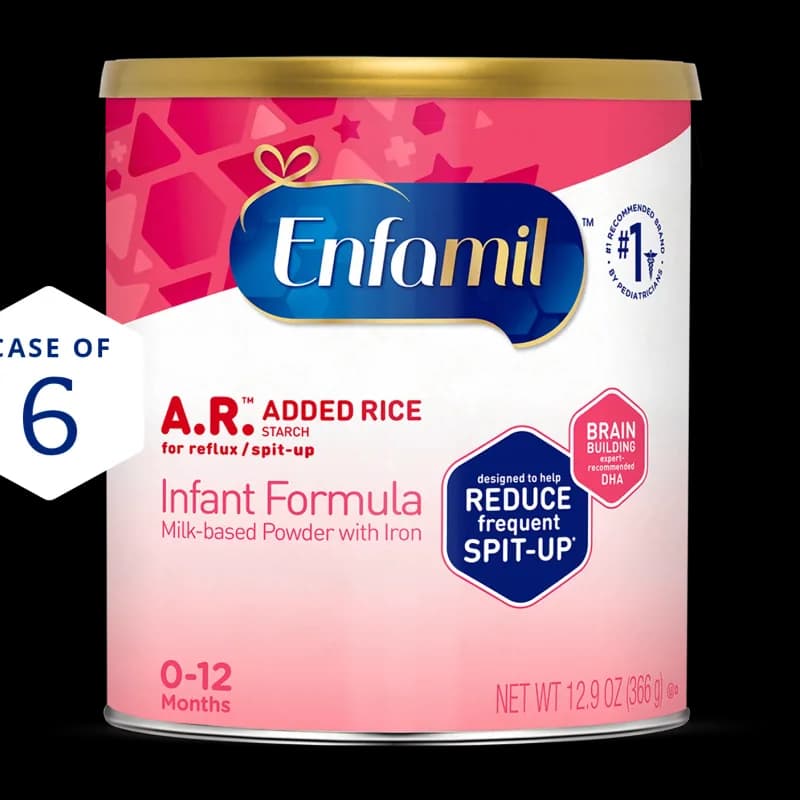
#2 · Best US-retail anti-reflux (rice starch thickener)
Enfamil A.R.
FDA-registered AR formula with added rice starch that thickens in the stomach to reduce regurgitation. Most-prescribed anti-reflux formula in US pediatric practice. Broad retail availability and insurance coverage. Contains corn syrup solids — non-EU regulatory composition. ~$1.85/oz.
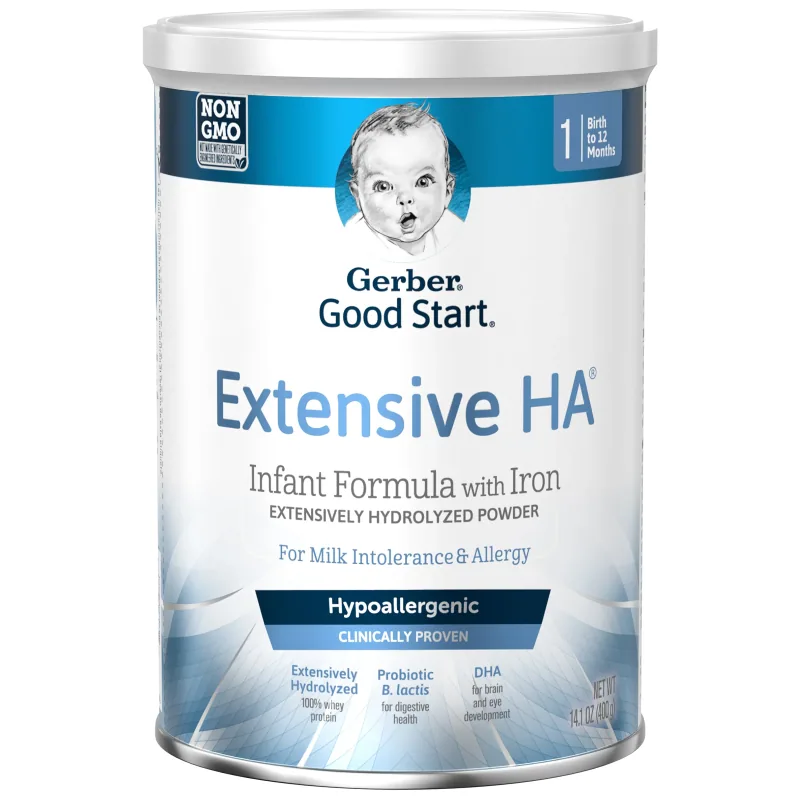
#3 · Best for reflux + CMPA combination (whey-eHF)
Gerber Extensive HA
Extensively hydrolyzed whey empties faster from the stomach than casein-hydrolyzed alternatives, reducing both CMPA reactivity and reflux symptoms. With Bifidobacterium lactis Bb12 probiotic. Pediatrician-prescribed for the dual-indication subset. ~$3.05/oz.

#4 · Best comfort formula for non-AR reflux symptoms
Enfamil Gentlease
Partially hydrolyzed milk-based comfort formula with reduced lactose and easy-to-digest proteins. NOT a true anti-reflux formula but often recommended for infants with mild reflux plus general fussiness. Broad US retail. ~$1.65/oz.
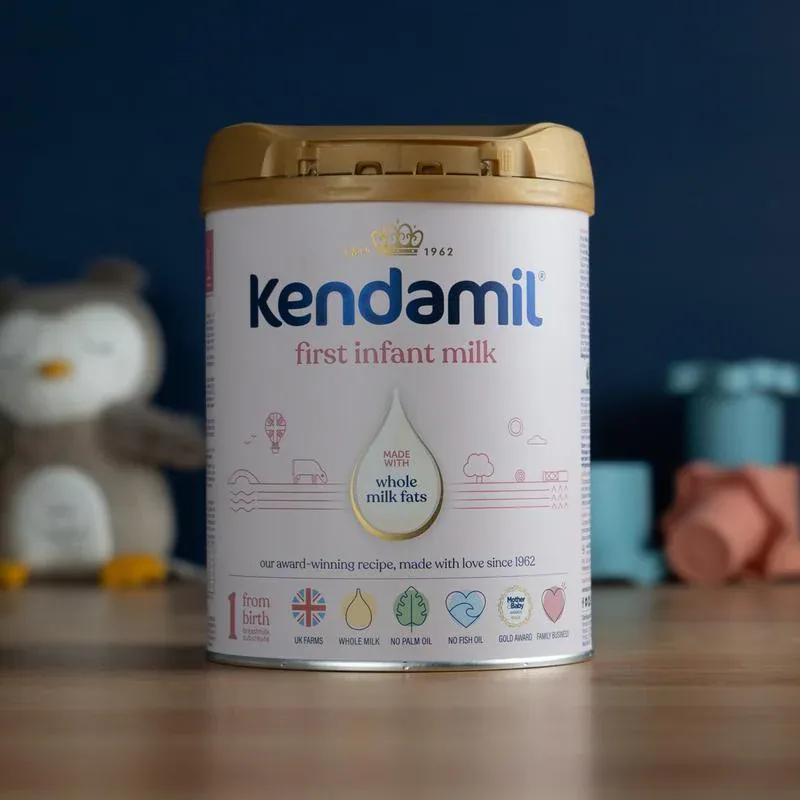
#5 · Best whole-milk-fat option for mild reflux
Kendamil Classic Stage 1
Whole-cow-milk fat is heavier and often delays gastric emptying — which can worsen reflux in some infants but help others. UK Red Tractor, no added palm, no soy. The whole-milk-fat alternative when standard formulas correlate with reflux symptoms. ~$1.63/oz.
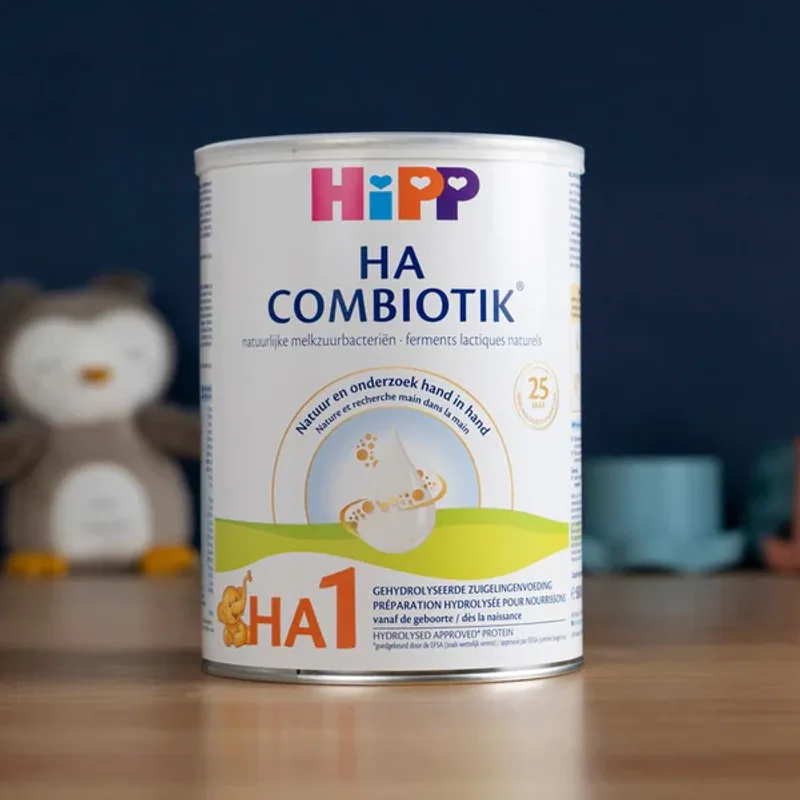
#6 · Best EU partially hydrolyzed for non-AR reflux
HiPP HA Stage 1
EU Organic partially hydrolyzed whey with GOS prebiotic and live probiotic. The pHF option for non-allergic infants with mild reflux symptoms preferring EU regulatory composition. Personally imported via Organic's Best. ~$1.85/oz.