
The water you mix with infant formula matters more than most parents realize. Three real risks sit inside a US tap: fluoride above the level that an infant kidney can clear without cumulative exposure, lead leaching from older household plumbing, and, in well-water households — nitrate, bacteria, and minerals that municipal systems would remove before delivery. None of these are hypothetical. Each has documented pediatric harm thresholds. And each has a simple, verifiable remediation that takes less effort than parents usually assume.
This guide walks through what the AAP, CDC, EPA, and FDA actually recommend, where their guidance diverges, and how to translate it into the specific bottled-water brand or filter on your countertop.
For US infants under 6 months, the AAP and CDC recommend using low-fluoride water (ideally under 0.7 mg/L) for formula preparation to minimize the risk of mild dental fluorosis on permanent teeth. Tap water in homes built before 1986 should be tested for lead, run for 2 minutes cold before use, and ideally filtered through an NSF/ANSI 53-certified device. Well water must be independently tested for nitrates and bacteria before use in any formula bottle.
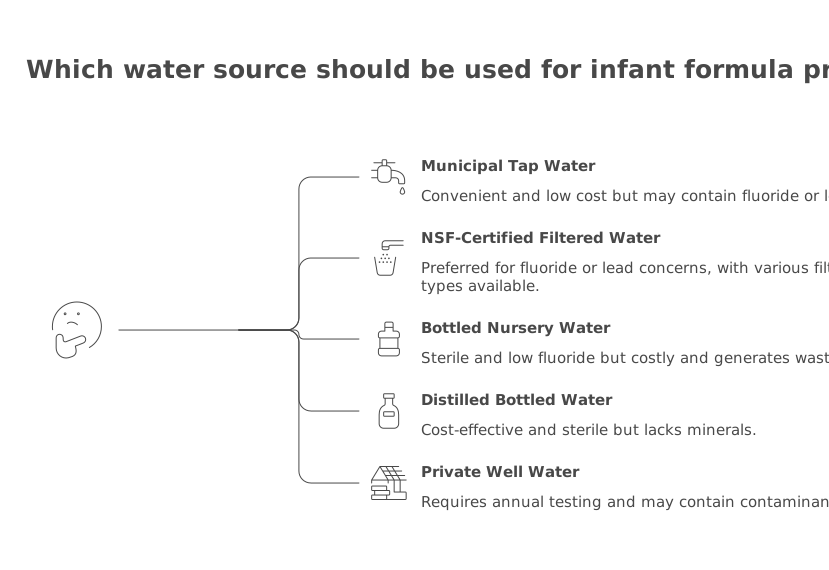
Visual generated with Napkin AI, editorial review by María López Botín. See methodology for our use policy.
The three water questions every US parent has to answer
Before the first scoop of powder, three decisions determine whether the water is safe for an infant bottle:
- Fluoride: Is the water source fluoridated, and if so, at what level? For infants under 6 months consuming exclusively formula, the AAP and CDC both acknowledge a small but real risk of mild dental fluorosis, cosmetic white streaks on the permanent teeth that don't erupt until ages 6-8, from sustained high fluoride intake during the tooth-enamel-forming window.
- Lead: Is the home's plumbing old enough that service lines, solder, or fixtures contain lead? Homes built before 1986 (when the Safe Drinking Water Act Amendments banned lead solder) are the primary concern, but lead service lines persist in many US cities regardless of home age.
- Source reliability: Is the water from a regulated municipal utility that publishes an annual Consumer Confidence Report, or from a private well where no agency tests it unless the homeowner arranges it?
Each answer routes the parent to a different remediation path.
Fluoride: the AAP position
Fluoride prevents dental caries. That is well established. The debate for infants is about the narrow developmental window during which teeth are mineralizing inside the jaw and excess fluoride intake can cause enamel to form with microscopic imperfections, the condition called dental fluorosis.
The AAP, American Dental Association, and CDC all agree on the core facts: infants under 6 months have no caries-prevention benefit from fluoride (no teeth yet erupted), and infants on exclusively reconstituted powdered formula made with fluoridated water can receive more fluoride per kg body weight than any older age group.
What the guidance actually says
- AAP (American Academy of Pediatrics, 2014 policy statement, reaffirmed): parents may occasionally use low-fluoride bottled water or reduce formula's fluoride exposure if dental fluorosis is a specific concern for their family. The AAP does not recommend switching to ready-to-feed formula on fluoride grounds alone, the fluorosis risk is described as mild and cosmetic.
- CDC: using optimally fluoridated water (0.7 mg/L) to reconstitute formula carries a small but real fluorosis risk. Parents concerned about this risk can use bottled water labeled "purified," "demineralized," "deionized," "distilled," or "produced through reverse osmosis." These typically contain little to no fluoride.
- ADA (American Dental Association): for infants whose primary source of nutrition is reconstituted formula, using optimally fluoridated water all the time can increase the chance of dental fluorosis. Consider using low-fluoride water some of the time.
The consensus is not "never use tap water", it's that families with fluoridated municipal supply and infants on exclusive powdered formula have a small, parent-controllable risk that they should be informed about.
Practical fluoride decision
If you are formula-feeding and your municipal water report shows fluoride ≥ 0.7 mg/L (the current US Public Health Service optimal level since 2015):
- Option A: Use bottled water labeled purified, distilled, deionized, or reverse osmosis. These contain negligible fluoride. Look for "fluoride added" labels and avoid them, some nursery water brands add fluoride back in, which defeats the purpose.
- Option B: Use a point-of-use reverse osmosis filter. Standard carbon pitcher filters (Brita, PUR without special cartridges) do not remove fluoride.
- Option C: Mix: use tap water for some bottles, low-fluoride bottled for others. The AAP considers this acceptable.
What "nursery water" actually is
The bottled-water brand labeled "Nursery" typically comes in two versions: with fluoride added and without. For infants under 6 months on exclusive formula, choose without fluoride added. The labeling is legally required under FDA bottled water regulation. Read the label, not the brand.
Lead: the older-plumbing risk
Fluoride is a modest, cosmetic risk; lead is categorically different. Where fluoride debate centers on mild dental fluorosis, lead exposure in infants is linked to measurable IQ loss, attention deficits, and behavioral problems, with no known safe threshold. Any household with pre-1986 plumbing, brass fixtures, or known municipal service-line issues needs to take this seriously before reconstituting formula.
Lead exposure in infants is causally linked to lower IQ, attention deficits, and behavioral problems, with no known safe threshold. The EPA action level for lead in drinking water is 15 parts per billion (ppb), but both the EPA and CDC emphasize that this is an enforcement trigger, not a safe threshold. The AAP recommends targeting exposure at 1 ppb or below in schools and childcare settings.
Where infant lead exposure comes from water
- Lead service lines: pipes that bring water from the water main to the house. Thousands of US cities still have partial lead service line inventories. The Lead and Copper Rule Revisions require utilities to publish inventories by October 2024, so most US municipal customers can now look up their own service line material online.
- Lead solder: used to join copper pipes. Banned in 1986 but homes built before that year may still have it.
- Brass fixtures: pre-2014 brass faucets and valves could legally contain up to 8% lead. The 2014 Reduction of Lead in Drinking Water Act lowered this to 0.25%.
Lead leaches from these sources when water sits stagnant in the pipes (overnight, during the workday) and when water is warm. Warm tap water extracts lead faster than cold. This is the single most important preparation detail in old-plumbing homes.
The AAP/EPA preparation protocol for older homes
- Run cold tap for 2 minutes before first use of the day, or until it runs noticeably colder. This flushes out water that has sat stagnant in the plumbing overnight.
- Never use hot tap water for formula preparation. Always draw cold and heat separately on the stove or in an electric kettle.
- Use an NSF/ANSI 53-certified filter for lead. Standard Brita and PUR pitcher filters are not NSF 53 certified for lead unless specifically labeled. Brita Elite (formerly Longlast+) and ZeroWater are common consumer options. Verify the specific model certification at NSF.org.
- Consider home lead testing. Many state health departments provide free or subsidized water testing for pregnant women and families with infants. Your local WIC office may have referrals.
The 2-minute flush is especially important because overnight stagnation produces the highest lead concentrations of the day. If you prepare a morning bottle with the first water out of the tap in a pre-1986 home, you are drawing the worst water of the 24-hour cycle.
Well water: a separate problem
About 15% of US households get water from a private well. None of these are regulated by the EPA. The homeowner is legally responsible for testing.
For infant formula preparation with well water, the AAP and CDC strongly recommend:
- Annual testing for nitrates, coliform bacteria, and total dissolved solids, at minimum. Many state labs offer subsidized testing. Cost is typically $30-150.
- Nitrate concern is unique to infants. The EPA limit for nitrate in drinking water is 10 mg/L. Infants under 6 months who consume formula made with high-nitrate water are at risk of methemoglobinemia ("blue baby syndrome"), a serious oxygen-delivery condition. This risk is near zero in municipal supply but real in agricultural-area wells where fertilizer runoff can push nitrate above 10 mg/L.
- Boiling does not remove nitrate. It concentrates it. If nitrate is elevated, switch to bottled water or install a reverse osmosis system, not a carbon filter.
Boiling: what it does, doesn't do
The WHO, and the UK NHS recommend preparing formula with water heated to 70°C (158°F) to kill Cronobacter sakazakii in the powder. The CDC historically said tap water sufficient if from a municipal source, but in 2023 updated guidance to align closer with WHO for infants under 2 months and for high-risk infants (preemies, immunocompromised).
Boiling water:
- Kills bacteria (Cronobacter, E. coli, Salmonella). Effective.
- Removes chlorine by evaporation. Effective.
- Concentrates lead, arsenic, nitrate, and fluoride as water evaporates. It does not remove these.
If you need to both boil (for Cronobacter risk) and reduce a chemical contaminant (lead, nitrate), filter first and boil the filtered water.
For the full WHO/CDC/FDA preparation consensus, water temperature, cooling, storage times, hang times, see our companion article on how to prepare baby formula safely.
Bottled water: reading the FDA label
FDA bottled water standards of identity define each category (21 CFR 165.110):
| Label | What it means | Fluoride |
|---|---|---|
| Purified | Treated by distillation, deionization, or RO to meet USP Purified Water standard | Near zero |
| Distilled | Produced by distillation only | Near zero |
| Deionized / Demineralized | Minerals removed via ion exchange | Near zero |
| Reverse osmosis | Purified specifically via RO membrane | Near zero |
| Spring | Comes from an underground formation flowing to surface | Variable, can be high |
| Mineral | Contains ≥250 ppm total dissolved solids from source | Variable, can be high |
| Artesian | From a confined aquifer under positive pressure | Variable |
| Drinking water | Basically bottled municipal water | Follows source utility |
For infant formula preparation in a fluoride-concerned household, choose purified, distilled, deionized, or RO. Avoid spring, mineral, and artesian without checking the lab analysis on the bottler's website.
Important: "purified" bottled water is not sterile. The FDA regulates bottled water as a food, with a heterotrophic plate count standard, but does not require sterility. For Cronobacter prevention in powdered formula, bottled water should still be heated to 70°C unless using pre-sterile ready-to-feed formula.
What this means in practice
For the majority of families, the preparation water that works:
- New construction (post-2014), municipal supply, standard risk infant: tap water, run cold for 30 seconds, heated to 70°C, is acceptable per current CDC guidance. Low-fluoride bottled is a reasonable substitute if fluorosis is a family concern.
- Older home (pre-1986), municipal supply: 2-minute cold flush, cold tap only, NSF 53 filter recommended. Test water annually if the service line inventory shows lead.
- Well water: annual testing non-negotiable. If nitrate is near or above 10 mg/L, switch to bottled purified water or install RO before preparing formula.
- Fluorosis-concerned, exclusive formula, under 6 months: rotate bottled purified water for most bottles; tap for occasional use is fine.
For the underlying preparation workflow, sterilization, temperature, storage, see how to prepare baby formula safely. If you're evaluating which formula to use once the water question is settled, the Infant Formula Atlas documents 50 and brands with full label transparency.
FAQ
Can I use tap water for baby formula in the United States?
Do I need special 'nursery water' for formula?
Is fluoride in tap water dangerous for babies?
Does boiling water remove lead?
Do Brita or PUR pitcher filters remove lead or fluoride?
How do I find out if my water has lead?
Is well water safe for baby formula?
Can I use a Keurig or hot water dispenser for formula?
Primary sources
- American Academy of Pediatrics, "Fluoride Use in Caries Prevention in the Primary Care Setting." Policy Statement, Pediatrics, 2014, reaffirmed 2020. publications.aap.org
- CDC, "Infant Formula and Fluorosis." cdc.gov/fluoridation
- EPA, "Basic Information about Lead in Drinking Water." epa.gov
- EPA, "Lead and Copper Rule Revisions." Federal Register, 2021; service line inventory compliance deadline October 16, 2024.
- FDA, "Bottled Water Everywhere: Keeping it Safe." 21 CFR 165.110. fda.gov
- WHO, "Safe Preparation, Storage and Handling of Powdered Infant Formula Guidelines." 2007. who.int
- American Dental Association, "Fluoride in Water: Infant Formula." ada.org
Related reading
This site provides research and comparisons, not medical advice. Consult your pediatrician before changing your baby's formula.