
Infant formula comes in three distinct formats: powder (the most common, requires reconstitution with water), ready-to-feed (RTF, pre-prepared sterile liquid), and liquid concentrate (mix with equal water before feeding). Each format has meaningful safety, cost, and practical trade-offs that are under-explained in most pediatric formula guidance. Powder is by far the most common and most affordable but carries specific Cronobacter sakazakii preparation risk. RTF is sterile at manufacture (eliminating Cronobacter risk) but costs 2-3x more. Concentrate sits between the two. The format choice matters particularly for young newborns, preterm infants, immunocompromised infants, and travel or preparation-constrained situations. This guide covers when to use each format and why.
Powder infant formula is the default format, cheapest, most widely available, but requires 70°C water reconstitution to address Cronobacter sakazakii risk. Ready-to-feed (RTF) is sterile at manufacture (no Cronobacter risk) but costs 2-3x more per ounce. Liquid concentrate requires equal-water mixing and carries intermediate risk/cost. For newborns under 2 months, immunocompromised infants, preterm infants, and specific high-risk situations, RTF is AAP/CDC-recommended. For healthy term infants in standard home environments, powder prepared per WHO 70°C protocol is safe and practical. Format choice is clinically meaningful in specific contexts, not just parental preference.
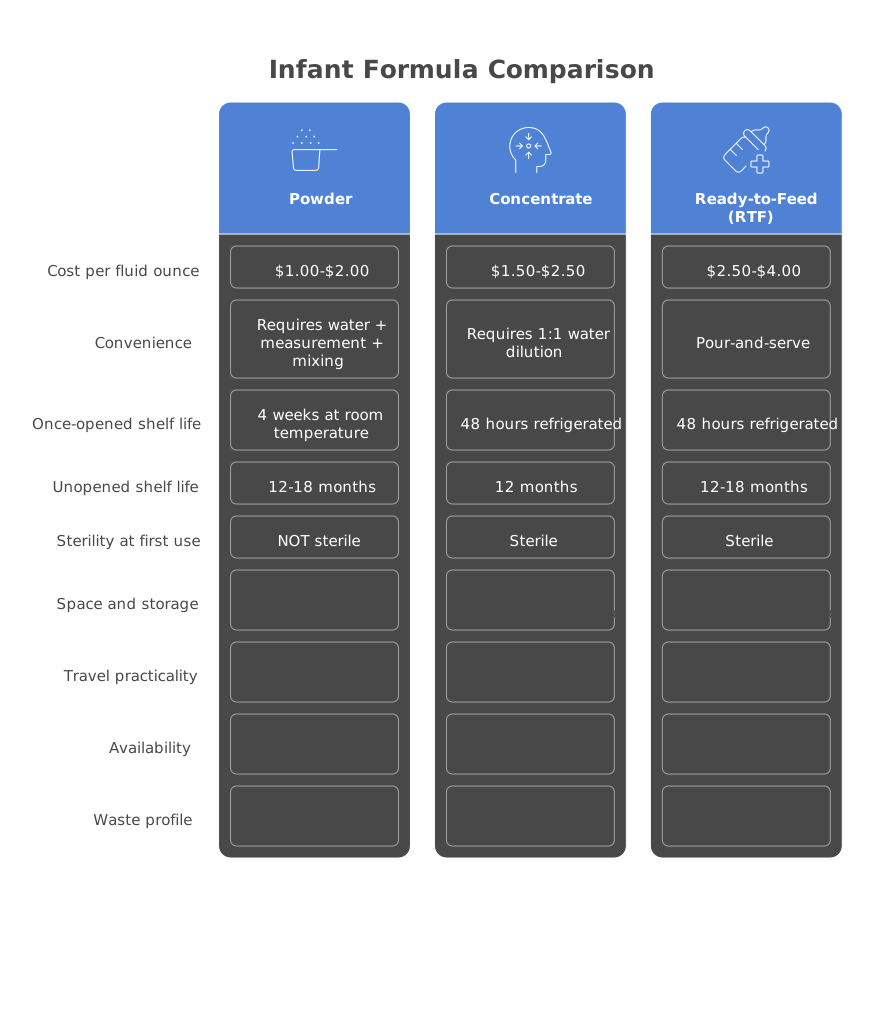
Visual generated with Napkin AI, editorial review by María López Botín. See methodology for our use policy.
The three formats
1. Powder (most common)
- What it is: Dry powder in a can; mixed with water to feed
- Availability: Standard format for essentially all infant formula brands
- Cost: Lowest per-ounce format, typically $1-2 per feeding
- Preparation: Requires measuring, water, mixing, and following 70°C water protocol per WHO/CDC
- Shelf life (opened): Typically 4 weeks once opened
- Storage (prepared): 2 hours room temp, 24 hours fridge
- Sterility: Not sterile, powder can carry Cronobacter sakazakii and other bacteria
2. Ready-to-Feed (RTF)
- What it is: Pre-prepared liquid formula in bottles or containers, sterile
- Availability: Most major brands offer RTF variants at premium pricing
- Cost: Highest per-ounce format, typically 2-3x powder cost
- Preparation: None required, pour into bottle and feed
- Shelf life (opened): Typically 48 hours in fridge
- Storage (opened): 24 hours refrigerated
- Sterility: Sterile at manufacture, no Cronobacter risk
3. Liquid concentrate
- What it is: Concentrated liquid requiring equal-water dilution
- Availability: Less common than powder; major brands offer concentrate versions
- Cost: Between powder and RTF, typically 30-50% more than powder
- Preparation: Measure equal parts concentrate and water, mix
- Shelf life (opened): 48 hours in fridge
- Sterility: Sterile at manufacture (like RTF before dilution); requires clean water source for dilution
Cost comparison
For a typical 4-month-old infant consuming ~30 oz/day:
| Format | Per-oz cost | Monthly cost (~900 oz) |
|---|---|---|
| Powder (major brand) | $0.25-0.35 | $225-315 |
| Powder (private label) | $0.15-0.25 | $135-225 |
| Liquid concentrate | $0.40-0.55 | $360-495 |
| Ready-to-feed (RTF) | $0.50-0.85 | $450-765 |
RTF for exclusive feeding is a significant cost consideration — roughly 2-3x powder. Most families use RTF selectively rather than exclusively.
Sterility and Cronobacter: why this matters
Cronobacter sakazakii is a gram-negative bacterium that causes rare but devastating infections in young infants:
- Sepsis
- Meningitis
- Necrotizing enterocolitis
- Case fatality rates 30-40% in confirmed infections
Powder Cronobacter exposure pathways
- Environmental contamination during manufacturing, powder is not sterile; trace Cronobacter in the powder is possible
- Contaminated water used for reconstitution
- Contaminated equipment (bottles, nipples, scoops)
- Reconstitution at insufficient temperature, water below 70°C doesn't kill any Cronobacter present
The 2022 Abbott Sturgis recall demonstrated this risk in practice — Cronobacter contamination at the manufacturing facility led to infant illnesses and deaths, triggering the national formula shortage.
For the full recall context: Abbott 2022 recall aftermath.
RTF eliminates Cronobacter risk
RTF and concentrate are sterile at point of manufacture, processed at high temperatures that eliminate Cronobacter and most other bacteria. No reconstitution with potentially contaminated water needed.
For newborns under 2 months, very low birth weight infants, or immunocompromised infants, RTF eliminates a real clinical risk that powder preparation requires active management to address.
When RTF is specifically recommended
AAP, CDC, and pediatric clinical guidance recommend RTF for:
1. Newborns under 2 months (especially vulnerable period)
Immune system immaturity makes Cronobacter infection more severe in very young infants. RTF for exclusive early-weeks feeding is a reasonable clinical choice where budget allows.
2. Premature infants or very low birth weight
Preterm infants (< 37 weeks) and very low birth weight infants have substantially elevated Cronobacter risk. NICUs commonly use RTF or sterile reconstitution protocols.
For context: formula for premature infants.
3. Immunocompromised infants
Infants with diagnosed immunodeficiency (primary or secondary) face elevated infection risk generally; RTF reduces the powder-specific risk pathway.
4. Hospital or NICU use
Medical facilities typically use RTF for infant feeding to avoid preparation risk in the clinical environment.
5. Travel and transit
When clean water, proper equipment, and 70°C water access may be uncertain: RTF eliminates preparation variables. See:
6. Daycare and childcare
Some daycare programs prefer RTF for multiple infants to reduce preparation variability and contamination risk.
7. Medically-compromised feeding situations
Infants recovering from GI surgery, with compromised gut integrity, or in specific medical situations may benefit from RTF sterility.
When powder is appropriate (most families)
For healthy term infants in standard home environments, powder prepared per WHO/CDC protocols is safe and the standard choice:
- Healthy infants at home, powder with proper preparation
- Budget-conscious families, powder cost-effectiveness
- Routine feeding at home, full preparation control available
The key is following proper preparation:
- 70°C water reconstitution
- Sterilized bottles and equipment
- Proper storage rules (2 hours room temp, 24 hours fridge)
- Following manufacturer's exact ratios
For the full preparation protocol: How to prepare baby formula safely. For related: Formula preparation mistakes to avoid.
Liquid concentrate: the middle ground
Concentrate format:
- Sterile at manufacture (eliminates Cronobacter risk from formula itself)
- Requires clean water for dilution (water source matters)
- Intermediate cost vs powder and RTF
- More portable than RTF (smaller volume before dilution)
- Less common in US retail than powder or RTF
For parents who want Cronobacter risk reduction but not the full cost of RTF, concentrate is a reasonable option. Availability is limited compared to powder.
Practical format strategies
Strategy 1: Exclusive RTF for 0-2 months, transition to powder
- Expensive but maximum safety during highest-risk infant period
- Transition to powder at 2-3 months once immune system matures
- Effective for families with budget to support initial RTF phase
Strategy 2: RTF for specific scenarios, powder as default
- Powder at home for routine feedings
- RTF for travel, overnight, daycare, illness recovery
- Most cost-efficient approach for families managing multiple variables
Strategy 3: Exclusive powder with rigorous protocol
- Full commitment to WHO/CDC preparation protocol
- 70°C water, sterilization, proper storage
- Most cost-effective; safe for healthy term infants
Strategy 4: Exclusive RTF
- Primarily for medical indications (preterm, immunocompromised, NICU) or strong values preference
- Highest cost; eliminates preparation variables entirely
Strategy 5: RTF for nighttime, powder for daytime
- Reduces overnight preparation complexity and contamination risk
- Balances cost (day) and convenience/safety (night)
Specialty formula format considerations
Specialty formulas (CMPA, preterm, anti-reflux)
Specialty formulas (Nutramigen, Alimentum, EleCare, Neocate, Similac NeoSure) are available in both powder and RTF formats. For medically-compromised infants specifically, RTF is commonly preferred:
Cost impact is substantial, specialty formula RTF reaches $3-5/oz, multiplying already-expensive specialty feeding costs.
For CMPA clinical context: Cow milk protein allergy explained.
Ready-to-feed insurance considerations
Some insurance plans cover RTF formulas with medical necessity documentation, particularly for:
- Preterm infants (Similac NeoSure RTF)
- CMPA with specific clinical indications
- Immunocompromised infants
- Post-surgical feeding
Contact insurance directly for RTF coverage questions. See also: WIC, insurance, and formula costs.
What RTF doesn't solve
Despite sterility advantages, RTF doesn't eliminate all infant feeding risk factors:
- Bottle contamination, unsterile bottles still introduce bacteria regardless of formula format
- Post-feeding storage, 1 hour discard rule still applies
- Equipment sanitation, nipples and bottles need cleaning
- Temperature: RTF may need warming depending on infant preference
- Overall hygiene, handwashing before preparation still matters
RTF reduces one specific risk pathway (formula-as-source contamination) while other risk pathways remain.
Environmental and packaging considerations
Powder
- Cans typically metal (some brands plastic)
- Least environmental impact per serving (weight ratio)
- Most recyclable in US municipal programs
Concentrate
- Typically cans or specialized packaging
- Intermediate environmental impact
RTF
- Small plastic bottles or paperboard containers
- Highest packaging weight per serving
- Higher environmental footprint per feeding
- Less typically recyclable due to mixed materials
For environmentally-conscious families, powder is the lower-impact choice if preparation safety is manageable.
Editorial notes from María
The format decision is another area where pediatric formula guidance is often incomplete. Powder is presented as the default without discussion of Cronobacter risk; RTF is priced at a premium without explanation of why it's worth the cost for specific populations.
For most healthy term infants in homes with competent caregivers, powder is a reasonable choice provided preparation follows WHO/CDC protocols. For preterm infants, immunocompromised infants, and during high-risk periods, RTF is worth the cost. For travel and daycare scenarios, RTF for those specific uses makes sense.
The 2022 Abbott crisis taught many families that powder Cronobacter risk is real, not theoretical. Understanding when format matters helps families make informed decisions without either under- or over-spending on format.
For related content:
- How to prepare baby formula safely
- Formula preparation mistakes
- Storing baby formula
- Traveling with baby formula
FAQ
Is ready-to-feed formula safer than powder?
Why is ready-to-feed formula so expensive?
When should I use ready-to-feed formula?
What is liquid concentrate formula?
Is powder formula less safe than RTF?
Can I mix RTF with powder formula?
Does RTF eliminate all formula-feeding risks?
Which brands offer ready-to-feed formula?
Primary sources
- WHO: Safe Preparation, Storage and Handling of Powdered Infant Formula Guidelines. who.int
- CDC: Cronobacter Prevention. cdc.gov
- FDA: Cronobacter Contamination in Powdered Infant Formula Q&A. fda.gov
- AAP: HealthyChildren.org infant feeding and formula preparation. aap.org
- NASPGHAN: Pediatric nutrition clinical guidelines. naspghan.org
Related reading
- Head-to-head format comparison, Bobbie Ready-to-Use vs HiPP Dutch Stage 1 (RTF convenience vs EU powder import, when format decides the choice)
- Bobbie brand hub (powder and RTF variants)
- Similac brand hub (full format coverage)
This site provides research and comparisons, not medical advice. Consult your pediatrician before changing your baby's formula.