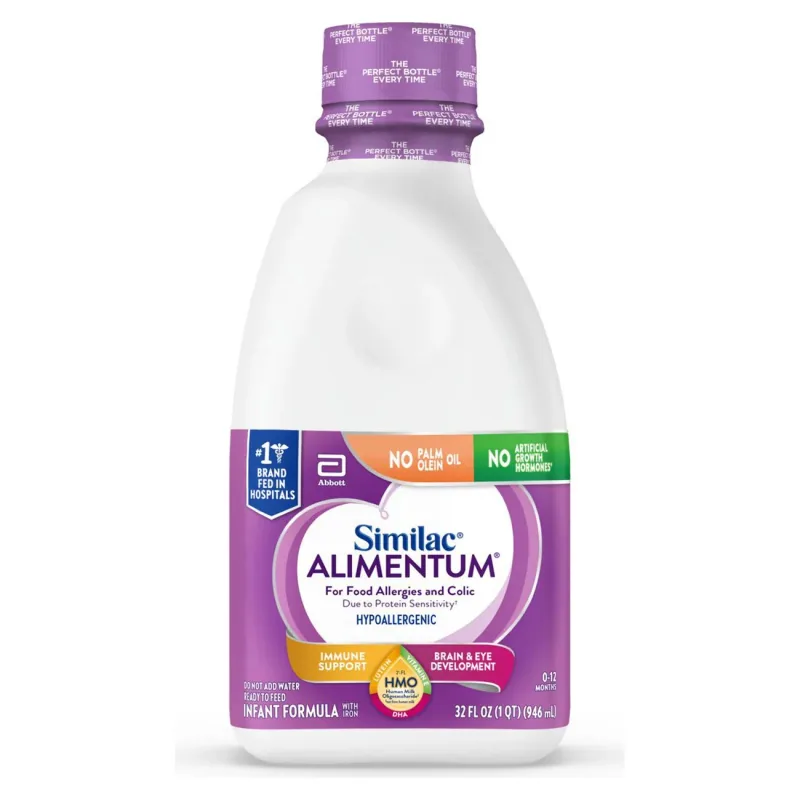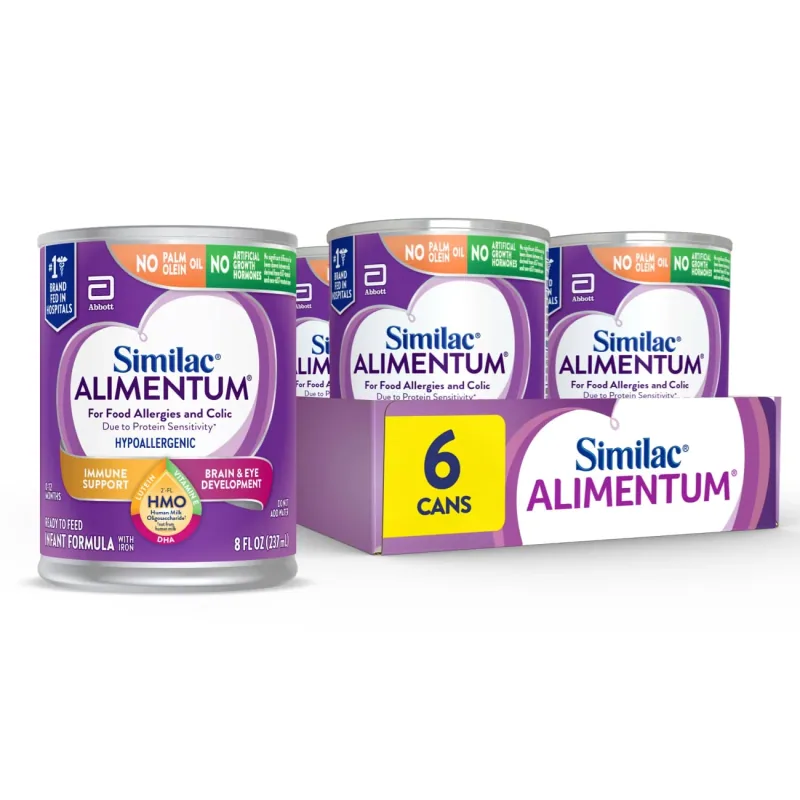
Reference coverage. Alimentum is a specialty medical formula for diagnosed cow-milk protein allergy. We cover it alongside Nutramigen because they are the two most-prescribed US eHF options, and parents whose pediatrician has prescribed "hypoallergenic formula" often need to choose between them. Honest editorial, no commercial funnel.
Similac Alimentum is Abbott Laboratories' extensively hydrolyzed infant formula for diagnosed cow-milk protein allergy (CMPA), in continuous production since 1990. Alongside Nutramigen (from Enfamil/Mead Johnson), Alimentum is one of the two most-prescribed US eHF options when a pediatrician needs to place a CMPA-diagnosed infant on hypoallergenic formula. Both are FDA-registered as exempt infant formulas under 21 CFR 107.30; both have been in clinical use for decades; the choice between them often comes down to pediatrician familiarity, infant acceptance, and insurance coverage.
What makes Alimentum distinctive
Three structural choices define Alimentum's formulation:
- Extensively hydrolyzed casein as the protein base. Casein protein is broken into peptides under 3,000 daltons (often below 1,500 daltons) via enzymatic hydrolysis. At this peptide size, the immune system typically doesn't recognize the fragments as cow-milk protein, which is what makes the formula appropriate for CMPA. See our hydrolyzed protein explainer for the full distinction between partial and extensive hydrolysis.
- Corn maltodextrin and sugar as the carbohydrate base in the powder version (39% maltodextrin and 9% sugar). The ready-to-feed liquid version uses sugar (sucrose) and modified tapioca starch instead. This matters: parents should not assume the powder and RTF have the same carb profile. Both are lactose-free (hydrolysis removes lactose).
- Medium Chain Triglycerides (MCT) in the fat blend, a specialty ingredient used for malabsorption-adjacent indications. MCTs are absorbed more directly than long-chain triglycerides, reducing GI work.
- 2'-FL HMO included: Alimentum markets itself as "the first and only hypoallergenic extensively hydrolyzed casein-based infant formula with 2'-FL for immune support." A genuine differentiator vs Nutramigen.
- No live probiotic. Unlike Nutramigen's Enflora LGG version, Alimentum doesn't include a probiotic strain. This is a real clinical tradeoff: LGG has documented evidence for accelerating CMPA tolerance. Parents choosing between the two can weigh HMO (Alimentum) vs probiotic (Nutramigen).
Alimentum is lactose-free (the hydrolysis process strips most lactose) and medically appropriate for CMPA where standard formula is not. It is NOT appropriate for generalized fussiness, gassiness, or non-diagnosed concerns, for those, see our infant lactose intolerance explainer (Phase II).
When Alimentum is indicated
- Confirmed CMPA diagnosed by pediatrician or pediatric allergist.
- Milk protein intolerance that pediatrician has distinguished from general fussiness.
- Transition from failed standard formula where CMPA has been confirmed through elimination trial.
Not indicated for:
- General "sensitive" formula use without diagnosis.
- Perceived lactose intolerance (rare in infants; different category).
- Colic or fussiness without medical evaluation.
Alimentum vs Nutramigen: the head-to-head
For parents whose pediatrician has prescribed "hypoallergenic formula" and needs to choose between Alimentum and Nutramigen:
| Dimension | Alimentum | Nutramigen |
|---|---|---|
| Protein hydrolysis | Extensively hydrolyzed casein | Extensively hydrolyzed casein |
| Primary carb (powder) | Corn maltodextrin and sugar | Corn syrup solids and modified corn starch |
| Primary carb (RTF liquid) | Sugar and modified tapioca starch | , |
| HMO (2'-FL) | Yes | No |
| Probiotic | None | LGG (Enflora LGG) |
| MCT oil | Yes | No |
| Taste | Slightly sweeter (sugar-based in RTF) | More bitter (corn-syrup based) |
| Manufacturer | Abbott (Similac parent) | Mead Johnson / Reckitt (Enfamil parent) |
| Indication | CMPA | CMPA |
| US market position | ~50% of US eHF volume | ~50% of US eHF volume |
| Insurance coverage | Broadly covered with prescription | Broadly covered with prescription |
The clinical choice often hinges on:
- Probiotic preference, if LGG's tolerance-acceleration evidence matters to the prescribing physician, Nutramigen wins.
- Infant acceptance, some CMPA infants reject one and accept the other due to taste. The sucrose-based Alimentum is sometimes more accepted by infants transitioning from standard formula.
- Insurance formulary, specific insurance plans may cover one preferentially. Check your plan.
- Prior use in sibling, many families stick with the one that worked for an older CMPA child in the family.
Neither is nutritionally superior to the other. Both are safe, effective, and evidence-based for CMPA indication.
Regulatory posture
- FDA-registered as exempt infant formula under 21 CFR 107.30 (specialty medical food classification).
- Sold via US retail with prescription requirement for insurance coverage (same framework as Nutramigen).
- WIC coverage in most states with physician documentation.
Availability and cost
Alimentum is available at major US retail (CVS, Walgreens, Target, Walmart, Amazon) without prescription at point of purchase, the prescription is for insurance/WIC coverage, not the purchase itself. Price is similar to Nutramigen: roughly $42-50 per can, significantly higher than standard formula.
Taste and transition
Alimentum is described by parents as having a vanilla-adjacent sweet note (from sucrose) with a slightly metallic aftertaste typical of hydrolyzed formulas. Most infants accept Alimentum within 3-7 days of transition. For comparison, Nutramigen is more uniformly described as bitter/sour.
Common transition strategies:
- Mix Alimentum with breast milk (if available) during phase-in.
- Start with small quantities and increase gradually.
- Consistent offering, babies usually adjust within a week.
Infants who reject Alimentum after 2 and weeks of consistent offering may need Nutramigen (slightly different taste), or an amino acid formula (EleCare, Puramino, Neocate) if eHF as a class isn't tolerated.
Recall history
- February 2022: Alimentum was included in Abbott's Sturgis, Michigan recall alongside Similac and EleCare powder formulas. Cronobacter sakazakii investigation tied to the Sturgis facility; infant illnesses and deaths documented. See our Similac brand page for the full timeline of the 2022 event.
- Post-2022, Alimentum production returned after Abbott rebuilt the Sturgis facility and restarted manufacturing.
No broad active recall affecting Alimentum as of April 2026.
My take on Alimentum for CMPA parents
If your pediatrician has prescribed hypoallergenic formula for diagnosed CMPA and you're choosing between Alimentum and Nutramigen:
- If HMO content matters (2'-FL's immune/microbiome evidence in CMPA infants): Alimentum (the only eHF with 2'-FL).
- If probiotic matters (LGG's evidence for accelerating CMPA tolerance acquisition): Nutramigen.
- If MCT oil matters (malabsorption, fat-absorption concerns): Alimentum (includes medium-chain triglycerides).
- If taste acceptance is an issue (your baby rejects bitter formulas): Alimentum's RTF version is sugar-based and often more palatable.
- If your infant has sucrose intolerance (rare but exists): Nutramigen (uses corn syrup solids, no sucrose).
- If insurance covers one preferentially: follow the coverage.
Both are legitimate first-line US eHF options. Neither is inferior. The clinical choice is individual, and there is no universal "best" between the two.
For parents exploring without a CMPA diagnosis: start with a pediatrician visit. eHF formulas are specialty medical products, not a general "sensitive" option. Using Alimentum empirically without indication is expensive, unnecessary, and may delay appropriate evaluation of underlying cause.
When eHF isn't enough: moving to amino acid formulas
About 5-10% of CMPA infants don't tolerate extensively hydrolyzed formula (Alimentum or Nutramigen), the peptide fragments, even at reduced size, still trigger an immune response in the most severe cases. For these infants, the next step is an amino acid formula (AAF): protein provided as free amino acids rather than peptides, so the immune system has nothing to recognize as "cow-milk protein."
The US AAF options:
- Similac EleCare: Abbott's AAF, paired with the Alimentum line.
- Enfamil Puramino: Mead Johnson's AAF (Reckitt-owned).
- Neocate: Nutricia's AAF, often used in the most severe CMPA and multi-protein-intolerance cases.
Transitioning from eHF to AAF is a physician-guided decision. Typical triggers: persistent GI symptoms (blood or mucus in stool, intractable vomiting), skin symptoms (severe eczema that doesn't respond), or failure-to-thrive after 2-4 weeks on a properly-indicated eHF. AAF formulas are more expensive (~$50-60 per can) and taste more unusual, but they solve the allergy problem completely for infants who don't tolerate eHF.
Most CMPA infants do NOT need AAF: Alimentum or Nutramigen is sufficient. AAF is the escalation tier, not the default.
Alimentum in the broader hypoallergenic landscape
Understanding where Alimentum sits helps parents make sense of the full CMPA-response hierarchy, from marketing-positioned "sensitive" products through partial hydrolysates, extensively hydrolyzed formulas, and amino-acid formulas, and why clinicians recommend eHF like Alimentum as first-line treatment for diagnosed CMPA rather than stepping through the lighter tiers first.
Step 1 (partial hydrolysis, "sensitive" formulas): HiPP HA, Gerber Good Start GentlePro, Enfamil Gentlease. NOT appropriate for diagnosed CMPA. Partial hydrolysis reduces but does not eliminate immune recognition, the peptides are still large enough for the immune system to potentially react.
Step 2 (extensive hydrolysis, eHF): Alimentum, Nutramigen with Enflora LGG, Gerber Extensive HA. First-line prescription for diagnosed CMPA. Peptide size reduced below immune-recognition threshold for the majority of CMPA cases.
Step 3 (amino acid: AAF): EleCare, Puramino, Neocate. Second-line when eHF fails or for severe multi-protein intolerance. No peptides — protein is pure free amino acids.
Moving up the hierarchy = more aggressive allergen removal, higher cost, more challenging taste acceptance. Don't skip steps unless a physician directs it. Starting with Step 2 (eHF) for diagnosed CMPA is the standard approach; Alimentum and Nutramigen are the two options at this tier.
All Similac Alimentum formulas
Every Similac Alimentum SKU currently documented in the Atlas appears below. Each entry links to the individual product record with verified nutrition per 100 ml, resolved ingredients, certification status, and retail availability. For a side-by-side comparison against other brands, add any of these SKUs to the compare tool; for one-dimension filters (origin, protein, certifications, red flags) start from the Atlas root.
FAQ
Is Alimentum the same as Similac?
Can I buy Alimentum without a prescription?
What's the difference between Alimentum and Nutramigen?
Is Alimentum safe after the 2022 Abbott recall?
Does Alimentum have lactose?
How long does it take to see if Alimentum is working for CMPA?
Sources
- Similac Alimentum product page: https://www.similac.com/products/baby-formula/alimentum.html
- Abbott Nutrition corporate: https://www.abbottnutrition.com/
- FDA 21 CFR 107.30 (exempt infant formula): https://www.ecfr.gov/current/title-21/chapter-I/subchapter-B/part-107
- FDA Sturgis 2022 investigation: https://www.fda.gov/food/outbreaks-foodborne-illness/fda-investigation-cronobacter-infections-powdered-infant-formula-february-2022
- AAP guidance on CMPA management: https://pediatrics.aappublications.org/
Related reading
This site provides research and comparisons, not medical advice. Consult your pediatrician before changing your baby's formula.