Reference coverage. Similac isn't sold by Organic's Best. We cover it because Similac is the #1 baseline parents compare European options against, and because the product line is large, complex, and changes every few years as Abbott repositions against newer competitors. Honest reference coverage, no commercial funnel.
Similac is the most widely-used infant formula brand in the United States. Abbott Laboratories has produced Similac continuously since 1923, the brand is a century old, and in any given month it accounts for approximately a quarter of US formula market share. When a parent asks "is European formula actually better than Similac?", they're asking about the specific formulation choices Abbott has made and whether those choices match what a US family wants for their baby.
The answer is complicated because Similac isn't one product, it's a line of ~10 products with noticeably different ingredient profiles. Similac Pro-Advance is different from Similac Pro-Sensitive is different from Similac 360 Total Care. Treating them as equivalent in a comparison is the single most common mistake parents make when researching formula options.
The Similac product family
The main retail lines parents will encounter:
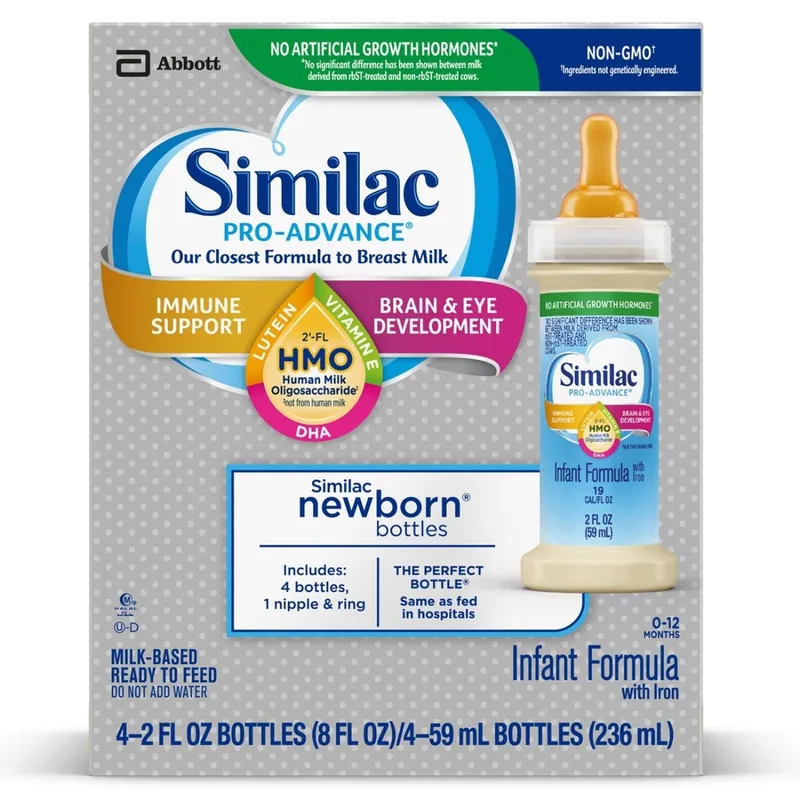
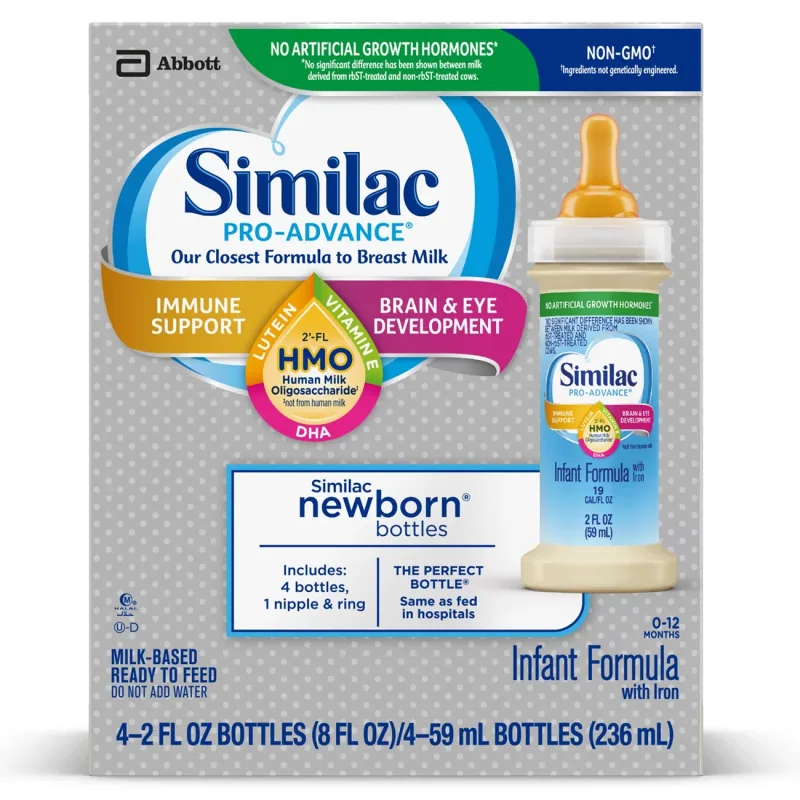
- Pro-Advance, the standard Similac for healthy term infants. Lactose is listed as the primary carbohydrate (though less purely than EU formulas, corn syrup solids is the second). Contains 2'-FL HMO as the primary prebiotic. Available widely.
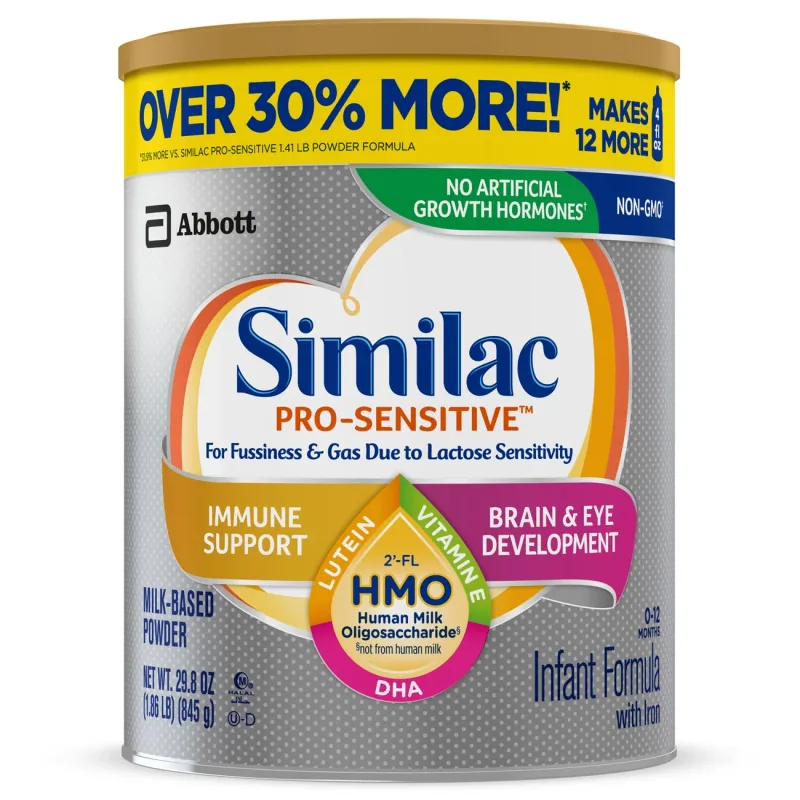
- Pro-Sensitive, reduced-lactose variant, positioned for babies with perceived lactose sensitivity. Uses corn syrup solids as the primary carbohydrate, which is the main ingredient-profile departure from EU standards.
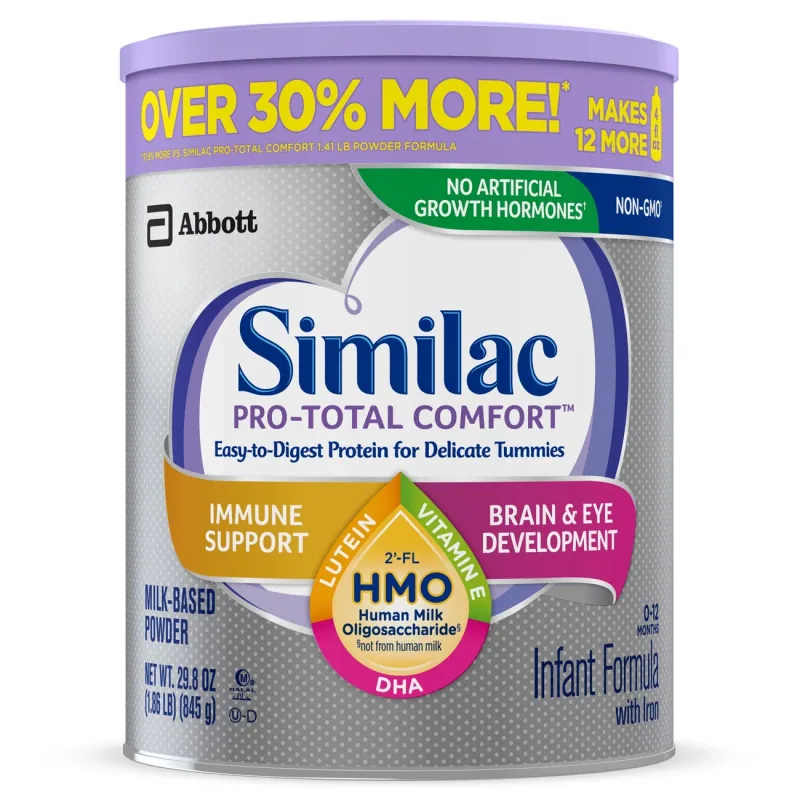
- Pro-Total Comfort, partially hydrolyzed whey protein variant. Corn syrup solids as primary carb. Marketing positioning is "gentle digestion", effectively a non-medical mild-sensitivity option.
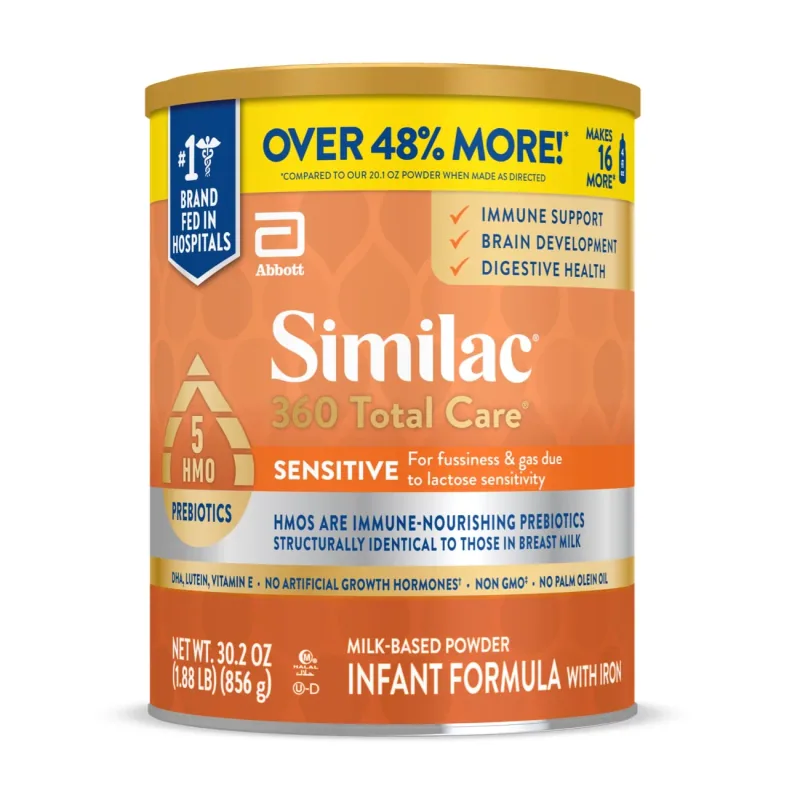
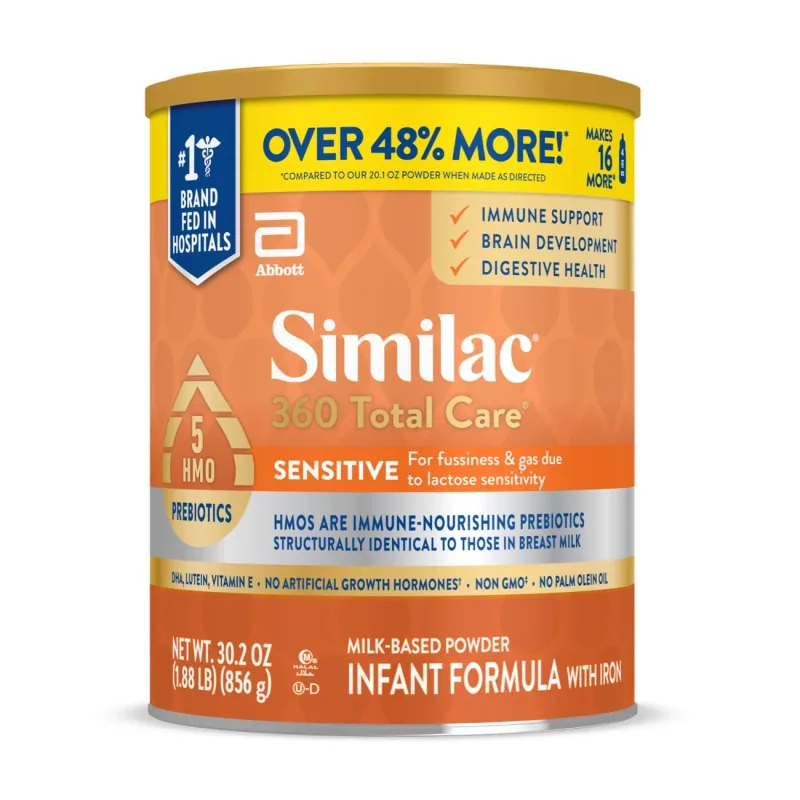
- 360 Total Care (2022+): Abbott's flagship response to newer premium brands like ByHeart. Includes 5 HMOs (2'-FL, 3'-SL, 6'-SL, LNT, DFL). Lactose-based like Pro-Advance.
- 360 Total Care Sensitive, reduced-lactose 360 variant.
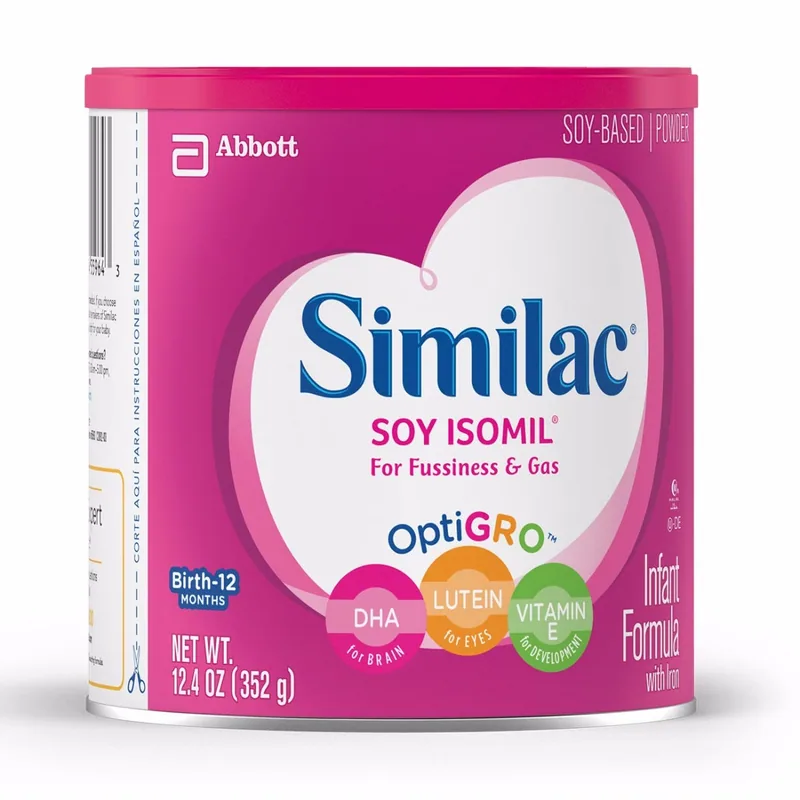
- Soy Isomil, soy-protein-based formula for medically-indicated use.
- Alimentum, extensively hydrolyzed formula (eHF) for diagnosed cow-milk protein allergy (CMPA).
- NeoSure, post-discharge formula for premature infants.
Parents often don't realize the Pro-Sensitive and Pro-Total Comfort lines use corn syrup solids as the primary carbohydrate, a formulation choice that would fail EU Regulation 2016/127 compliance. It's legal and common in the US, but it is the single most-cited reason parents switch from Similac to European organic options.
How Similac compares to European organic
For a US parent comparing Similac against the European options we cover:
- Carbohydrate: Similac Pro-Advance lists lactose first, which is good. Pro-Sensitive and Total Comfort list corn syrup solids first, which most European families would consider non-compliant. European organics (HiPP, Holle, Kendamil) all use lactose exclusively.
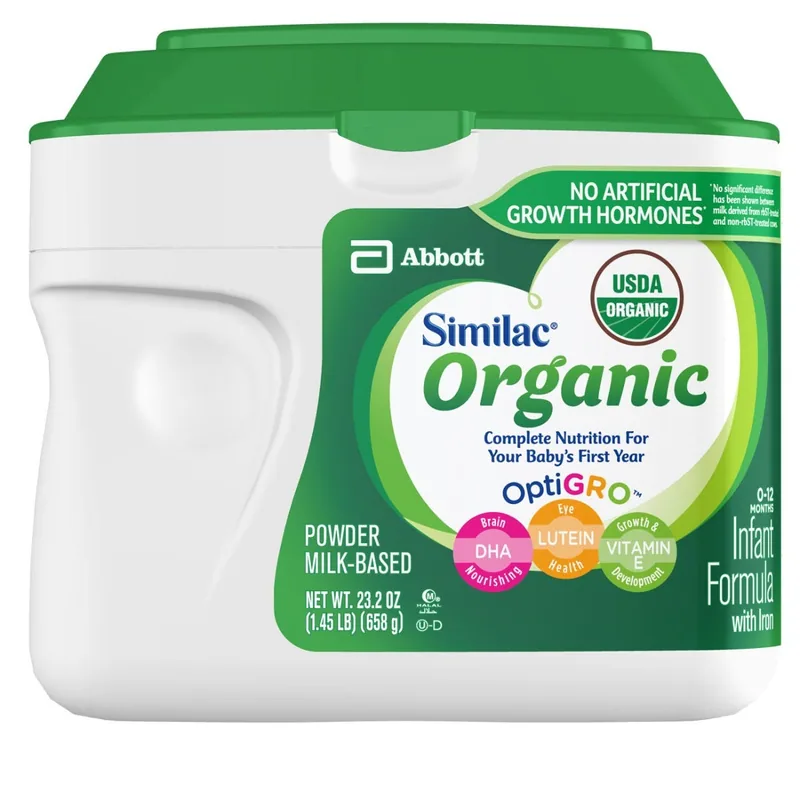
- Organic certification: Similac has no organic lines. Every European option we cover is EU Organic certified minimum.
- Prebiotic/HMO: Pro-Advance has 2'-FL; 360 Total Care has 5 HMOs — more than any single European brand. HiPP uses GOS; Holle/Kendamil/ Lebenswert don't add HMOs.
- Palm oil: Similac generally uses palm olein in its fat blend; some variants use sn-2 palmitate. See our palm oil explainer.
- Iron level: Similac iron-fortified at the US-standard ~1.8 mg/100 ml vs European organic at ~0.5-0.8 mg/100 ml. See our iron explainer for why this difference exists.
- Regulatory framework: Similac is FDA-registered. European brands ship under personal-import enforcement discretion. If FDA registration matters to you, the US options (Similac, Bobbie, Enfamil, ByHeart) win on that axis.
Our Infant Formula Atlas documents each specific Similac SKU with full nutrition panels alongside the European options for direct side-by-side comparison.
The 2022 recall: the event that reshaped the US market
The event that looms over every discussion of Similac: February 2022 recall of Similac, Alimentum, and EleCare powder formulas manufactured at Abbott's Sturgis, Michigan plant, following Cronobacter sakazakii and Salmonella investigations tied to infant illnesses and deaths.
- 4 confirmed infant illnesses (2 deaths) linked to Sturgis-manufactured formulas during the investigation period.
- The plant was shuttered for months, creating the most significant US formula shortage in decades.
- The shortage is what opened the US market to European imports at scale : HiPP, Holle, and especially Kendamil (which got FDA enforcement discretion for direct retail) grew dramatically during this period.
- The FDA has made significant changes to infant-formula oversight since, including more frequent facility inspections and clearer recall escalation procedures.
Abbott has since rebuilt the Sturgis facility and restarted production. Recent Similac batches are manufactured at facilities that were not implicated in the 2022 event.
Recall history summary
- February 2022: Class I recall of Similac, Alimentum, EleCare powder from Sturgis plant. Cronobacter sakazakii and Salmonella investigation. Infant deaths reported. Largest US formula recall in decades.
- October 2022: Recall of Similac PM 60/40 (specialty medical formula) due to potential bottom-contamination concerns.
- Smaller lot-level recalls periodically since.
The Infant Formula Atlas changelog tracks ongoing events across all brands.
My take on Similac for parents
Similac is a legitimately safe and effective infant formula for most term infants. It is FDA-registered, widely available, covered by WIC in all 50 states, and the pricing is significantly lower than European imports. For families with budget constraints or WIC coverage, Similac (especially Pro-Advance or 360 Total Care) is a reasonable choice.
The formulation is not as optimized as European organic options on a few specific axes (carbohydrate composition for the non-Pro-Advance variants, organic certification, iron level match to breastfed infants, prebiotic diversity in some SKUs). But it is FDA-registered, it is rigorously manufactured, and it supports normal infant growth and development.
The question isn't "is Similac bad?", it isn't. The question is "does the specific formulation match what I want for my baby?" For many families, especially those with WIC coverage or budget priority, yes. For families who specifically want lactose-only carbohydrate composition, organic certification, or European-style formulation, the European options remain the stronger choice.
All Similac formulas
Every Similac SKU currently documented in the Atlas appears below. Each entry links to the individual product record with verified nutrition per 100 ml, resolved ingredients, certification status, and retail availability. For a side-by-side comparison against other brands, add any of these SKUs to the compare tool; for one-dimension filters (origin, protein, certifications, red flags) start from the Atlas root.
FAQ
Is Similac safe after the 2022 recall?
Why does Similac Pro-Sensitive use corn syrup solids?
Is Similac organic?
What's the difference between Similac Pro-Advance and 360 Total Care?
Is Similac covered by WIC?
How does Similac compare to HiPP Dutch?
Sources
- Similac corporate: https://www.similac.com/
- Abbott Nutrition corporate: https://www.abbottnutrition.com/
- FDA infant formula registration database: https://www.fda.gov/food/infant-formula-guidance-documents-regulatory-information
- FDA 2022 recall information on Sturgis plant: https://www.fda.gov/food/outbreaks-foodborne-illness/fda-investigation-cronobacter-infections-powdered-infant-formula-february-2022
- WIC infant formula rebate contracts: https://www.fns.usda.gov/wic/infant-formula-cost-containment-provisions
Related reading
- Head-to-head comparisons, Similac Pro-Advance vs Enfamil NeuroPro, Bobbie Original vs Similac Organic (clean-label vs big-brand USDA Organic), Happy Baby Organic Infant vs Similac Organic (Danone vs Abbott USDA Organic), HiPP Dutch Stage 1 vs Similac Pro-Advance, Holle Cow Stage 1 vs Similac Pro-Advance, and Kendamil Classic Stage 1 vs Similac Pro-Advance
- 2022 Abbott Sturgis recall aftermath
- FDA 21 CFR 107 explained
This site provides research and comparisons, not medical advice. Consult your pediatrician before changing your baby's formula.
- Aptamil UK Stage 1 vs Similac Pro-Advance - Cheapest EU Import vs US Retail HMO
- Enfamil Gentlease vs Similac Sensitive - Partial Hydrolysate vs Lactose-Reduced (Easy to Confuse, Very Different)
- Jovie Goat Stage 1 vs Similac Pro-Advance - EU Organic Goat-Milk vs US 2'-FL HMO Cow-Milk
- Kabrita Stage 1 vs Similac Pro-Advance - Dutch Goat-Milk with sn-2 Palmitate vs US Cow-Milk Mainstream
- Lebenswert Stage 1 vs Similac Pro-Advance - Bioland Minimalist EU Organic vs US 2'-FL HMO
- Loulouka Stage 1 vs Similac Pro-Advance - Swiss EU Organic No-Palm No-Soy vs US 2'-FL HMO Mainstream
- Similac Pro-Advance vs Similac 360 Total Care - Abbott's Two Mainstream Flagships Compared