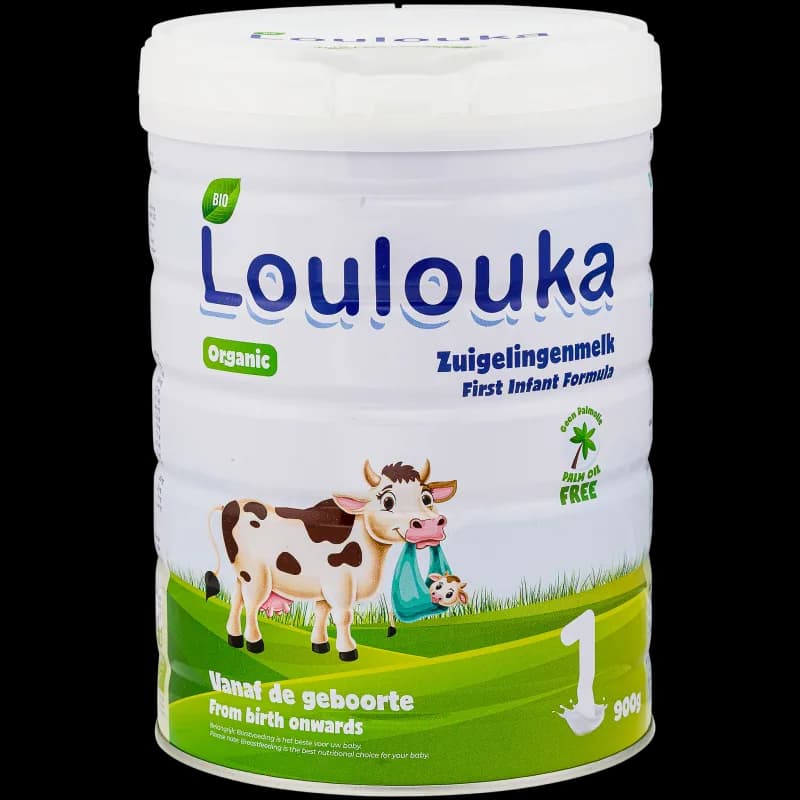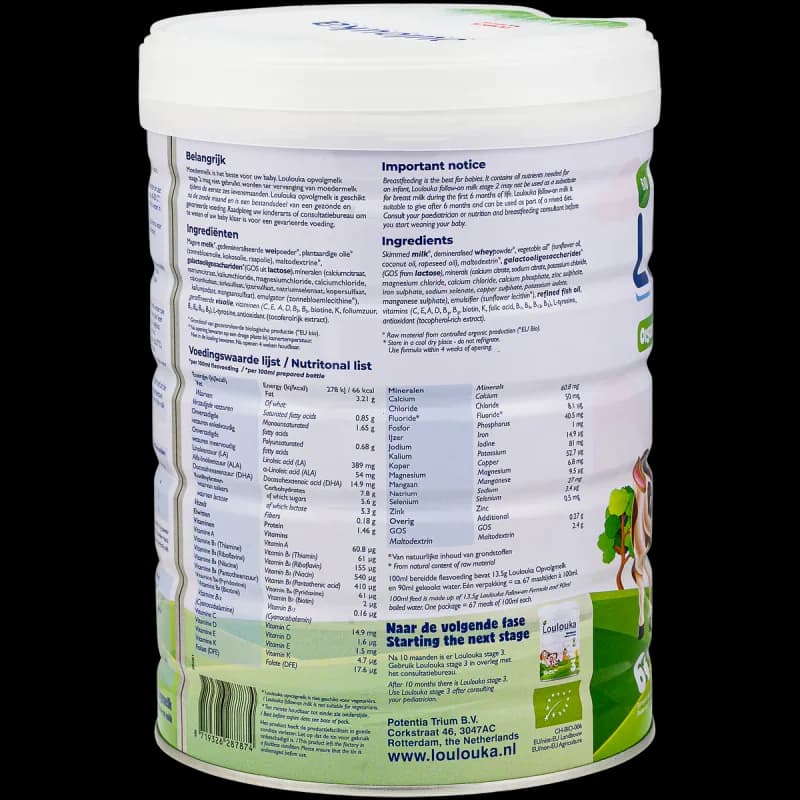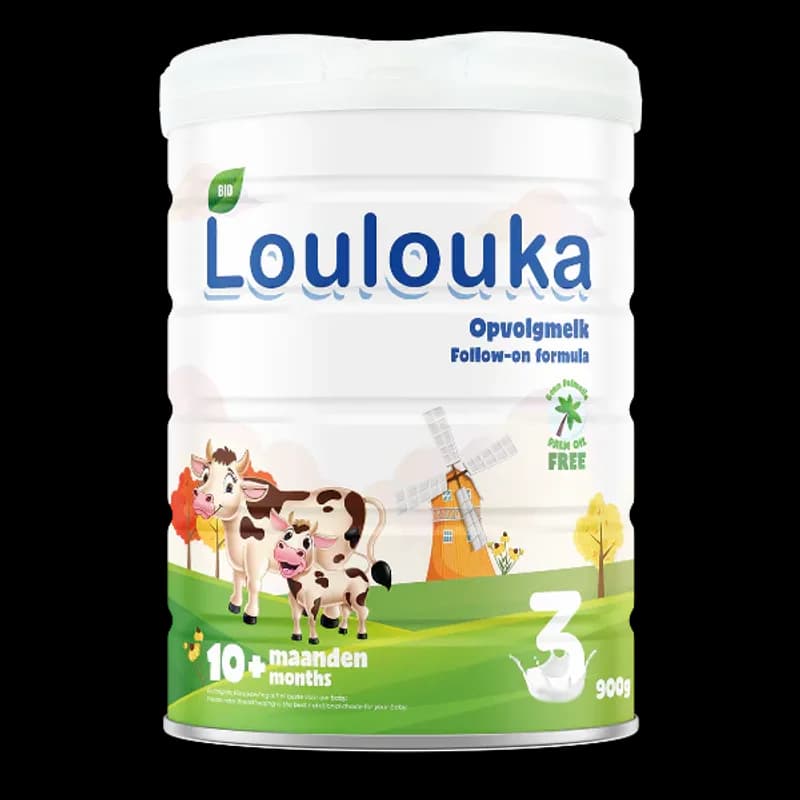

Status update (2024–present): Loulouka production is paused with no announced resumption date. My Organic Formula and other US-facing resellers have notified customers directly. Existing Organic's Best inventory may sell out without restocking. The transition candidates most families move to are Lebenswert (Bioland-certified Holle sister line, similar price tier) or HiPP Dutch (adds Metafolin, GOS, and probiotic). The Loulouka profile below is preserved as reference; plan around current availability before ordering.
Loulouka was a Swiss organic infant formula brand, launched in 2019 and operating independently of the larger Holle/HiPP supply network that dominates the EU organic space. The brand positioned itself on two specific attributes: Swiss-sourced organic cow milk (not German or Dutch), and a vegetable oil blend that used coconut oil as a meaningful component rather than the palm, rapeseed, and sunflower standard in most EU organics.
Why Loulouka exists
The founding premise was straightforward: parents who wanted a clean EU organic formula with less palm oil and different regional sourcing had limited options in 2019. Loulouka filled that gap with Swiss dairy farming credentials: Switzerland maintains stricter animal-welfare standards than the EU baseline on some specific criteria (outdoor access requirements, feed composition rules). The brand has grown quietly since launch as US-import parents look for alternatives beyond HiPP and Holle.
Loulouka's product approach
Three main points of distinction:
- Swiss sourcing. Milk from Swiss organic-certified farms. Both Swiss Bio and EU Organic certifications apply, which is unusual (most brands carry one or the other dominant certification).
- Coconut oil in the fat blend. Palm oil is still present (most EU organic formulas use it), but coconut oil appears more prominently than in HiPP Dutch or Holle. For parents looking to reduce palm oil exposure without going to whole-milk-fat (Kendamil), Loulouka is an intermediate option.
- Simpler ingredient profile. Fewer added bioactives than HiPP (no Metafolin, no probiotics, no separate 2'-FL HMO), just the organic-dairy baseline with added DHA/ARA and the standard vitamin/mineral fortification.
Loulouka is a simpler formula than HiPP Dutch; that simplicity is the feature, not a bug, for parents who prefer minimal added ingredients.
Comparison vs other commercial options
- vs HiPP Dutch. HiPP has Metafolin, GOS prebiotic, and a live probiotic strain. Loulouka has none of these. HiPP wins on formulation depth; Loulouka wins on price and ingredient simplicity.
- vs Holle Cow. Holle is Demeter-certified biodynamic; Loulouka is "only" EU Organic and Swiss Bio. Both use similar fat blend approaches. Holle is more established; Loulouka is leaner-priced.
- vs Lebenswert. Both are lower-cost EU organic options. Lebenswert is Bioland-certified (stricter than EU Organic baseline); Loulouka is EU Organic and Swiss Bio. Similar price point and positioning.
- vs Kendamil. Kendamil uses whole milk fat (no palm oil at all); Loulouka still contains palm oil. Kendamil wins on palm-oil-free; Loulouka is cheaper.
Manufacturing and certifications
- EU Organic (Regulation 2018/848).
- Swiss Bio: Swiss national organic standard.
- EU Infant Formula Compliance (Regulation 2016/127).
- Manufactured in Switzerland.
Not Demeter-certified. Not Bioland. A clean EU Organic baseline with Swiss Bio overlay.
Regulatory posture in the US
Not FDA-registered. Imported under the same FDA enforcement discretion framework as HiPP and Holle, personal use only. See our FDA-approval Outer pillar for the full regulatory context.
Recall history
Clean as of April 2026, no recalls affecting US-distributed SKUs. The brand's newer and smaller operation may not have the recall footprint of longer-running brands; the operational track record is short but clean.
My take on Loulouka for parents
Loulouka is the brand I recommend when the parent wants:
- EU organic and Swiss sourcing.
- Less formulation complexity than HiPP (no added probiotics, no Metafolin, no HMO).
- A lower price point than Holle Bio or Kendamil Organic.
The trade-offs:
- No Metafolin (uses folic acid).
- No GOS / FOS / HMO prebiotics.
- No probiotics.
- Still contains palm oil (just less than some EU organics).
For parents who value simplicity and Swiss sourcing over maximum bioactive-ingredient depth, Loulouka is a legitimate choice in the same price tier as Lebenswert.
All Loulouka formulas
Every Loulouka SKU currently documented in the Atlas appears below. Each entry links to the individual product record with verified nutrition per 100 ml, resolved ingredients, certification status, and retail availability. For a side-by-side comparison against other brands, add any of these SKUs to the compare tool; for one-dimension filters (origin, protein, certifications, red flags) start from the Atlas root.
FAQ
Is Loulouka FDA-approved for sale in the US?
How does Loulouka compare to HiPP and Holle?
Does Loulouka contain palm oil?
Where is Loulouka manufactured?
Why does Loulouka cost less than HiPP?
What stages does Loulouka offer?
Is Loulouka suitable for a baby with sensitivities?
Sources
- Loulouka corporate: https://loulouka.com/
- Swiss Bio Suisse certification: https://www.bio-suisse.ch/
- EU Organic Regulation 2018/848: https://eur-lex.europa.eu/legal-content/EN/TXT/?uri=CELEX%3A02018R0848
- EU Infant Formula Regulation 2016/127: https://eur-lex.europa.eu/legal-content/EN/TXT/?uri=celex%3A32016R0127
- FDA infant formula regulatory information: https://www.fda.gov/food/infant-formula-guidance-documents-regulatory-information
Related reading
- Head-to-head comparisons, HiPP Dutch Stage 1 vs Loulouka Stage 1 (discontinuation and transition-off-Loulouka path including Kendamil Organic as palm-free alternative), Lebenswert Stage 1 vs Loulouka Stage 1 (two lower-price-tier EU organics: Lebenswert active, Loulouka discontinued), and Bobbie Original vs Loulouka Stage 1 (US-domestic palm-free alternative)
- How to buy European formula in the US
- EU Regulation 2016/127 overview
This site provides research and comparisons, not medical advice. Consult your pediatrician before changing your baby's formula.