
Best Fat-Blend Formulas: Whole-Milk-Fat and sn-2 Palmitate Options for US Families (2026)
Last updated 2026-04-25 · María López Botín
This guide replaces the simpler "palm-free is better" heuristic with the fat-blend quality hierarchy current literature actually supports. Palm oil and coconut oil are saturated, breast-milk-similar fats appropriate for infants. The real fat-blend question is where the palmitic acid comes from and in what position on the triglyceride, plus how much of the blend is seed oils (sunflower, safflower, soybean, rapeseed/canola). Whole-milk-fat preservation (Kendamil, ByHeart) delivers natural sn-2 palmitate, native MFGM, and the closest match to breast-milk fat. sn-2 palmitate (Kabrita) addresses the position issue in structured form. RSPO-palm-with- rapeseed-and-sunflower (HiPP, Holle, Lebenswert) is a legitimate breast-milk-similar approach. All-seed-oil "palm-free" constructions (Bobbie, Loulouka, Aptamil UK) are palmitic-acid-poor and PUFA-heavy — not categorically a quality upgrade.
This ranking sorts by fat-blend quality plus complementary attributes (organic certification, bioactive depth, retail availability). Use the "truly palm-free" picks (#8-10) only if palm avoidance is your specific priority despite the fat-blend trade-off.
The fat-blend hierarchy for infant formula (current literature 2026): (1) whole-milk fat preserved (natural sn-2 palmitate plus MFGM plus breast-milk-similar profile), (2) coconut oil universally good, (3) sn-2 palmitate (structured palm), (4) standard RSPO palm plus supplementary oils (palmitic acid in non-ideal position but present), (5) all-seed-oil constructions (palm-free, palmitic-acid-poor, PUFA-heavy). "Palm-free" is not synonymous with "better fat blend" unless paired with whole-milk-fat preservation.
The fat-blend hierarchy (corrected framing)
Palm oil has been criticized in US parenting communities for ~10 years; some of the criticism is well-founded, some is not. The current nutrition-science perspective:
Saturated fats (palm, coconut, whole-milk fat) are infant-appropriate. Breast-milk fat is ~50% saturated, with palmitic acid at ~20-25% of total fatty acids. Saturated fats deliver stable calories, brain-and- nervous-system substrates, and breast-milk-similar fat profile.
The real palm question is position, not presence. Standard palm olein has palmitic acid at the sn-1 and sn-3 positions of the triglyceride; breast-milk fat has it at sn-2. The position affects calcium absorption and stool consistency modestly (not clinically significantly for healthy term infants). sn-2 palmitate (structured palm) and whole-milk-fat (natural sn-2) address this.
Seed oils are the secondary concern. Sunflower, safflower, soybean, rapeseed/canola oils are PUFA-heavy (high linoleic acid / omega-6) and industrially extracted in conventional versions. EU 2016/127 mandates specific PUFA ranges, so all compliant formulas deliver some seed-oil contribution; the question is the balance relative to saturated fats.
Coconut oil is universally a positive. Provides medium-chain triglycerides (MCT) easily absorbed by infants, plus saturated stability close to breast milk. Most formulas include some coconut oil; the proportion matters.
Sustainability is separate from infant nutrition. RSPO certification addresses palm-oil deforestation and biodiversity concerns; it does not affect the baby's nutrition relative to non-certified palm. Families weighting sustainability can pick whole- milk-fat or sn-2 palmitate alternatives without conceding nutritional adequacy.
The hierarchy from most to least breast-milk-similar:
- Whole-milk fat preserved (natural sn-2 palmitate + MFGM + best profile)
- sn-2 palmitate (structured palm) — addresses position
- Standard RSPO palm + supplementary oils — palmitic acid in non-ideal position, modest stool/calcium effect
- All-seed-oil constructions — palmitic-acid-poor, PUFA-heavy
For the full mechanism, see the palm oil explainer and sn-2 palmitate explainer.
The ranking
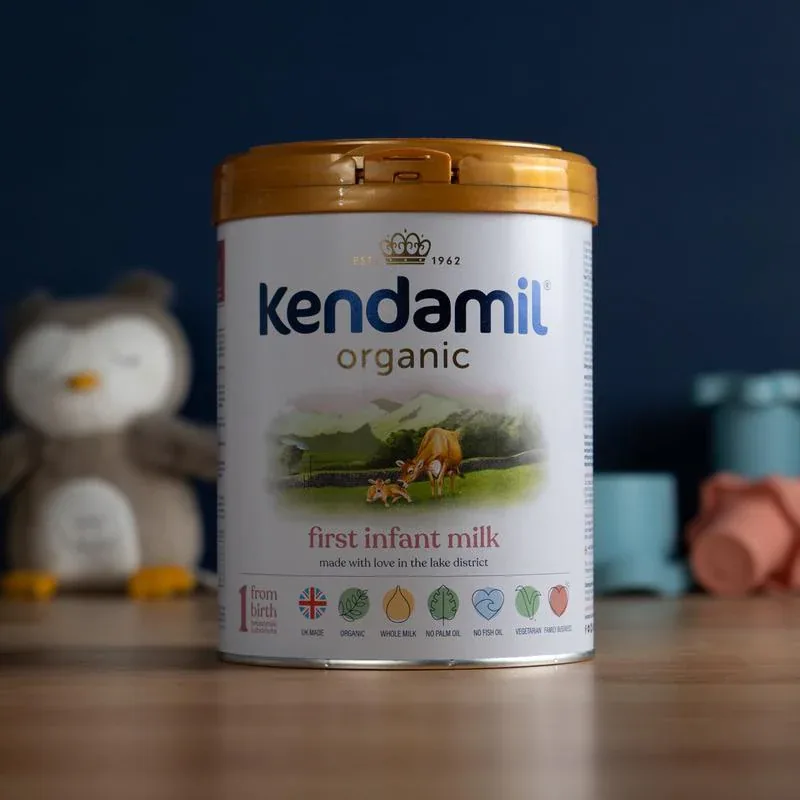
1. Best whole-cow-milk-fat plus organic plus HMO: Kendamil Organic Stage 1
Kendamil Organic is structurally distinct because it combines four things rarely found in a single Stage 1 formula: EU Organic plus UK Soil Association Organic, whole-cow-milk-fat preservation (preserving natural sn-2 palmitate plus native MFGM plus breast-milk- similar fatty-acid profile), 2'-FL HMO plus GOS bioactive addition, and supplementary rapeseed and coconut oils only — no added palm, no soy. FDA-registered for US retail. ~$1.95/oz at Target, Amazon, us.kendamil.com.
For families weighting closest-to-breast-milk fat profile plus organic certification plus bioactive depth at FDA-registered US retail, Kendamil Organic is the unique combination.
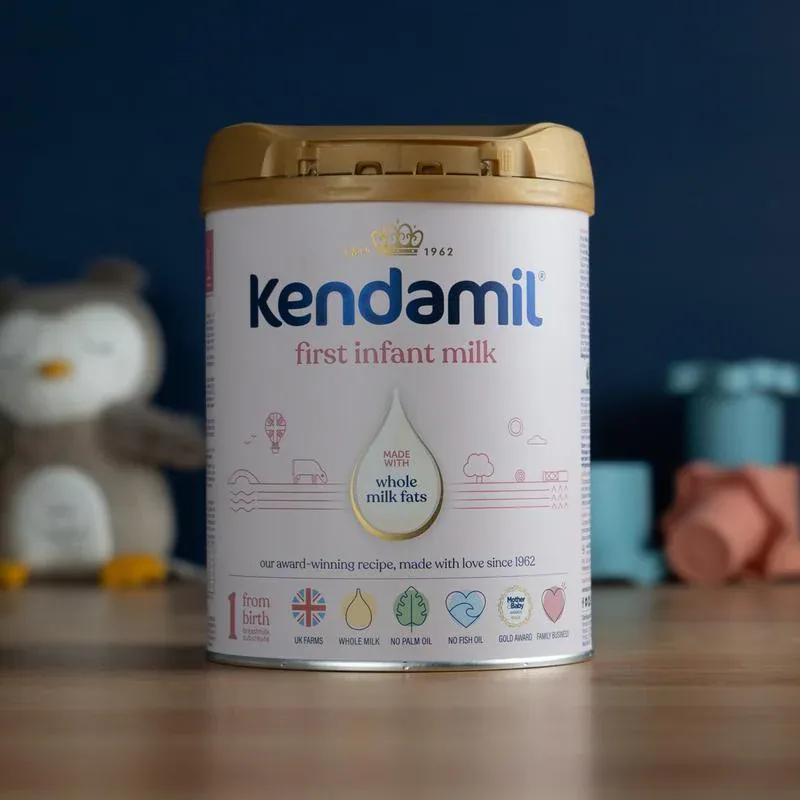
2. Best non-organic whole-cow-milk-fat at retail: Kendamil Classic Stage 1
Kendamil Classic carries the same whole-milk-fat MFGM-preservation philosophy at lower price than the Organic line. UK Red Tractor and Vegetarian Society marks (no organic certification). GOS+FOS 9:1 prebiotic. No added palm, no soy. FDA-registered for US retail. ~$1.63/oz.
For families weighting whole-milk-fat MFGM contribution at lower price than the Organic upgrade, Kendamil Classic is the in-family option. Compositionally close to Kendamil Organic minus organic certification and minus 2'-FL HMO.
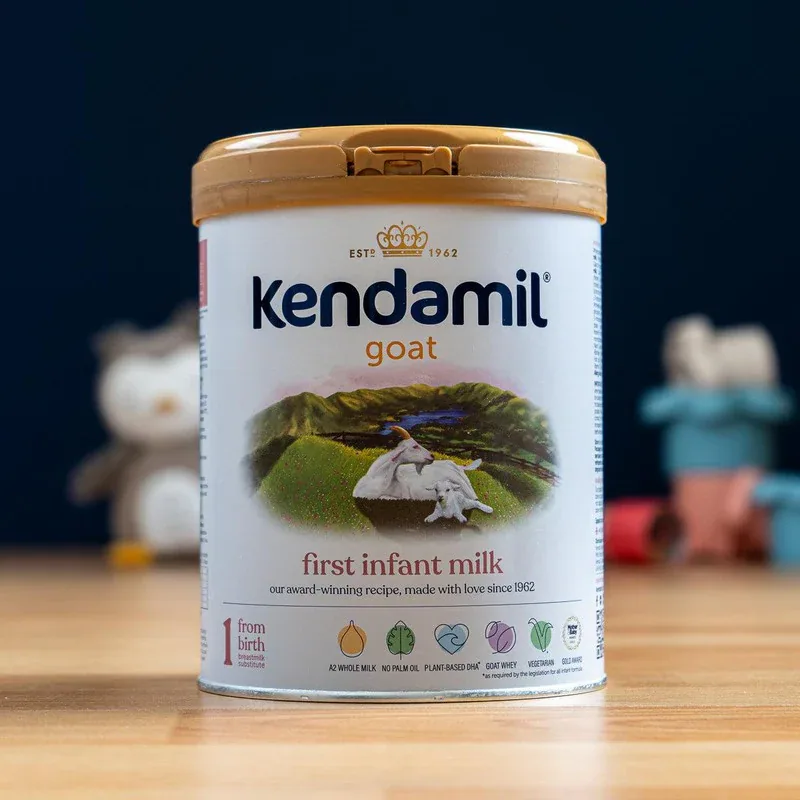
3. Best whole-goat-milk-fat at US retail: Kendamil Goat Stage 1
Kendamil Goat Stage 1 is the only whole-goat-milk-fat option at US retail. Whole goat milk preserves native goat-milk MFGM plus natural-position fatty acids. No GOS, no HMO, minimalist composition. No added palm, no soy. Algal-oil DHA. ~$1.98/oz at us.kendamil.com, select Whole Foods, Amazon.
For families wanting whole-milk-fat in goat-milk format plus US-retail availability, Kendamil Goat is the unique answer.
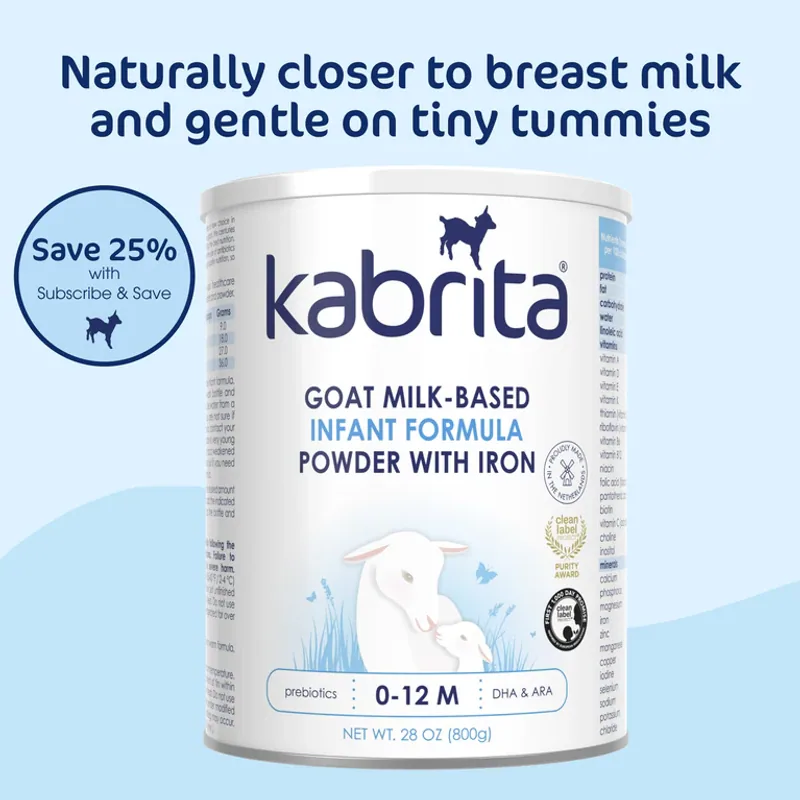
4. Best sn-2 palmitate goat-milk with HMO: Kabrita Stage 1
Kabrita uses sn-2 palmitate (structured palm with palmitic acid in the breast-milk-equivalent sn-2 position) plus rapeseed and sunflower oils. The sn-2 form addresses the calcium-soap and stool-hardening concerns associated with standard palm olein. Plus GOS plus 2'-FL HMO. 60:40 whey:casein matching breast-milk reference. No soy. ~$2.71/oz at US retail.
This is the structurally cleanest palm fraction available in any Stage 1 formula. Families who understand the sn-2 distinction and prefer matching breast-milk position over avoiding palm entirely pick Kabrita. See sn-2 palmitate explainer.
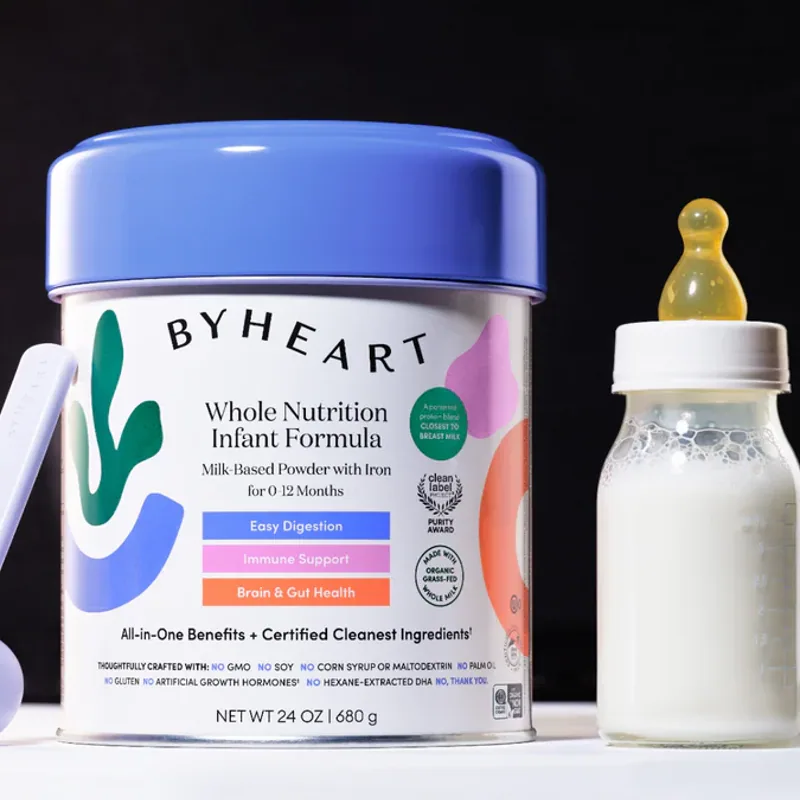
5. Best US-domestic whole-cow-milk-fat with bioactive depth: ByHeart Whole Nutrition
ByHeart is US-domestic, FDA-registered, with whole-milk fat preserving native MFGM plus natural sn-2 palmitate, 2'-FL HMO plus lactoferrin plus GOS, no added palm, no soy. The deepest bioactive stack in whole-milk-fat cow-milk Stage 1. Non-organic. ~$2.59/oz at US retail.
Caveat: ByHeart had a 2025 botulism recall. The recall was addressed but families considering ByHeart should verify the current production batch's recall status before purchase. Bobbie's clean recall history is a meaningful trade-off; for families weighting the bioactive stack heavily and accepting the recall context, ByHeart's MFGM plus HMO plus lactoferrin combination is unique among whole-milk-fat cow-milk Stage 1 formulas.
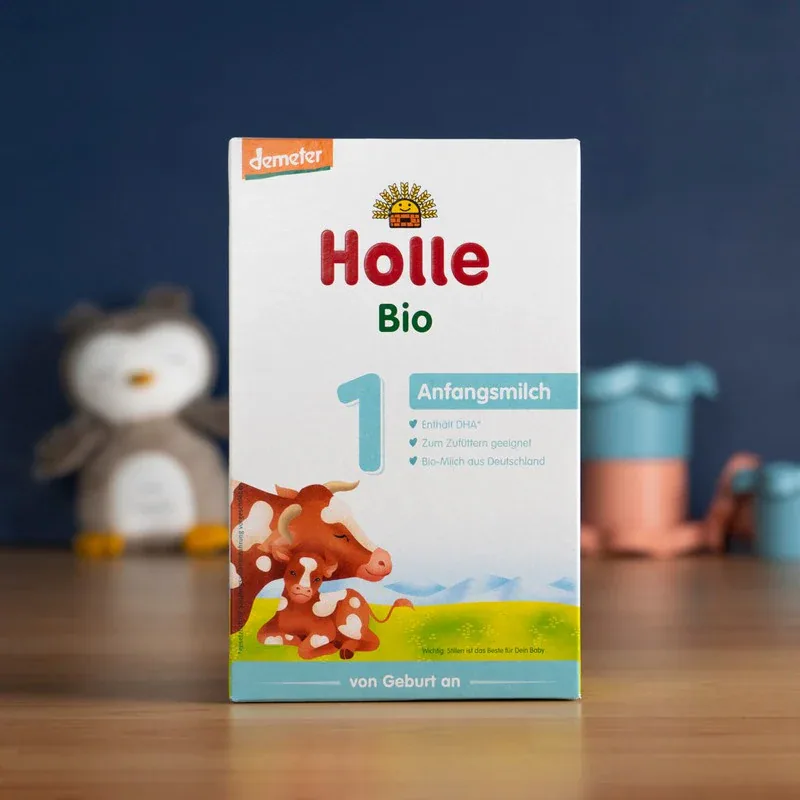
6. Best Demeter biodynamic with RSPO palm: Holle Cow Stage 1
Holle Cow Stage 1 carries Demeter biodynamic plus EU Organic (the strictest organic standard globally). Skimmed-milk-plus-vegetable-oils construction with RSPO-certified palm oil plus rapeseed and sunflower. No soy. Lactose-only carbohydrate.
Per current literature, RSPO palm at standard sn-1/sn-3 position contributes the breast-milk-similar palmitic acid (modest stool/ calcium effect documented but not clinically significant for healthy term infants). The Demeter strictness applies to dairy sourcing and farming methods. ~$1.95/oz delivered via personal import.
For families weighting strictest organic certification plus accepting RSPO standard palm, Holle Cow is the European Stage 1 reference. For strictest organic plus whole-milk-fat, no current option exists in cow-milk format (Kendamil Organic is the EU/UK Organic + whole-milk- fat combination). For Demeter goat-milk that's also palm-free, Holle Goat (rank 9 below).
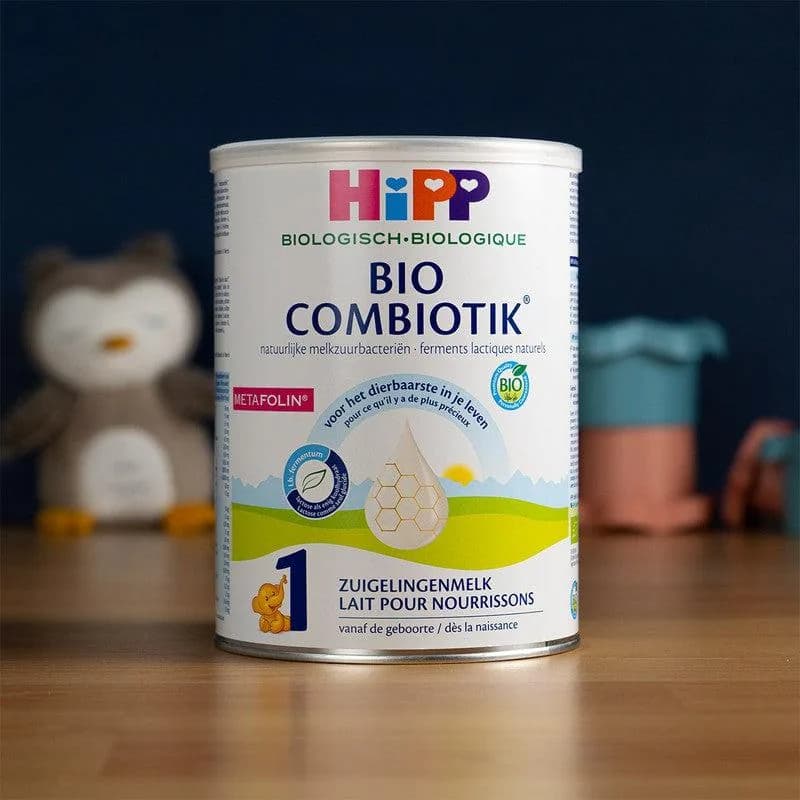
7. Best EU Organic with bioactive depth (RSPO palm): HiPP Dutch Stage 1
HiPP Dutch Stage 1 is the EU Organic Combiotik flagship — Limosilactobacillus fermentum hereditum live probiotic plus GOS prebiotic plus Metafolin bioactive folate. RSPO-certified palm oil plus rapeseed and sunflower. No soy. ~$1.77/oz delivered.
For families weighting probiotic strain inclusion plus bioactive folate, HiPP Dutch is the unique combination. The RSPO palm provides breast-milk-similar palmitic acid; for families specifically wanting palm avoidance, see picks 8-10.
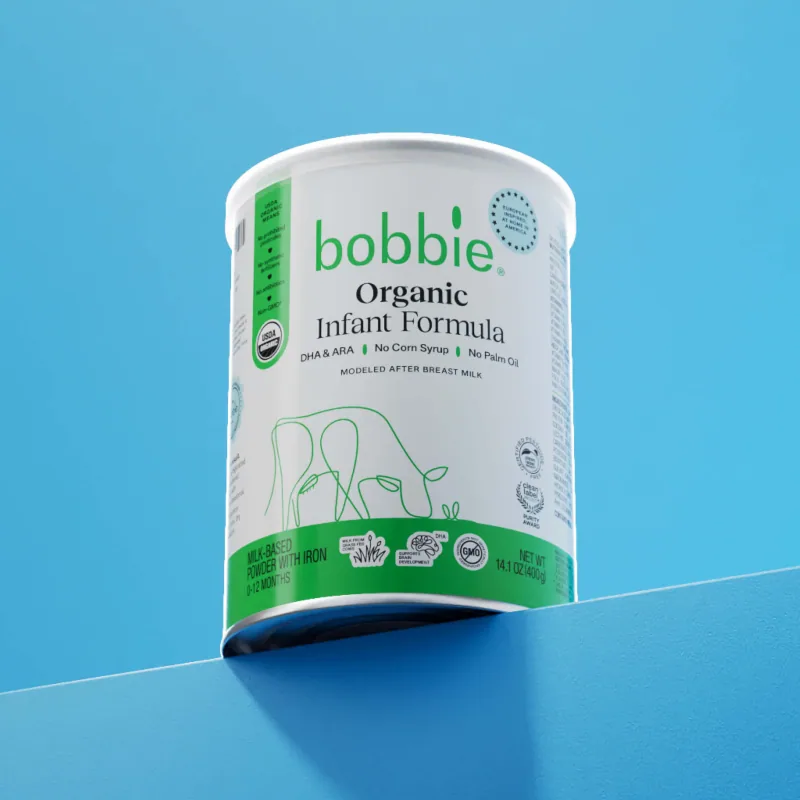
8. Best truly palm-free USDA Organic at US retail: Bobbie Original
Bobbie Original excludes palm in any form and excludes soy. Fat blend: coconut, sunflower, and rapeseed only. USDA Organic plus Non-GMO Project plus Clean Label Project Purity Award. Lactose-only carbohydrate. FDA-registered. ~$2.94/oz at Target, Amazon, Whole Foods.
Trade-off note (per current literature): the palm-free profile means less palmitic acid in the final fat blend, with relatively higher seed-oil contribution. Coconut oil is universally good (MCT), but sunflower and rapeseed are PUFA-heavy. For families who specifically want palm-avoidance with US-domestic organic plus Clean Label Project certification, Bobbie is the answer; the fat-blend trade-off vs whole-milk-fat alternatives is a real consideration. See Bobbie Original vs Kendamil Organic for the head-to-head.
9. Best truly palm-free EU Organic: Loulouka Stage 1
Loulouka excludes palm in any form and excludes soy. Fat blend: coconut, sunflower, and rapeseed only. Swiss EU Organic plus Swiss Bio. Lactose-only plus GOS prebiotic. ~$1.45/oz delivered.
Same fat-blend trade-off as Bobbie (palmitic-acid-poor relative to whole-milk-fat or RSPO-palm formulas) at the EU-organic price point. For families wanting EU Organic plus palm avoidance plus soy avoidance, Loulouka is the principal choice. Caveat: smaller production capacity, supply can run thin during demand spikes.
10. Best budget palm-free EU import: Aptamil UK Stage 1
Aptamil UK Stage 1 is the cheapest palm-free EU-import Stage 1 cow- milk formula at ~$1.42/oz delivered. Non-organic Danone Aptamil with the UK-variant palm-free fat blend (German Aptamil variants contain palm). Soy is present in the fat blend. GOS+FOS 9:1 prebiotic plus 29% fermented dairy.
For families avoiding palm and accepting soy plus non-organic at the cheapest price, Aptamil UK is the price floor. Note: soy oil and soy lecithin are present.
Comparison summary
| Pick | Fat-blend approach | Palm | Soy | Organic | Pathway | Price/oz |
|---|---|---|---|---|---|---|
| Kendamil Organic | Whole-cow-milk fat + MFGM + 2'-FL HMO | no added | no | EU + UK Soil | FDA-registered | ~$1.95 |
| Kendamil Classic | Whole-cow-milk fat + MFGM + GOS+FOS | no added | no | none | FDA-registered | ~$1.63 |
| Kendamil Goat | Whole-goat-milk fat + MFGM | no added | no | none | FDA enforcement discretion retail | ~$1.98 |
| Kabrita | sn-2 palmitate (structured palm) + GOS + 2'-FL HMO + 60:40 | sn-2 only | no | none | FDA enforcement discretion retail | ~$2.71 |
| ByHeart | Whole-cow-milk fat + MFGM + 2'-FL HMO + lactoferrin (recall caveat) | no added | no | none | FDA-registered | ~$2.59 |
| Holle Cow | Skimmed + RSPO palm + rapeseed/sunflower (Demeter) | RSPO yes | no | Demeter + EU | EU import | ~$1.95 |
| HiPP Dutch | Skimmed + RSPO palm + GOS + L. fermentum + Metafolin | RSPO yes | no | EU Organic | EU import | ~$1.77 |
| Bobbie Original | All-seed-oil (coconut + sunflower + rapeseed), Clean Label | no | no | USDA Organic | FDA-registered | ~$2.94 |
| Loulouka | All-seed-oil (coconut + sunflower + rapeseed) + GOS | no | no | EU + Swiss Bio | EU import | ~$1.45 |
| Aptamil UK | All-seed-oil + soy + GOS+FOS + fermented | no | yes | none | EU import | ~$1.42 |
What changed in this guide
This buying guide was originally framed as "best palm-free formulas" with palm-free positioned as universally cleaner. Per current literature review (2026):
- Palm and coconut are saturated breast-milk-similar fats appropriate for infants. Palm is NOT a categorical red flag.
- The real fat-blend hierarchy is: whole-milk-fat preserved → sn-2 palmitate → standard RSPO palm + supplementary oils → all-seed-oil constructions.
- "Palm-free" is not synonymous with "better fat blend" unless paired with whole-milk-fat preservation.
- All-seed-oil constructions deliver palmitic-acid-poor, PUFA-heavy fat blends — a structural trade-off relative to whole-milk-fat or RSPO-palm-with-saturated-balance approaches.
- The legitimate concerns about palm are sourcing/sustainability (RSPO addresses this), and position on triglyceride (sn-2 palmitate or whole-milk-fat addresses this).
- Soy oil and soy lecithin (in fat-blend constructions) are not the same concern as soy protein isolate (in soy-protein formulas like Similac Soy Isomil, Enfamil ProSobee — separate clinical considerations).
The ranking now sorts by fat-blend quality plus complementary attributes, not "palm presence" as the dominant axis. Families with specific palm-avoidance preferences (sustainability, allergy, or constipation history) still have picks 8-10. Families optimizing on "closest to breast milk fat profile" should look at picks 1-5 (whole-milk-fat preservation or sn-2 palmitate).
Frequently asked questions
Is palm oil bad for babies?
Why are seed oils worse than palm oil?
Is whole-milk-fat preservation really better than palm-free seed-oil constructions?
Should I avoid palm oil if my baby has constipation?
What about coconut oil — is it good or bad?
Is sn-2 palmitate worth the extra cost?
Is RSPO-certified palm oil different from non-certified palm oil for the baby?
Is soy oil the same concern as soy protein?
Related reading
- Best European baby formulas
- Best organic baby formulas
- Best goat-milk formulas
- Palm oil explainer — the full nutritional framing
- sn-2 palmitate explainer
- MFGM explainer
- Bobbie Original vs Kendamil Organic Stage 1 — palm-free seed-oil vs whole-milk-fat
- Kendamil Goat vs Kabrita — whole-goat-milk-fat vs sn-2 palmitate
- Kendamil brand hub
- Kabrita brand hub
- Bobbie brand hub
- ByHeart brand hub
- Rapeseed Oil (Canola)
Primary sources
- Koletzko B et al. Palm oil and palmitic acid supply in infant formula: a systematic review. European Journal of Nutrition, 2019. pubmed.ncbi.nlm.nih.gov/30545042
- Kennedy K et al. Double-blind randomized trial of sn-2 palmitate vs standard palm olein in term infants. American Journal of Clinical Nutrition. pubmed.ncbi.nlm.nih.gov/12586971
- Linoleic acid intake in infants and the omega-6:omega-3 ratio in infant formulas. Recent literature questioning seed-oil-heavy constructions. pubmed.ncbi.nlm.nih.gov/35684140
- EU Regulation 2016/127 on infant formula composition (mandates PUFA ranges). eur-lex.europa.eu
- FDA 21 CFR Part 107: US infant formula regulation. ecfr.gov
This site provides research and comparisons, not medical advice. Consult your pediatrician before changing your baby's formula.
The ranked picks
#1 · Best whole-cow-milk-fat plus organic plus HMO
Kendamil Organic Stage 1
EU Organic and UK Soil Association Organic. Whole-cow-milk fat preserves native MFGM plus delivers natural sn-2 palmitate plus breast-milk-similar fatty-acid profile. Adds 2'-FL HMO plus GOS. No added palm, no soy. FDA-registered for US retail. The unique organic-MFGM-HMO combination at FDA-registered retail. ~$1.95/oz.
#2 · Best non-organic whole-cow-milk-fat at retail
Kendamil Classic Stage 1
Whole-cow-milk fat preserves native MFGM and natural sn-2 palmitate. GOS+FOS 9:1 prebiotic. Non-organic but with the same Kendamil whole-milk-fat philosophy as the Organic line at lower price. FDA-registered at Target, Amazon. ~$1.63/oz.
#3 · Best whole-goat-milk-fat at US retail
Kendamil Goat Stage 1
Whole goat-milk fat preserves native MFGM. The only whole-goat-milk-fat option at US retail. No added palm, no soy. Lactose-only. Algal-oil DHA. ~$1.98/oz at us.kendamil.com, select Whole Foods, Amazon.
#4 · Best sn-2 palmitate (structured palm) goat-milk with HMO
Kabrita Stage 1
Dutch goat-milk with sn-2 palmitate — palm fraction with palmitic acid in the breast-milk-equivalent sn-2 position, addressing the calcium-soap concern of standard palm. GOS plus 2'-FL HMO. No soy. The unique structured-palm-plus-HMO combination in goat-milk format. ~$2.71/oz at US retail.
#5 · Best US-domestic whole-cow-milk-fat with bioactive depth (recall caveat)
ByHeart Whole Nutrition
US-domestic, FDA-registered, whole-milk fat preserves native MFGM plus natural sn-2 palmitate. 2'-FL HMO plus lactoferrin plus GOS. No added palm, no soy. The deepest bioactive stack in whole-milk-fat cow-milk Stage 1. Caveat: 2025 botulism recall — verify current production-batch status before purchase. ~$2.59/oz.
#6 · Best Demeter biodynamic with RSPO palm
Holle Cow Stage 1
Demeter biodynamic plus EU Organic — strictest organic certification globally. Skimmed-milk plus RSPO-certified palm oil plus rapeseed and sunflower. No soy. Per current literature, RSPO palm contributes the breast-milk-similar palmitic acid (in sn-1/sn-3 position rather than sn-2 — modest stool/calcium effect, not a clinical concern). Lactose-only. ~$1.95/oz delivered.
#7 · Best EU Organic with bioactive depth (RSPO palm)
HiPP Dutch Stage 1
EU Organic Combiotik with live L. fermentum probiotic plus GOS plus Metafolin bioactive folate. RSPO-certified palm plus rapeseed and sunflower. No soy. The deepest bioactive stack in EU Organic Stage 1 cow-milk format. ~$1.77/oz.
#8 · Best truly palm-free USDA Organic at US retail
Bobbie Original
USDA Organic plus Clean Label Project. Excludes palm in any form, excludes soy. Coconut, sunflower, rapeseed only. Lactose-only. Per current literature: palm-free means palmitic-acid-poor and seed-oil-heavy — a trade-off vs whole-milk-fat. For US-domestic FDA-registered organic with palm-avoidance, Bobbie. ~$2.94/oz.
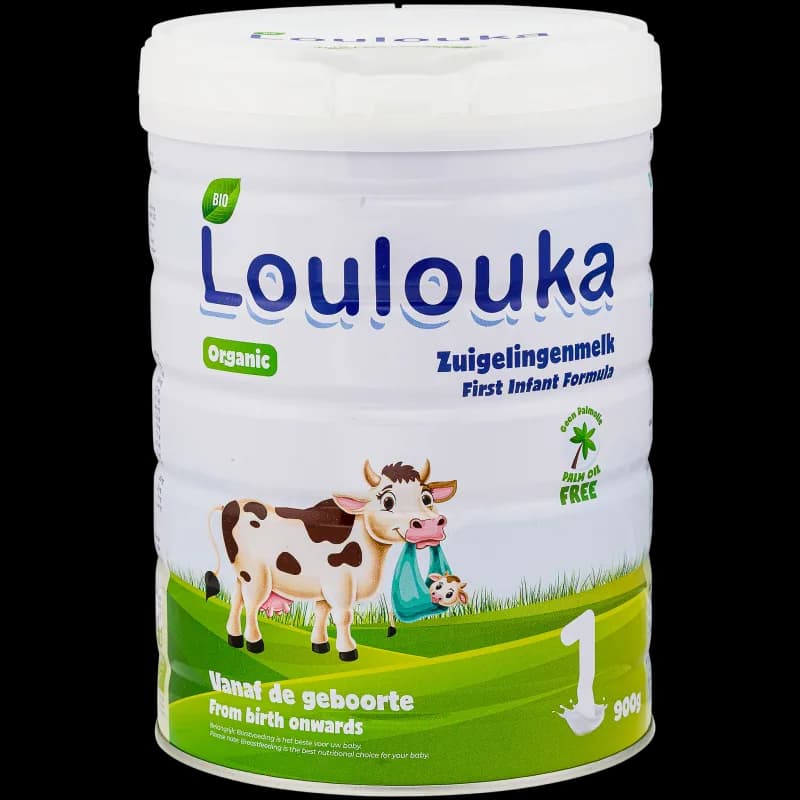
#9 · Best truly palm-free EU Organic
Loulouka Stage 1Discontinued
Swiss EU Organic plus Swiss Bio. Excludes palm in any form, excludes soy. Coconut, sunflower, and rapeseed only. Lactose-only plus GOS prebiotic. Same fat-blend trade-off as Bobbie (palmitic-acid-poor relative to whole-milk-fat or RSPO-palm formulas) but at the EU-organic price point. ~$1.45/oz delivered.
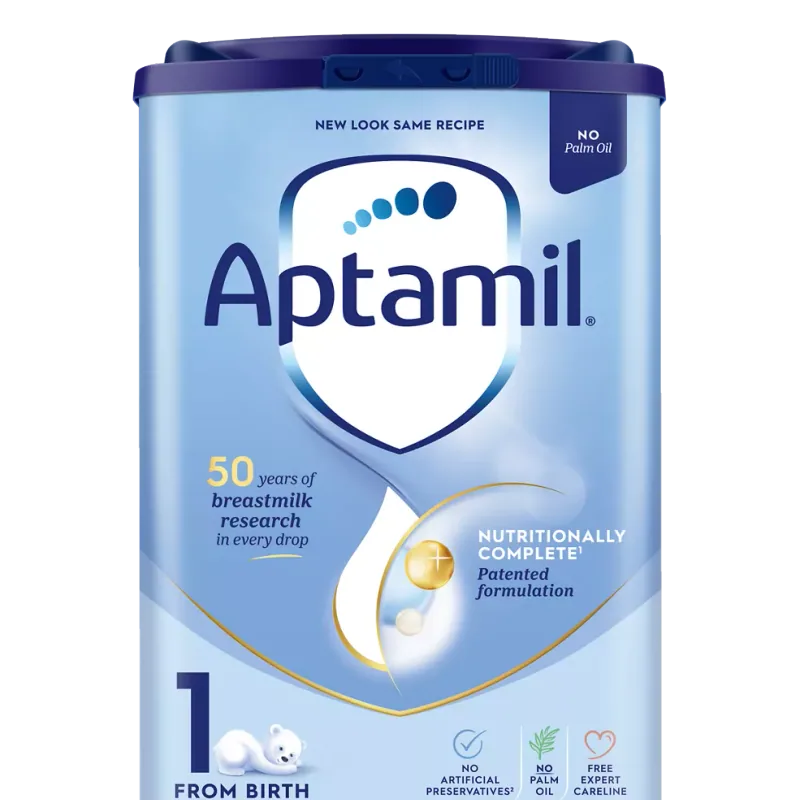
#10 · Best budget palm-free EU import (with soy)
Aptamil UK Stage 1
Cheapest EU-import Stage 1 (~$1.42/oz). Non-organic Danone Aptamil. Palm-free fat blend (UK variant specifically). GOS+FOS 9:1 plus 29% fermented dairy. Soy oil is present in the fat blend. The price floor for palm-free EU imports.