
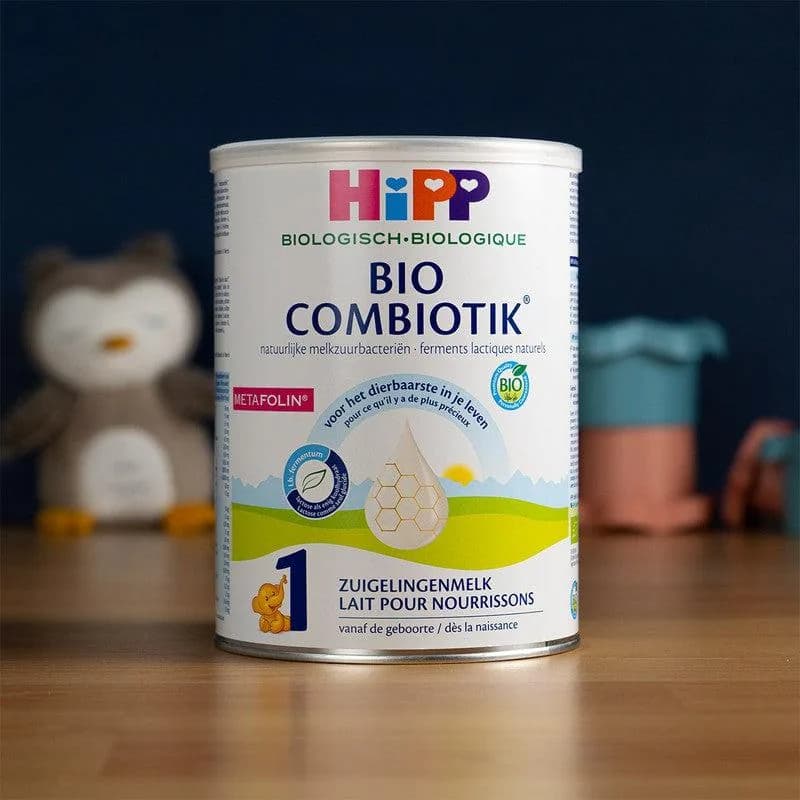
Bobbie Ready-to-Use and HiPP Dutch Stage 1 aren't a like-for-like compositional face-off, they're a format comparison. Bobbie RTF is a sterile-at-source liquid (no mixing, no water, no preparation risk) in US retail; HiPP Dutch is a premium EU organic powder requiring standard 70°C water preparation. The decision frame is format, cost, and the specific clinical context where sterility-from-source matters (preterm, immunocompromised, or travel/emergency situations).
Bobbie Ready-to-Use is sterile at manufacture, requires no preparation, and sits at the premium end of US RTF pricing at ~$1.62/oz for 8 fl oz bottles. HiPP Dutch Stage 1 is powder, requires 70°C water preparation (neutralizing Cronobacter risk), at ~$1.77/oz via Organic's Best subscription. RTF wins on travel, emergency, and high-risk infant scenarios. Powder wins on cost-at-scale, bioactive depth (Combiotik and Metafolin), and EU Organic certification.
Why this comparison matters
Parents who consider RTF specifically do so for one of three reasons: (1) high-risk infant (preterm, immunocompromised, cardiac) where the FDA and NICU consensus favors sterile-at-source liquid, (2) travel context where powder preparation is impractical, (3) emergency or single-night use when setup time matters more than cost. Parents who prefer powder do so for cost-at-scale and for the bioactive-rich composition premium powder formulas like HiPP Combiotik offer that most RTF products don't match.
For context on the format decision generally, see the format comparison pillar.
At a glance
| Dimension | Bobbie Ready-to-Use | HiPP Dutch Stage 1 |
|---|---|---|
| Manufacturer | Bobbie (US-contract Perrigo) | HiPP GmbH (Dutch line) |
| Origin | USA | Netherlands |
| Format | Ready-to-feed (sterile liquid) | Powder |
| Age range | 0-12 months | 0-6 months (Stage 1) |
| Regulation | FDA 21 CFR 107 | EU 2016/127 and 2018/848 organic |
| Organic certification | USDA Organic and FDA registration | EU Organic (SKAL Dutch) |
| Protein | Skimmed cow milk | Skimmed cow milk |
| Primary carbohydrate | Lactose | Lactose |
| Prebiotic | None | GOS |
| Probiotic | None | L. fermentum CECT5716 |
| Folate form | Folic acid | Metafolin (L-5-MTHF) |
| Fat blend | Coconut, sunflower, rapeseed (no palm) and soy | Palm, rapeseed, coconut, sunflower |
| DHA source | Algal oil, ~14 mg/100 ml | Fish oil, ~13.2 mg/100 ml |
| Sterility at first use | Sterile (liquid, heat-treated at manufacture) | Not sterile (powder; 70°C water required) |
| Preparation time | 0 seconds, pour and serve | ~5 min (water prep, cooling, mixing) |
| Storage (unopened) | 12 months room temp | 12-18 months room temp |
| Storage (opened) | 48 hrs refrigerated | 4 weeks dry tin |
| Typical US price | ||
| Travel portability | Moderate (liquid weight) | High (compact dry) |
| US availability | Target, Amazon, Bobbie subscription | Organic's Best, 5-10 day shipping |
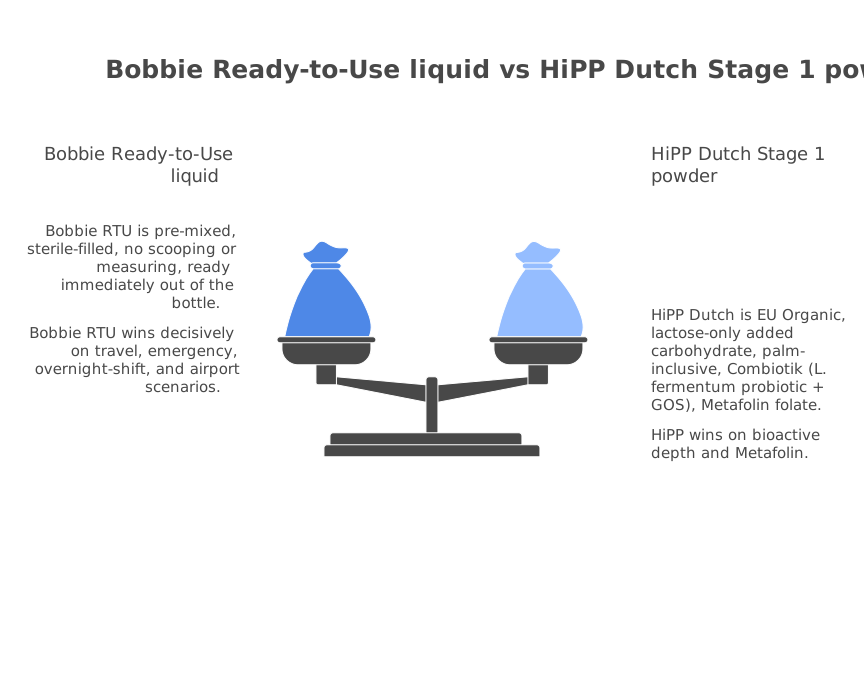
Visual generated with Napkin AI, editorial review by María López Botín. See methodology for our use policy.
Format dimensions that actually matter
1. Sterility at first use
This is the headline clinical difference. Bobbie Ready-to-Use is sterile at manufacture, the liquid is heat-treated during production, sealed, and ships to you without contamination pathway exposure. HiPP Dutch powder is NOT sterile, powder itself cannot be sterilized at scale, and Cronobacter sakazakii risk is inherent to any powdered formula until water preparation at 70°C and neutralizes it.
The FDA recommends sterile-at-source formats (RTF, sterile concentrate) for infants in specific high-risk categories: preterm infants, infants with compromised immune systems, cardiac conditions, or recovering from hospitalization. For healthy term infants, both powder and correct 70°C preparation AND RTF are considered safe, but the preparation window for powder is where preparation mistakes happen. See the preparation mistakes pillar for the full error taxonomy.
2. Compositional profile
Bobbie RTU is USDA Organic, no palm oil, but otherwise minimal additive (no HMO, no probiotic, no prebiotic beyond what milk naturally provides). HiPP Dutch powder is EU Organic with the full Combiotik bioactive platform: GOS prebiotic and L. fermentum CECT5716 probiotic and Metafolin folate. These are different compositional philosophies on top of the format difference.
For families who want sterile-at-source AND bioactive depth, neither formula matches perfectly. Similac Pro-Advance RTF adds 2'-FL HMO to the RTF format. Enfamil Enspire RTF adds HuMO6 blend and MFGM. Both are non-organic US mainstream.
3. Cost at scale
RTF runs expensive per ounce across the market. Bobbie RTU at ~$1.62/oz is actually competitively priced for the format, most US RTF formulas run $2.50-$4.00/oz. HiPP Dutch powder at ~$1.77/oz via OB subscription is similar. Over a year of feeding (conservatively 20 oz/day = ~7,300 oz), Bobbie RTU costs ~$11,800 and HiPP Dutch powder costs ~$12,900 — close enough that cost isn't the decisive factor.
However, RTF packaging disposal, refrigeration for opened bottles, and shipping weight create secondary cost/inconvenience not captured in per-ounce price. Daily powder users handle less packaging waste and don't need to refrigerate leftover prepared bottles beyond the standard 24-hour window.
4. Preparation time and travel logistics
Powder: ~5 min per bottle (boil water, cool to 70°C, measure scoops, mix, cool to feed temp). RTF: open bottle, pour into feeding bottle, serve. Over 8 feeds/day in the first months, powder preparation adds ~40 min daily; RTF adds ~5 min total.
For travel, RTF single-serve bottles eliminate water-source concerns (fluoride, bacterial safety, temperature) at the cost of packing weight. Powder travels in compact tins but requires bottled or filtered water on arrival. See the traveling with formula pillar for the full framework.
5. Storage window after opening
RTF opened bottle: 48 hrs refrigerated. Powder opened tin: 4 weeks at room temperature. For families with irregular feeding volume (early reflux, cluster feeding phases), the powder's longer window is more forgiving of leftover product. For households using a consistent daily amount, RTF's 48-hour window is fine.
Regulatory framework
Bobbie Ready-to-Use complies with FDA 21 CFR Part 107, same regulatory framework as Bobbie Original powder, with additional FDA-required sterility verification for the RTF liquid format. USDA Organic certification applies.
HiPP Dutch Stage 1 complies with EU Regulation 2016/127 (infant formula, mandatory lactose predominance and DHA) plus EU Regulation 2018/848 (organic). Not FDA-registered; imports via enforcement discretion.
See FDA vs EFSA standards compared.
Real-world parent experience
Following site methodology, the observations below come from my personal use across both kids plus a stable pool of parent-feedback notes from families on both formulas. They carry the parent-experience label rather than being claimed as regulatory or clinical facts, because individual infant variation on stool consistency, smell preference, and mixability is large enough that any specific point can reverse for a specific baby. Read these as context, not prediction.
Smell and taste. Bobbie RTU has a neutral, clean liquid-formula smell — similar to the powder version once prepared. HiPP Dutch has the traditional EU dairy character (more assertive dairy aroma).
Convenience. RTF families universally report the middle-of-night feed advantage, no preparation when you're half-asleep. Powder families who prepare bottles in advance adapt to the logistics quickly.
Travel. RTF wins handily for overnight trips, hotel stays, air travel. Powder wins for car trips where you can prepare bottles at rest stops with thermos-stored hot water.
Switching between them. Clinically straightforward, same composition family (both Bobbie/HiPP brands have powder and RTF where available), and transitioning formats is about water source rather than formula.
Verdict: when to pick each
Pick Bobbie Ready-to-Use if:
- Your infant is in a high-risk category (preterm, immunocompromised, cardiac), sterile-at-source format is clinically preferred
- Travel is frequent enough that powder preparation is impractical
- Middle-of-night feeds at full throughput are happening
- Cost at scale is not the primary driver
- You want USDA Organic, no palm oil, and FDA registration all in one
Pick HiPP Dutch Stage 1 (powder) if:
- Daily home use is the primary feeding context
- Cost at scale matters, powder is cheaper over multi-month use
- Combiotik bioactive depth (GOS and L. fermentum and Metafolin) fits your compositional priority
- EU Organic certification carries weight
- You can maintain 2-4 weeks of stock for shipping resilience
Use both in a split strategy if:
- Daily home feeds with HiPP Dutch powder and RTF reserved for travel / emergency / night feeds. Many families combine formats rather than committing to one. The compositional bridge across formats is clinically fine for healthy term infants.
What you can't infer from this comparison
Neither is indicated for diagnosed cow milk protein allergy, see CMPA explained. Neither is reflux-specific. Neither is appropriate for preterm infants without specific neonatologist guidance (though RTF format is favored when preterm-specific formulas are not indicated).
For more format considerations see the formula formats pillar.
Frequently asked questions
Is Bobbie Ready-to-Use the same composition as Bobbie Original powder?
Can I use Bobbie RTU as the default and HiPP Dutch powder for backup?
Why is HiPP Dutch only powder?
Is RTF safer than powder?
What's the shelf life of Bobbie RTU once opened?
Is Bobbie RTU FDA-registered?
Can I import HiPP Dutch RTF for convenience?
Related reading
- Bobbie brand hub
- HiPP brand hub
- Bobbie Original vs HiPP Dutch Stage 1, powder vs powder head-to-head
- Bobbie Original vs Holle Cow Stage 1
- Formula formats: powder, RTF, concentrate
- Formula preparation mistakes
- Traveling with baby formula
Primary sources
- Bobbie, official US-market product information. hibobbie.com
- HiPP Netherlands, official Dutch-market product information. hipp.nl
- FDA infant formula preparation guidance. fda.gov
- EU Regulation 2016/127: Infant formula compositional requirements. eur-lex.europa.eu
This site provides research and comparisons, not medical advice. Consult your pediatrician before changing your baby's formula.