
DHA is the one ingredient in infant formula where the science is unambiguous. This long-chain omega-3 fatty acid is a structural component of the developing brain and retina, it is deposited most rapidly during the third trimester of pregnancy and the first two years of life, and breastfed infants receive it naturally from their mothers. Every major pediatric and regulatory body recognizes DHA as essential for infant nutrition. The only questions that remain are how much, from what source, and why the US has been slower than Europe to require it in all formulas.
What DHA does
DHA (docosahexaenoic acid) is a 22-carbon omega-3 polyunsaturated fatty acid. It is concentrated in two specific tissues:
- The cerebral cortex. DHA accounts for roughly 15% of the total fatty acids in gray matter. Synaptic membranes, myelin, and signaling lipids all incorporate DHA.
- The retina. DHA accounts for up to 60% of the fatty acids in rod photoreceptor outer segments, the highest concentration of DHA anywhere in the body.
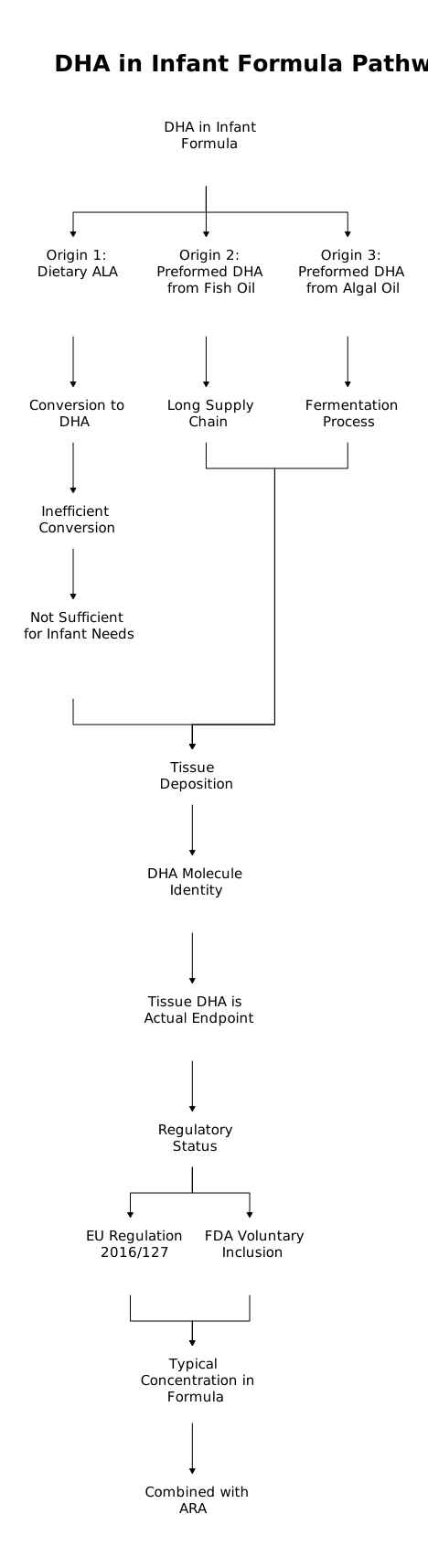
An infant who gets adequate DHA has the building blocks for visual acuity, cognitive development, and the biochemistry of neural signaling. An infant who is DHA-deficient can theoretically synthesize small amounts from dietary ALA (alpha-linolenic acid) via hepatic enzymes, but the conversion rate is low (under 5% in most studies) — too low to meet the deposition rates documented in breastfed infants.
Why EU regulation made DHA mandatory in 2020
EU Commission Delegated Regulation 2016/127 came into force in February 2020, superseding the older 2006/141 Directive. Among many changes, it set a minimum of 20 mg and maximum of 50 mg of DHA per 100 kcal as a compulsory component of infant formula. The basis for the ruling was a 2014 EFSA scientific opinion documenting that DHA supplementation in formula matched the DHA accrual rates seen in breastfed infants and correlated with improved visual evoked potentials at 4 months of age.
Every EU-compliant formula sold after February 2020 provides DHA in that range. Our HiPP Dutch Stage 1 record, for example, shows 13.2 mg DHA per 100 ml prepared, which works out to roughly 20 mg per 100 kcal at the standard 66 kcal/100 ml.
Why US regulation is still different
FDA 21 CFR Part 107 does not require DHA in infant formula. The FDA permits DHA as a nutrient addition but has not set a minimum. Most major US brands (Similac, Enfamil, Bobbie, ByHeart, Gerber) do include DHA voluntarily, typically in the 8–17 mg per 100 kcal range, lower than the EU minimum. A US parent reading a nutrition panel without checking specifically may not realize the EU baseline is higher.
This gap is one of the most concrete reasons parents seek out European formulas: the DHA floor is regulatorily guaranteed across every EU brand, not a marketing choice.
Visual generated with Napkin AI, editorial review by María López Botín. See methodology for our use policy.
Sources: fish oil vs algal oil
DHA in infant formula comes from two main sources:
- Fish oil. Traditional, well-studied, cheap. Used in most European formulas including HiPP Dutch, Holle, and Kendamil. The fish-source taste is negligible after processing. Some parents following strict vegan or allergy-avoidance protocols reject fish-derived DHA on principle.
- Algal oil. Derived from microalgae (typically Crypthecodinium cohnii or Schizochytrium species). Vegan-acceptable, identical DHA molecule to fish-derived DHA, slightly more expensive. Used by some US brands (Bobbie's DHA is algal) and by specialty vegan formulas.
Both forms deliver bioidentical DHA and are absorbed identically. The choice is a matter of parent preference, not nutritional outcome.
ARA always comes with DHA
DHA is never added alone in infant formula. It is always paired with ARA (arachidonic acid), the major long-chain omega-6 fatty acid in breast milk, for metabolic balance. The ratio varies: breast milk typically has roughly equal or slightly higher ARA than DHA, and formulas generally mirror this 1:1 to 1.5:1 ratio.
What the research says
The evidence base for DHA in infant formula is one of the most thoroughly studied areas in pediatric nutrition. Key findings from meta-analyses:
- Visual acuity: DHA-supplemented formulas produce better visual evoked potentials and grating acuity at 2, 4, and 12 months compared to non-supplemented formulas. Effect size: small to moderate.
- Cognitive development, the picture is less clean. Individual trials show modest benefits on Bayley Mental Development Index scores, but pooled meta- analyses sometimes find null results when controlling for confounders. The consensus is that DHA helps but isn't magic.
- No documented harm at the levels permitted by regulation.
How this shows up in the Atlas
Every SKU record in the Infant Formula Atlas documents the DHA content per 100 ml, the source (fish oil vs algal), and the compliance statement. EU brands are guaranteed within the 20–50 mg/100 kcal range. US brands vary, if DHA content matters to you, check the specific SKU.
Frequently asked questions
What is DHA and why is it in infant formula?
Is fish oil DHA different from algal DHA?
How much DHA should a formula provide?
Does ARA need to accompany DHA?
Are vegetable-oil DHA sources as effective as fish oil?
What's the difference between DHA in breast milk vs formula?
Primary sources
- EU Commission Delegated Regulation 2016/127: Article 7 and Annex I set the DHA minimum and maximum for infant formula. eur-lex.europa.eu
- EFSA Panel on Dietetic Products, Nutrition and Allergies. Scientific opinion on dietary reference values for fats, including DHA. EFSA Journal, 2014. efsa.europa.eu
- Delgado-Noguera MF et al. Supplementation with long-chain polyunsaturated fatty acids (LCPUFA) to breastfeeding mothers for improving child growth and development. Cochrane Database 2015. pubmed.ncbi.nlm.nih.gov/28426085
- US FDA. Infant formula nutrition guidance. fda.gov
Related reading
- Brands and comparisons featuring DHA sourcing, HiPP brand hub (fish-oil DHA), Bobbie brand hub (algal-oil DHA), Kendamil brand hub (algal DHA and whole-milk fat base), HiPP vs Bobbie (the fish-oil-vs-algal-DHA contrast made concrete)
- EU Regulation 2016/127, why DHA is mandatory
- FDA vs EFSA standards compared
This site provides research and comparisons, not medical advice. Consult your pediatrician before changing your baby's formula.