
Lactoferrin is a protein most parents haven't heard of, which is strange given how important it is in breast milk. This iron-binding glycoprotein is the second most abundant protein in breast milk after casein, and it performs several functions simultaneously: it kills or slows bacterial growth, boosts iron absorption via specialized gut receptors, and modulates infant immune development. Bovine lactoferrin (from cow's milk) is structurally and functionally similar to the human version, and it can be added to infant formula, though it remains expensive enough that few mass-market brands include it.
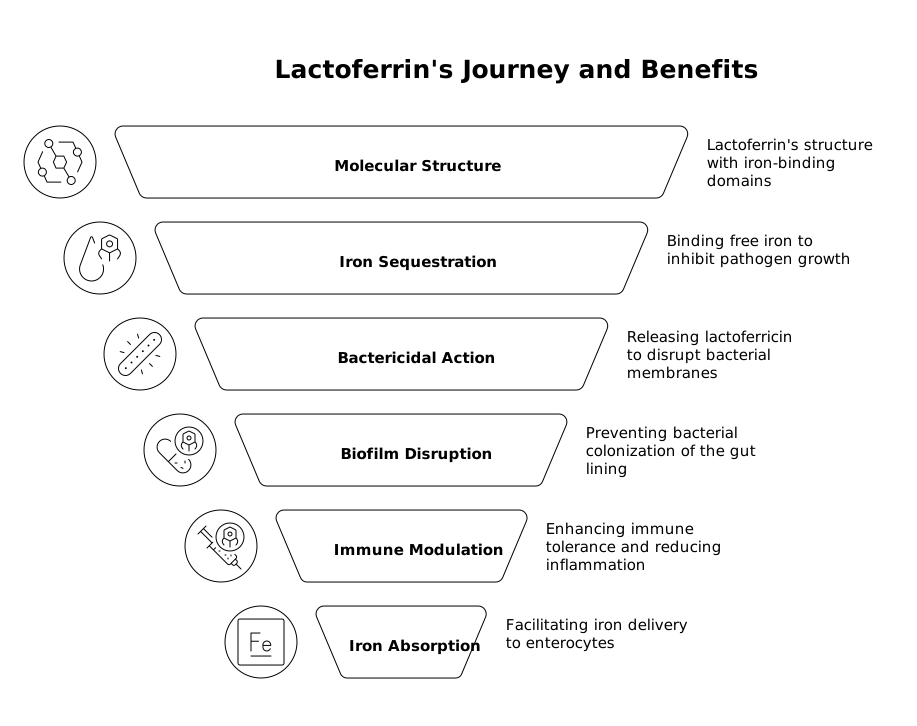
Visual generated with Napkin AI, editorial review by María López Botín. See methodology for our use policy.
What lactoferrin does
Lactoferrin is a 78-kDa glycoprotein with a structural feature that drives most of its biology: a pair of binding sites that grip iron atoms very tightly. This seemingly simple feature enables three cascading effects:
- Antimicrobial action (iron sequestration). Bacteria need iron to grow. When lactoferrin locks up iron in the infant gut, iron-dependent pathogens (E. coli, Salmonella, Streptococcus, Helicobacter) starve. B. infantis and other beneficial bifidobacteria have adapted to acquire iron from lactoferrin or don't need it as urgently, so they aren't affected.
- Iron absorption enhancement. The infant small intestine has specific lactoferrin receptors that bind the lactoferrin-iron complex and transfer the iron into enterocytes at an efficiency of around 50%, compared to 5–10% for free iron. This is one reason breast milk iron is so much more bioavailable than formula iron despite being present at much lower concentrations.
- Immune modulation. Lactoferrin interacts with gut-associated lymphoid tissue (GALT), shaping cytokine patterns, regulatory T-cell development, and NK-cell activity in the developing infant.
Why this matters in infant formula
Historically, infant formula has no lactoferrin. Standard cow's milk contains some (about 0.1 g/L, compared to 1–3 g/L in human breast milk), and most of what it does contain is destroyed by the heat processing used to make infant formula powder. The result: formula-fed infants get the iron fortification bump (the high iron levels in iron-fortified formulas) but without the lactoferrin-mediated selective absorption and antimicrobial protection that breastfed infants get.
Adding bovine lactoferrin to formula attempts to close this gap. The bovine version is 70% identical to human lactoferrin by amino acid sequence and shares the key functional domains (iron-binding sites and antimicrobial N-terminal region).
Which formulas contain lactoferrin
- Bobbie (US), pioneered mass-market lactoferrin adoption in the US. Their original formula includes bovine lactoferrin derived from organic cow's milk. This is one of Bobbie's most-marketed differentiators.
- ByHeart Whole Nutrition, includes lactoferrin alongside 5 HMOs.
- Some specialty premium formulas (certain Similac and Enfamil premium variants, some Japanese Meiji imports) include lactoferrin.
- European organic formulas, most do NOT include lactoferrin. HiPP, Holle, Kendamil, Lebenswert, and similar EU staples rely on GOS/FOS prebiotics and natural whey protein content rather than supplemental lactoferrin.
This is one of the few areas where US premium brands genuinely out-specification EU organic brands. A parent specifically wanting lactoferrin content will find it more easily on the US side. See our Infant Formula Atlas to compare specific SKUs.
Evidence for clinical benefits
- Infection prevention. Multiple trials in term and preterm infants show reduced respiratory and GI infections in lactoferrin-supplemented infants compared to controls. Effect sizes vary by trial; the direction is consistent.
- Preterm infant outcomes. In preterm infants specifically, lactoferrin supplementation has been linked to reduced rates of late-onset sepsis and necrotizing enterocolitis, two of the most serious complications in this population. This is the strongest evidence base.
- Iron absorption. Documented in vitro and in animal studies; less directly measured in human term infants.
- Growth and tolerance. Formulas with lactoferrin support normal growth equivalent to controls. No tolerance issues at the tested doses.
- No safety concerns have been identified at concentrations used in commercial formula (around 0.1–1.0 g/L, still below breast milk levels but meaningful).
EFSA has reviewed bovine lactoferrin for use in infant formula and found it safe. FDA permits it as a GRAS ingredient.
The cost barrier
Lactoferrin is expensive. Industrial production requires extracting it from cow's milk or whey (the majority of commercial lactoferrin) or producing it through recombinant expression (less common, more costly still). A formula with lactoferrin at meaningful levels costs significantly more per tin than an equivalent formula without it. For brands operating on thin margins, the addition is hard to justify. For premium brands, it's a differentiator.
This is why lactoferrin appears more often in US premium formulas than in widely-distributed European organics, the price point supports the ingredient cost.
What a parent should make of this
- If you specifically value lactoferrin for its antimicrobial and iron- absorption effects: Bobbie and ByHeart are the most accessible US options. The EU-import options are limited.
- If your baby is healthy and thriving on a non-lactoferrin formula, there is no evidence that adding lactoferrin changes outcomes for a healthy term infant in any measurable way. It helps; it doesn't rescue.
- If your baby is preterm or has immune concerns, lactoferrin supplementation (either in-formula or as a separate supplement) has stronger evidence. Discuss with your pediatrician.
Our Infant Formula Atlas lists the lactoferrin status per SKU under the prebiotics block, alongside HMO and GOS presence.
Frequently asked questions
What is lactoferrin and why is it in formula?
Is bovine lactoferrin equivalent to breast milk lactoferrin?
Which infant formulas contain lactoferrin?
Is lactoferrin clinically proven beneficial?
Can I supplement lactoferrin separately from formula?
Does lactoferrin interact with iron in formula?
Primary sources
- Manzoni P et al. Clinical benefits of lactoferrin for infants and children. Journal of Pediatrics, 2016, comprehensive review of clinical evidence. pubmed.ncbi.nlm.nih.gov/30486407
- EFSA Panel on Dietetic Products, Nutrition and Allergies. Scientific opinion on bovine lactoferrin, EFSA Journal 2012. efsa.europa.eu
- Ochoa TJ et al. Effect of lactoferrin on infection rates in breastfed and formula-fed infants: meta-analysis. J Pediatr Gastroenterol Nutr, 2015. pubmed.ncbi.nlm.nih.gov/26109561
- Hernell O et al. Bovine lactoferrin in infant formula: safety and efficacy. Nutrients, 2017. pubmed.ncbi.nlm.nih.gov/28498432
Related reading
- Brands and comparisons featuring added lactoferrin, Enfamil brand hub (Enspire adds lactoferrin), Bobbie brand hub, Similac Pro-Advance vs Enfamil NeuroPro (lactoferrin is one of the Enspire/Enfamil differentiators)
- How formula brands compare, bioactives
- FDA vs EFSA standards compared
- Infant microbiome and formula choice
This site provides research and comparisons, not medical advice. Consult your pediatrician before changing your baby's formula.