

The infant gut microbiome has become one of the most aggressively marketed topics in infant formula. Brands claim their specific prebiotic blend, probiotic strain, or HMO addition supports a "breast-milk-like microbiome." Some of these claims rest on good clinical data; most rest on extrapolation from adult microbiome research, in vitro studies, or small underpowered trials. This guide separates what parents can trust from what the manufacturer's marketing copy is overstating.
The infant gut microbiome differs between breast-fed and formula-fed infants in ways that are well-established: breast-fed babies have higher Bifidobacterium and lower Clostridia; formula feeding shifts that ratio even with modern prebiotic/probiotic/HMO-enriched formulas. Within formula-fed infants, choices of lactose-primary vs corn-syrup-primary carbohydrate, presence of specific prebiotics (GOS, FOS, 2'-FL HMO), and probiotic strains with clinical evidence (B. lactis Bb-12, L. reuteri DSM) do modulate the microbiome, but the effect sizes are smaller than marketing suggests and strain-specific, not category-wide.
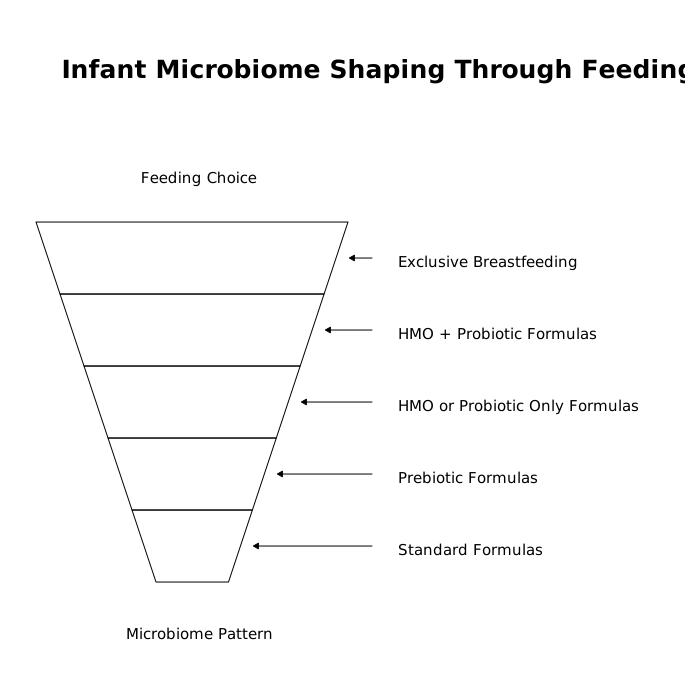
Visual generated with Napkin AI, editorial review by María López Botín. See methodology for our use policy.
What is well-established
Three observations about the infant gut microbiome have strong evidence across multiple independent studies, replicated in different populations, using different sequencing methods, and tied to downstream clinical outcomes with increasing rather than decreasing effect sizes as methodology improves.
Breast-fed infants have a distinct microbiome signature dominated by specific Bifidobacterium species (B. longum subsp. infantis, B. breve, B. bifidum). Formula-fed infants have more diverse genera with lower Bifidobacterium dominance and higher relative abundance of Clostridia, Enterobacteriaceae, and Bacteroides. This difference exists at every age sampled through the first year and correlates with differences in immune development, short-chain fatty acid production, and metabolic programming.
Delivery mode imprints early. Cesarean-delivered infants have delayed Bifidobacterium colonization and different early-life microbial succession patterns than vaginally-delivered infants. This effect attenuates by 12 months in most studies but may persist longer in subgroups. Formula choice cannot fully compensate for cesarean-associated microbiome differences in the first months.
Early antibiotic exposure (maternal intrapartum antibiotics, neonatal antibiotic courses) substantially reshapes the infant microbiome and is causally linked to increased asthma, allergic disease, and obesity risk in subsequent childhood. Formula choice matters less when antibiotic exposure is present, the antibiotic effect dominates.
None of these observations imply formula-fed infants are at categorical health disadvantage. They describe real differences; the clinical significance of those differences varies by outcome and is not uniformly negative.
What is emerging
Several formula-ingredient categories have clinical evidence for microbiome effects that is better than marketing and weaker than hype.
GOS and FOS prebiotics
Galacto-oligosaccharides (GOS) and fructo-oligosaccharides (FOS) are the oldest commercial prebiotic addition in infant formula, present across EU and US premium tiers. Meta-analyses show consistent effects: Bifidobacterium counts rise, stool pH drops toward the breast-fed range, and stool consistency shifts softer. Clinical outcomes (infection rate, atopic disease) show smaller and more variable benefits, some trials show reduction in GI infection episodes, others show no significant difference. See the GOS explainer.
2'-FL HMO
2′-fucosyllactose is the most abundant human milk oligosaccharide and the first to receive FDA GRAS approval for infant formula use in 2015. Multiple randomized trials show 2'-FL supplemented formulas produce microbiome shifts closer to breast-fed patterns than GOS-only formulas — specifically, increased B. longum subsp. infantis abundance, which is the HMO-consuming Bifidobacterium that dominates breast-fed infant guts. See the 2'-FL HMO explainer.
Clinical outcomes from 2'-FL: moderate evidence for reduced respiratory infection rates in the first year, modest evidence for reduced antibiotic use, limited evidence on allergic disease. The effect sizes are smaller than "supports your baby's immune system" marketing implies but larger than zero.
Probiotic strains
Bifidobacterium lactis (Bb-12 or BB-12) and Lactobacillus reuteri DSM 17938 have the most trial evidence in infant formula. Clinically, these strains reduce the risk of necrotizing enterocolitis in preterm infants (strong evidence, pediatric consensus) and may reduce colic and functional constipation symptoms in term infants (moderate evidence, some trials negative). L. reuteri specifically has trial support for reducing infant colic crying duration.
The key caveat: probiotic effects are strain-specific, not category-wide. "Contains probiotics" on a label tells you very little — what matters is the specific strain name and CFU count, both of which should be on the label if the manufacturer has confidence in the strain.
Milk fat globule membrane (MFGM)
MFGM is the lipoprotein membrane surrounding milk fat droplets. Whole- milk-fat formulas (Kendamil, Baby's Only Premium A2, Serenity Kids) preserve native MFGM; vegetable-oil-blend formulas with added MFGM concentrate (Enfamil NeuroPro platform) include it as a supplement. Trial evidence is modest but consistent: MFGM-supplemented formulas show small improvements on Bayley cognitive scores at 12 months and some reduction in respiratory infection episodes. See the MFGM explainer.
What is still hype
Several microbiome-adjacent claims persist across formula marketing even though they rest on weak, extrapolated, or strain-nonspecific evidence. A parent who wants to ignore marketing noise can screen new formula launches against this list, if a brand's microbiome-positioning maps cleanly to one of these patterns, its claim is likely marketing-first, evidence-second.
"Microbiome-optimized" as a category claim, this phrasing rarely corresponds to specific ingredients with trial data. If a brand claims microbiome benefit, look for specific strain names, specific prebiotic grams per 100 ml, and trial citations. Absence of any of these is a marketing-over-evidence pattern.
Extrapolation from adult microbiome research, infant gut ecology is fundamentally different from adult gut ecology. Claims based on "gut health" research in adults do not transfer automatically to infants.
Small underpowered pilot studies, many probiotic and prebiotic claims cite single trials with 40-80 infants. These are hypothesis- generating, not definitive. Look for meta-analyses or trials with n>300 infants.
Strain-specificity ignored, saying "contains L. reuteri" without specifying the DSM strain is a yellow flag. Many L. reuteri strains have no infant-specific trial data.
Long-term health outcome claims, "supports lifelong immune health" is not a claim any current infant formula can make on evidence. The furthest out we have trial data for any formula intervention is typically 2-5 years.
What actually matters for the microbiome-conscious parent
In descending evidence strength:
-
Breastfeed if possible, for as long as possible. Even partial breastfeeding maintains some of the microbiome advantage. No formula fully replicates breast-milk's microbiome effect. See the combining formula and breastfeeding pillar.
-
If fully formula feeding, lactose-primary matters more than prebiotic additions. Carbohydrate base sets the substrate for gut fermentation. Corn-syrup-primary formulas produce different fermentation patterns than lactose-primary. The lactose-primary filter lists every formula in the Atlas that keeps lactose as primary carbohydrate.
-
Prebiotics and HMOs help, moderately. GOS and FOS formulas and 2'-FL-enriched formulas both move the microbiome closer to breast-fed patterns. The effect is real but small relative to the breast-fed baseline.
-
Specific probiotic strains help specific indications. Don't pick a formula for "probiotics" generically, pick based on what you're trying to address (colic: L. reuteri DSM 17938; NEC prevention: B. lactis and L. reuteri combinations; generic immune support: evidence weak).
-
Avoid antibiotics unless medically necessary. Routine infant antibiotics (particularly broad-spectrum) overshadow most formula- ingredient effects on the microbiome. Trust your pediatrician's antibiotic stewardship.
-
MFGM is a niche differentiator. For parents already choosing between formulas on other grounds, MFGM tilts the decision slightly toward whole-milk-fat (Kendamil Classic) or MFGM-supplemented (Enfamil NeuroPro). It's not the main reason to pick a formula, but it's real.
Why the EU regulates this differently
EU Regulation 2016/127 mandates lactose as primary carbohydrate for Stage 1 infant formula and requires DHA. Neither is mandated in US FDA 21 CFR 107. The EU framework is more prescriptive about microbiome- adjacent composition than the US framework, and the resulting EU baseline product (HiPP Dutch Stage 1, Holle Cow Stage 1) is closer to breast milk in their ingredients than most US baseline products.
For the full regulatory comparison see FDA vs EFSA standards compared.
Frequently asked questions
Will my formula-fed baby have a 'worse' microbiome than breast-fed babies?
Is there a 'best formula for gut health'?
If my baby was born by C-section, should I choose a specific formula?
Do probiotic drops help if my formula doesn't contain them?
Does formula DHA source (fish oil vs algal) affect the microbiome?
Can I give my formula-fed baby probiotic-enriched adult foods?
Related reading
- GOS prebiotic explainer
- 2'-FL HMO explainer
- Lactoferrin explainer
- MFGM explainer
- Combining formula and breastfeeding
- Lactose-primary formulas filter
- Formulas with 2'-FL HMO filter
- Are probiotics in baby formula actually effective?
- Best Baby Formula for Constipation
- Formula-Fed vs Breastfed Gut Microbiome — What Differs and Why It Matters
Primary sources
- WHO: Breastfeeding and infant microbiome policy framework. who.int
- AAP: Infant nutrition policy statements on feeding and probiotic use. aap.org
- EU Regulation 2016/127: Prebiotic and bioactive rules in infant formula. eur-lex.europa.eu
- PubMed: Peer-reviewed infant microbiome and formula intervention literature (search terms: infant microbiome formula, 2'-FL HMO clinical trial, L. reuteri DSM 17938 infant colic, GOS FOS prebiotic infant). pubmed.ncbi.nlm.nih.gov
This site provides research and comparisons, not medical advice. Consult your pediatrician before changing your baby's formula.