
Comparing infant formula brands is one of parenting's genuinely difficult analytical tasks. The US alone has 50, brands, and hundreds of individual SKUs. Marketing language obscures meaningful differences. Pediatric guidance often defaults to "any FDA- registered brand is fine", which is true for healthy term infants but leaves families without a framework for deliberate choice when values, budget, or specific preferences matter. This guide provides a systematic comparison framework, the dimensions that actually distinguish formulas, how to evaluate them, and specific examples of how major brands stack up on each dimension.
Systematic formula comparison requires evaluating 7 key dimensions: (1) protein source (skimmed vs whole cow, A2, soy, goat, hydrolyzed), (2) carbohydrate base (lactose-primary vs corn syrup solids vs maltodextrin), (3) fat composition (vegetable oil blend vs whole milk fat; palm vs no-palm; sn-2 palmitate presence), (4) fortification (DHA, ARA, HMO, prebiotic, probiotic, lactoferrin, MFGM), (5) regulatory status (FDA 21 CFR 107 vs EU 2016/127 vs enforcement discretion), (6) manufacturer quality systems and history, (7) practical factors (cost, availability, format, packaging). This guide walks through each dimension with specific brand examples and decision weightings.
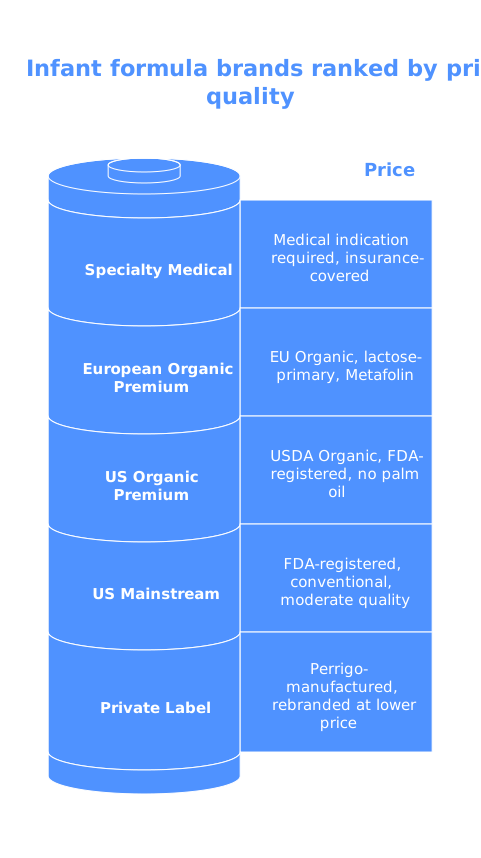
Visual generated with Napkin AI, editorial review by María López Botín. See methodology for our use policy.
The 7-dimension comparison framework
Rather than the reductive "which brand is best" question, evaluate brands across these dimensions:
Dimension 1: Protein source
The primary protein in a formula affects digestibility, allergen profile, and nutritional composition:
| Protein source | Typical brands | Use case |
|---|---|---|
| Skimmed cow milk (60:40 whey-dominant) | Similac, Enfamil, Bobbie, HiPP, Holle, most standard | Default healthy term infants |
| Whole cow milk (60:40) | Kendamil Classic/Organic, Baby's Only Premium, Serenity Kids | Preference for whole milk fat preservation |
| A2-only cow milk | ByHeart, Serenity Kids, Baby's Only Premium, a2 Platinum | A2 beta-casein preference |
| Goat milk | Holle Goat, Jovie, Kabrita, Nannycare, Kendamil Goat, Oli6 | Goat milk preference; some cow-milk tolerance issues |
| Soy protein isolate | Similac Soy Isomil, Enfamil ProSobee, Earth's Best Soy Organic | Galactosemia, religious/ethical vegan |
| Plant-based (non-soy) | Else Nutrition (almond, tapioca, and buckwheat) | Dairy avoidance preference; not indicated for diagnosed CMPA |
| Partially hydrolyzed (pHF) | HiPP HA, Enfamil Gentlease, Gerber GentlePro, NAN HA | Atopic-risk positioning; NOT for diagnosed CMPA |
| Extensively hydrolyzed (eHF) | Nutramigen, Alimentum, Modilac (EU specialty), Gerber Extensive HA | First-line CMPA treatment |
| Amino-acid based (AAF) | Neocate, EleCare, Puramino | Second-line CMPA (eHF failure), multiple allergies |
For the clinical framework:
Dimension 2: Carbohydrate base
The primary carbohydrate matters for multiple reasons:
| Primary carbohydrate | Implication | Examples |
|---|---|---|
| Lactose only | Closest to breast milk; EU Stage 1 standard | HiPP, Holle, Kendamil, Bobbie, Earth's Best Dairy |
| Lactose and added sugar | Less ideal; added sweetness | Similac Organic (added sucrose) |
| Lactose and maltodextrin | Common in EU Stage 2 and follow-on | Holle Cow Stage 2, HiPP Stage 2 |
| Maltodextrin primary | Not lactose-first; unusual in Stage 1 | Happy Baby Organic |
| Corn syrup solids | Standard in "sensitive," "gentle," hydrolyzed | Enfamil Gentlease, Similac Sensitive |
| Lactose-free | Soy formulas, some specialty | Similac Soy Isomil, Enfamil ProSobee |
Key insight: EU Regulation 2016/127 requires lactose-primary in Stage 1. Some US organic brands (Happy Baby, Similac Organic) deviate. For lactose-primary preference, Bobbie, Earth's Best, Baby's Only, Gerber Nature's Select, Enfamil Simply Organic, and the major EU imports all qualify.
Dimension 3: Fat composition
Fat structure affects digestibility and breast-milk similarity:
| Fat approach | Brands | Distinction |
|---|---|---|
| Whole milk fat and no palm oil | Kendamil Organic/Classic, Baby's Only Premium, Serenity Kids, Löwenzahn | Most breast-milk-similar fat architecture |
| Vegetable oil blend, no palm | Nannycare, Jovie, Aptamil UK, Similac Alimentum RTF | Cleaner ingredient; standard vegetable oils |
| Vegetable oil blend with palm oil (RSPO) | HiPP, Holle, most EU/US mass-market | Standard industry approach; sustainability certification |
| sn-2 palmitate (structured OPO) | Kabrita, some HiPP variants | Structurally mimics breast milk palmitic acid placement |
For fat context: palm oil, sn-2 palmitate.
Dimension 4: Fortification ingredients
Premium features vary significantly across brands:
DHA/ARA
- Mandatory in EU (2016/127 since 2020), all EU-sold formulas include it
- Optional in US, most modern US formulas include voluntarily
- Levels vary, 10-20 mg/100 ml typical; Enfamil Enspire (17 mg), HiPP German (~14 mg), Bobbie (~14 mg) above average
HMO (Human Milk Oligosaccharides)
- 2'-FL HMO, most common addition; standard in premium US variants
- 5-HMO blend (2'-FL and 3-FL and LNT and 3'-SL and 6'-SL) — introduced by Similac 360 Total Care (2022), first US market
- Absent: Bobbie (minimalist), HiPP Dutch PRE, Holle (pure GOS approach)
GOS and FOS prebiotics
- Common in most EU formulas: Nutricia Pronutra 9:1 blend
- Common in US premium: Similac 360, Enfamil NeuroPro
- Absent: Bobbie, some simpler brands (Loulouka, Nannycare)
Probiotics
- L. fermentum hereditum (HiPP Combiotik line) — proprietary strain from breastmilk lineage
- B. breve M-16V (Neocate Syneo): Morinaga-researched strain
- L. rhamnosus GG (Nutramigen with Enflora): Reckitt licensed
- B. lactis Bb-12 (Gerber SoothePro, SMA variants) — Nestlé/CHr. Hansen research
Lactoferrin
- Japanese convention: Meiji Hohoemi, Morinaga Hagukumi
- US premium: Enfamil Enspire is among few US formulas including prominently
- Absent, most other US and EU formulas
MFGM (Milk Fat Globule Membrane)
- Enfamil NeuroPro platform, standard feature
- Enfamil Enspire, also includes
- Most other brands, absent. Whole-milk-fat formulas (Kendamil, Baby's Only Premium A2) preserve native MFGM via the ingredient itself without an added concentrate.
Dimension 5: Regulatory status
Matters for safety, supply reliability, and access:
| Status | Implication | Examples |
|---|---|---|
| FDA 21 CFR 107 registered | Full US regulatory framework; mainstream retail | All major US brands; US organic brands |
| FDA enforcement discretion | Legal US retail under flexibility; not full registration | Kendamil (US variants), a2 Platinum, Bubs |
| EU 2016/127 compliant, personal import | Via Organic's Best Shop; not FDA-registered | HiPP Dutch, Holle, Lebenswert |
| Non-US regulatory | Not typically in US market | Meiji, Morinaga, Karicare |
For regulatory depth:
Dimension 6: Manufacturer, history
Manufacturing concentration, and history matter for supply risk:
| Manufacturer | Brands | Historical context |
|---|---|---|
| Abbott | Similac, EleCare, Alimentum | 2022 Sturgis recall; consent decree; largest US market share |
| Reckitt/Mead Johnson | Enfamil, Nutramigen, Puramino | Pfizer acquisition 2009; 2017 Reckitt acquisition |
| Perrigo | Parent's Choice, Up&Up, Mama Bear, Kirkland | Primary US private-label manufacturer |
| Nestlé | Gerber, Nestlé NAN, SMA | Global dominant; WHO Code scrutiny |
| Danone/Nutricia | Aptamil, Cow & Gate, Nutrilon, Gallia, Milupa, Mellin, Karicare, Happy Baby, Neocate | European infant nutrition consolidation |
| Independent | Bobbie, ByHeart, HiPP, Holle, Kendamil | Non-multinational corporate structures |
For recall history context: Formula recall history USA.
Dimension 7: Practical factors
Often the deciding factors in actual family decisions:
| Factor | Consideration |
|---|---|
| Cost | WIC covered > private label > organic US > European import > specialty |
| Availability | Mainstream retail > specialty retail > import only > direct-only |
| Format | Powder (most common) > RTF (premium) > concentrate (niche) |
| Pediatric preference | Often defaults to Similac or Enfamil |
| Insurance coverage | Specialty formulas typical covered; standard not |
| Storage/packaging | Standard cans, bulk (Costco), single-serve (travel) |
The comparison framework in practice
Scenario 1: Healthy term infant, budget-conscious family
Priority dimensions: Cost, availability, FDA compliance
Shortlist candidates:
- Parent's Choice Advantage Premium (Walmart)
- Up&Up Advantage Premium (Target)
- Mama Bear Advantage (Amazon)
- Kirkland Signature ProCare (Costco)
- WIC-contracted brand if eligible
Decision criteria: Which retailer you shop at; Costco membership for bulk savings; WIC eligibility overrides for free formula.
Scenario 2: Healthy term infant, mainstream preference
Priority dimensions: Pediatric familiarity, retail access, standard features
Shortlist candidates:
- Similac Pro-Advance or 360 Total Care
- Enfamil NeuroPro or Enspire
- Gerber Good Start GentlePro
Decision criteria: Pediatrician recommendation, specific feature preference (5-HMO blend → Similac 360, MFGM → Enfamil NeuroPro, probiotic → Gerber GentlePro).
Scenario 3: US-made organic preference
Priority dimensions: USDA Organic, lactose-primary, clean ingredient profile
Shortlist candidates:
- Bobbie Original (lactose-only, minimalist)
- Earth's Best Dairy Organic (lactose-primary)
- Baby's Only Organic (lactose-primary; A2 Premium variant available)
- Enfamil Simply Organic (lactose-primary, major brand)
- Gerber Nature's Select Organic (lactose-primary)
Avoid if lactose-primary required: Happy Baby Organic (maltodextrin-primary), Similac Organic (added sucrose).
Decision criteria: Specific features preferred (A2 → Baby's Only Premium; major brand recognition → Enfamil Simply Organic or Gerber Nature's Select; minimalist → Bobbie).
Scenario 4: European organic import preference
Priority dimensions: EU 2016/127 compliance, specific European features
Shortlist candidates:
- HiPP Dutch Stage 1 (Combiotik probiotic)
- Holle Cow Stage 1 (Demeter, lactose-only)
- Kendamil Organic Stage 1 (whole milk fat and no palm)
- Lebenswert Stage 1 (Bioland, budget EU organic)
- Loulouka Stage 1 (Swiss, simpler profile)
Decision criteria: Specific feature preference (probiotic → HiPP; whole milk fat → Kendamil; Demeter biodynamic → Holle; price-conscious → Lebenswert).
For full comparison: EU organic vs US organic formula.
Scenario 5: Specialty formula needed (CMPA)
Priority dimensions: Clinical indication, pediatric guidance
Clinical pathway:
- First-line eHF: Nutramigen, Alimentum, Gerber Extensive HA
- Second-line AAF (eHF failure): Neocate, EleCare, Puramino
Decision criteria: Pediatric GI or allergist guides. Specific brand often reflects insurance formulary and practitioner familiarity more than clinical superiority.
Scenario 6: A2-only preference
Priority dimensions: A2/A2 protein sourcing
Shortlist candidates:
- ByHeart Whole Nutrition (US, non-organic)
- Serenity Kids A2 (US, non-organic premium)
- Baby's Only Premium A2 (USDA Organic)
- a2 Platinum Stage 1 (Australia, US retail via enforcement discretion)
Decision criteria: Organic requirement → Baby's Only Premium; grass-fed and whole milk fat → Serenity Kids or ByHeart; Australian brand familiarity → a2 Platinum.
What NOT to weight heavily
Common comparison mistakes to avoid:
Marketing claims
"Closest to breast milk," "gentle on tiny tummies," "supports brain development," "premium comfort", these terms appear across essentially all brand marketing. Evaluating actual ingredient composition tells you more than marketing language.
Pediatrician preference without reasoning
Pediatric brand recommendations matter when tied to specific clinical reasoning (CMPA diagnosis, preterm status, specific condition). Generic "Similac is fine" defaults don't indicate clinical superiority, pediatric brand familiarity varies by practice, geography, and training.
"What other parents recommend"
Another infant's success with a specific brand doesn't predict your infant's response. Formula response varies substantially. Anecdote ≠ evidence.
Price as quality proxy
Higher price doesn't mean better infant outcomes. FDA regulatory equivalence means nutritional requirements are met across price tiers. Major brand premium reflects marketing spend and brand equity more than infant health benefit.
Recency of brand launch
"Newer brand" (ByHeart 2022, Serenity Kids 2024) is neither inherently better nor worse than established brands. Newer brands may have modern formulation; established brands have track records. Evaluate on substance, not launch date.
The decision in 10 minutes
For most healthy term families, infant formula choice can be made in about 10 minutes using this framework:
-
Rule out specialty needs (1 min): Does your pediatrician indicate CMPA, preterm, specific condition? If yes → pediatric guidance for specialty formula. Stop here.
-
Set your budget (2 min): WIC-eligible? Costco member? Private-label comfort? European import budget? Major brand preference?
-
Identify values requirements (2 min): Organic certification mandatory? Lactose-primary strictness? A2 preference? Whole milk fat preference? Specific probiotic?
-
Cross-reference available brands (3 min): Atlas brand hubs provide decision data. The root Atlas lists all brands; filter pages cluster by features.
-
Check retail availability (1 min): Is your chosen brand at local Target/Walmart/Whole Foods/Costco, or does it require import via Organic's Best Shop?
-
Decide and move on (1 min): Once reasonable choice identified, commit to 2-3 weeks before evaluating. Formula brand perfection isn't achievable; reasonable choice with proper preparation matters more than obsessive comparison.
For ongoing decisions
Once initial formula is chosen and working, continue checking Atlas updates for:
- Formula recall history USA , stay aware of safety events
- Reformulations (documented in SKU records)
- New brand entries (market evolves)
- Shortage preparedness when disruptions occur
For related framework content:
- Choosing your first formula
- How to read a formula label
- Formula shortage preparedness
- WIC, insurance, and formula costs
FAQ
How do I choose between infant formula brands?
What's the most important factor in comparing baby formulas?
Are more expensive formulas better for babies?
Should I choose formula based on my pediatrician's recommendation?
What's the best way to compare organic formulas?
How do I know if a formula's marketing claims are real?
Can I switch between brands I'm comparing?
What's the best infant formula overall?
Primary sources
- FDA: Infant Formula regulation under 21 CFR 107. fda.gov
- American Academy of Pediatrics: HealthyChildren.org infant feeding framework. aap.org
- CDC: Infant feeding guidance. cdc.gov
- EU Regulation 2016/127: Comparative European framework. eur-lex.europa.eu
- WHO: Global Strategy for Infant and Young Child Feeding. who.int
- NASPGHAN: Clinical guidelines on pediatric nutrition. naspghan.org
Related reading
- Tier 1-2 brand hubs, HiPP, Holle, Kendamil, Bobbie
- Tier 3-4 brand hubs (US mainstream and private label), Similac, Enfamil, Gerber, Karicare, Kirkland Signature (Costco private label, same manufacturer as several national brands)
- Head-to-head comparisons, HiPP vs Holle vs Kendamil, HiPP Dutch Stage 1 vs Bobbie Original, Similac Pro-Advance vs Enfamil NeuroPro
This site provides research and comparisons, not medical advice. Consult your pediatrician before changing your baby's formula.