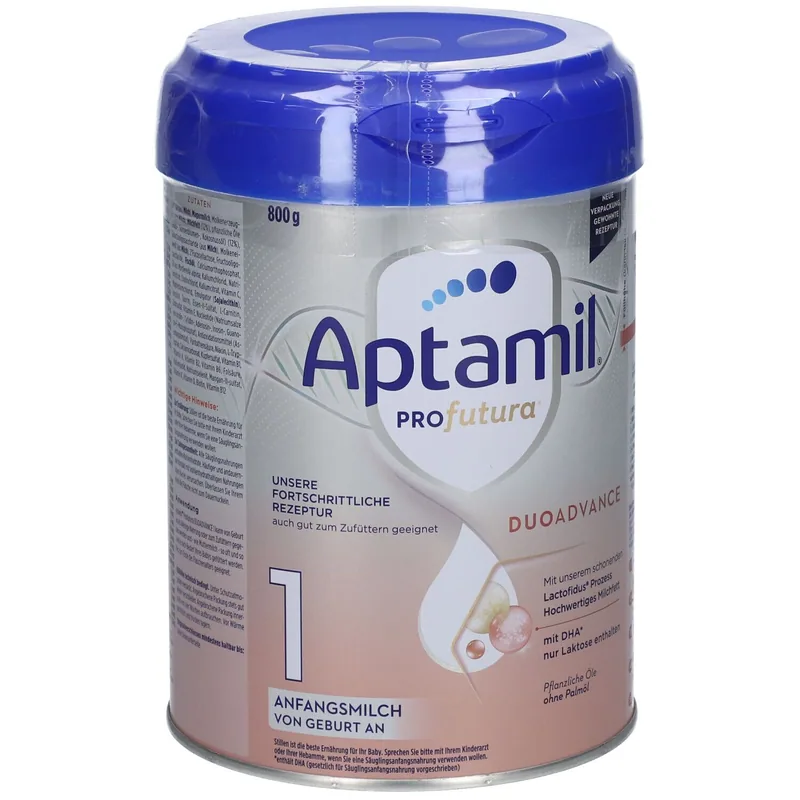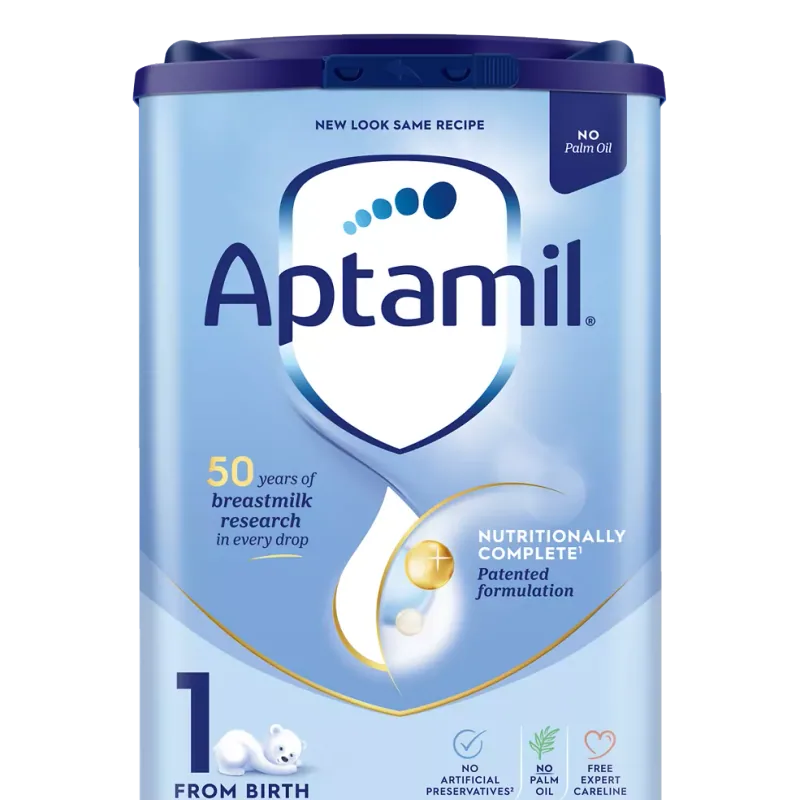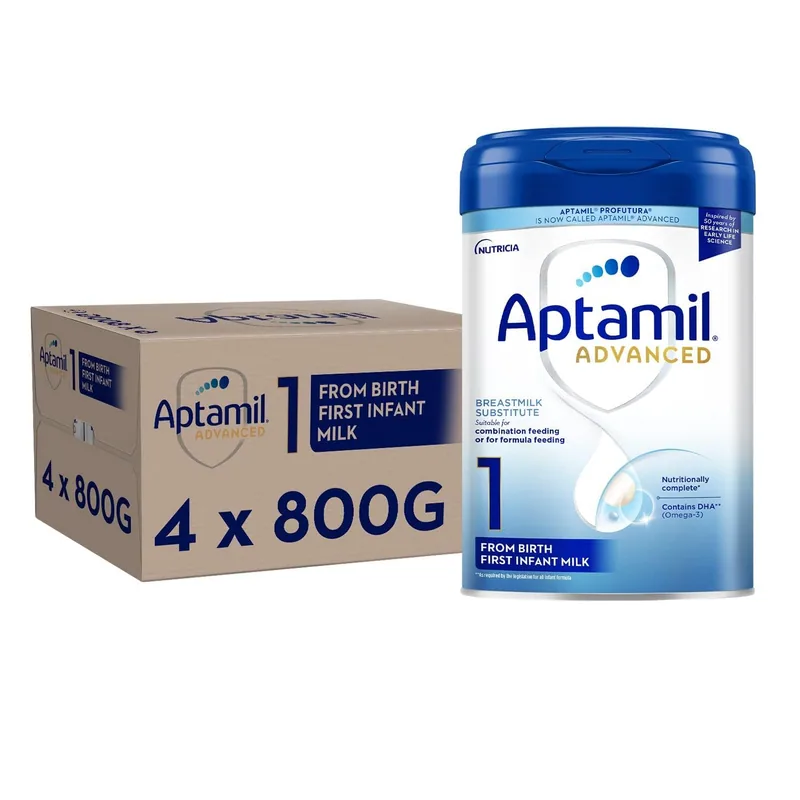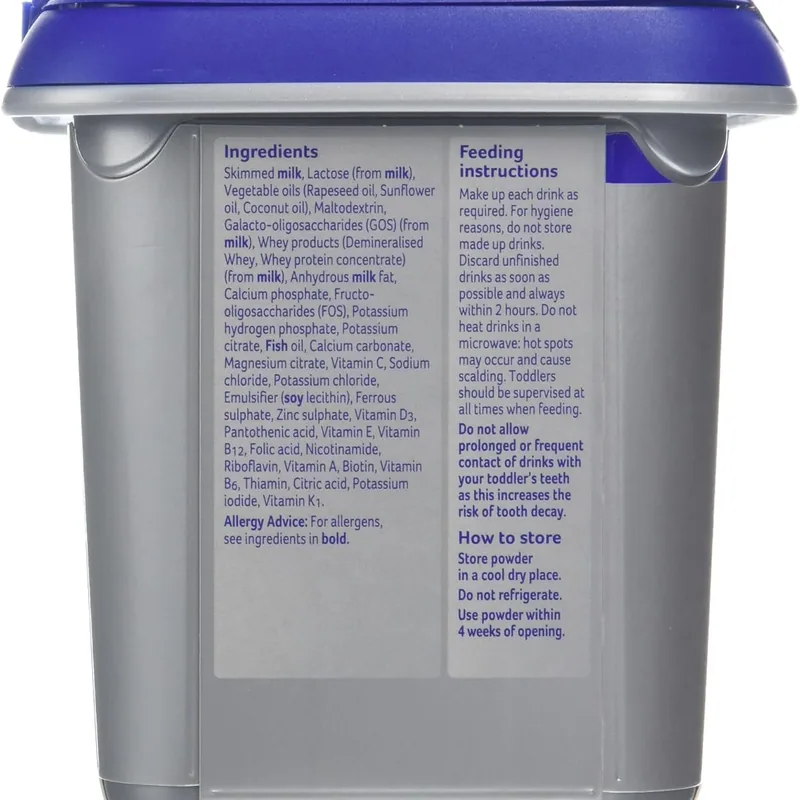

Aptamil is the largest non-organic European infant formula brand by volume. Owned by Danone through its Nutricia-Milupa division, Aptamil has been produced since 1921 and holds substantial market share across the UK, Germany, Ireland, and the Netherlands. The brand is notable for two things in the US-import context: regional variants differ in composition (UK Aptamil is not identical to German Aptamil), and Aptamil is not organic-certified, unlike the organic-first positioning of HiPP, Holle, and Kendamil.
Why Aptamil is different from the other EU imports
Most EU organic brands parents encounter (HiPP, Holle, Lebenswert, Loulouka, Jovie) position on organic certification and ingredient simplicity. Aptamil positions on R&D depth and bioactive ingredient technology: Danone has one of the largest infant nutrition research operations globally, and Aptamil product lines reflect that with features like:
- Pronutra prebiotic blend, proprietary GOS and FOS formulation at specific ratio, with ongoing reformulations across the decades.
- Profutura and ProExpert premium lines, include HMOs (2'-FL and others) and specific bioactive combinations not in standard lines.
- Stage-specific nutrient tuning: Aptamil varies composition more dramatically between stages than most EU organics do.
The trade-off for this R&D depth: Aptamil is not organic-certified. If organic certification is a baseline requirement for you, look to the organic EU brands instead.
Aptamil regional variants
This is the key complexity of Aptamil for US-import parents: "Aptamil" is not one product. The UK, German, Irish, and Dutch variants differ in meaningful ways:
- UK Aptamil First Infant Milk, the variant most commonly shipped to parents via resellers. Meets UK FSA and EU 2016/127 compliance.
- German Aptamil Pronutra, different prebiotic blend, slightly different nutrient profile, different label.
- Irish Aptamil, similar to UK but with Irish dairy sourcing.
- Dutch Aptamil, uncommon in US-import channels but exists for EU market.
- Profutura / ProExpert, premium subtier; more HMOs and bioactives.
A parent buying "Aptamil Stage 1" via an online reseller should verify which regional variant they're receiving. Price, tin size, and ingredient list all differ by region.
Comparison vs other commercial options
- vs HiPP Dutch. HiPP is EU-organic certified and uses Metafolin. Aptamil is not organic and uses folic acid. HiPP is generally positioned as "clean organic and Metafolin"; Aptamil as "R&D-backed bioactive ingredient technology." Different philosophies at similar price points (UK Aptamil sits below HiPP Dutch on typical US pricing).
- vs Kendamil. Kendamil is UK-based organic with a whole-milk-fat, no-palm-oil approach. Aptamil UK is also UK-based and also palm-oil free, but it is not organic and uses a vegetable-oil blend rather than whole milk fat. Kendamil wins on organic certification and fat source; Aptamil wins on R&D track record and on HMO content in the Profutura tier.
- vs Bobbie. Bobbie is USDA Organic US-registered; Aptamil is not organic and not FDA- registered. Bobbie is a simpler clean formula; Aptamil Profutura has more bioactives. Different regulatory tiers and positioning.
Manufacturing and certifications
- EU Infant Formula Compliance (Regulation 2016/127) across all variants.
- UK FSA compliance for UK-market variants.
- No organic certification, standard Aptamil is not EU Organic or Bioland. If Danone has any organic variants, they're not the primary US-imported lines.
- Manufacturing, distributed across Danone/Nutricia facilities in Germany, UK, Ireland, and the Netherlands depending on variant.
Regulatory posture in the US
Aptamil is not FDA-registered under 21 CFR 107 for any regional variant. parents import via FDA enforcement discretion for personal use, the same framework that governs HiPP, Holle, and Kendamil imports. See our FDA enforcement discretion explainer for the full legal picture including commercial-resale distinctions and Customs handling expectations.
Recall history
Aptamil has had periodic recalls over its 100 and year operating history, typical of any large infant formula manufacturer. Notable events:
- 2022 Aptamil Advanced 1 recall (UK), voluntary recall of specific batches due to unexpected flakes in the formula. No infant illnesses reported.
- Ongoing lot-level recalls for packaging or minor composition deviations, handled routinely.
No broad active recall affecting US-distributed SKUs as of April 2026. See our Atlas changelog for ongoing tracking.
My take on Aptamil for parents
Aptamil is the brand I recommend when the parent specifically wants:
- Bioactive ingredient depth (especially the Profutura/ProExpert tiers with HMOs) without the price premium of US brands like ByHeart.
- Danone R&D heritage, 100+ years of infant nutrition research.
- A specific regional variant (German Pronutra, UK First) they've researched and want.
The trade-offs:
- Not organic. If organic matters, pick HiPP Dutch, Holle, Kendamil Organic, or Bobbie instead.
- Regional variant confusion, need to verify which Aptamil you're buying from a reseller.
- Palm oil depends on the market. The UK range (Stages 1, 2 and 3) is palm-oil free. The German Profutura line uses RSPO-certified palm oil. See does Aptamil contain palm oil.
- No Metafolin (uses folic acid).
For parents who weren't looking for organic and want a research-intensive European formula, Aptamil Profutura is a credible choice. For parents committed to organic certification as a baseline, Aptamil isn't the right fit.
All Aptamil formulas
Every Aptamil SKU currently documented in the Atlas appears below. Each entry links to the individual product record with verified nutrition per 100 ml, resolved ingredients, certification status, and retail availability. For a side-by-side comparison against other brands, add any of these SKUs to the compare tool; for one-dimension filters (origin, protein, certifications, red flags) start from the Atlas root.
FAQ
Is Aptamil organic?
What's the difference between UK Aptamil and German Aptamil?
Is Aptamil FDA-approved for sale in the US?
How does Aptamil compare to HiPP and Kendamil?
What is the Pronutra prebiotic blend?
What is Aptamil Profutura?
Where can parents buy Aptamil?
Sources
- Aptamil Club UK: https://www.aptaclub.co.uk/
- Nutricia Research: https://www.nutricia.com/
- Danone corporate: https://www.danone.com/
- EU Infant Formula Regulation 2016/127: https://eur-lex.europa.eu/legal-content/EN/TXT/?uri=celex%3A32016R0127
- UK Food Standards Agency: https://www.food.gov.uk/
- FDA infant formula guidance: https://www.fda.gov/food/infant-formula-guidance-documents-regulatory-information
Related reading
This site provides research and comparisons, not medical advice. Consult your pediatrician before changing your baby's formula.