
The "European vs US organic" infant formula question is one of the most common decisions parents face who've committed to organic feeding. Both categories meet rigorous organic certification standards (EU Organic 2018/848 and USDA NOP respectively), and both tiers have multiple legitimate brand options. But meaningful differences exist, regulatory framework, DHA requirements, iron fortification levels, lactose-first strictness, cost, access, and specific compositional details vary between tiers and sometimes within each tier. This guide provides a practical decision framework for parents choosing between European organic imports and US-made organic formulas.
Both EU Organic (2018/848) and USDA Organic (NOP) require 95%+ organic ingredients, prohibit synthetic pesticides/GMOs, and meet rigorous farming standards. Key differences for infant formula: EU Regulation 2016/127 mandates DHA and requires lactose-primary carbohydrate in Stage 1 (not all US organics comply), while US formulas have higher iron fortification. European imports (HiPP, Holle, Kendamil, Lebenswert, plus Löwenzahn, Töpfer, and Hero Baby for Spanish-market organics) cost 30-50% more than US-made (Bobbie, Happy Baby, Earth's Best) but offer specific regulatory features. US-made organics provide easier supply, no import complexity, and FDA-registered status. The decision framework: regulatory preferences, budget, and supply resilience considerations.
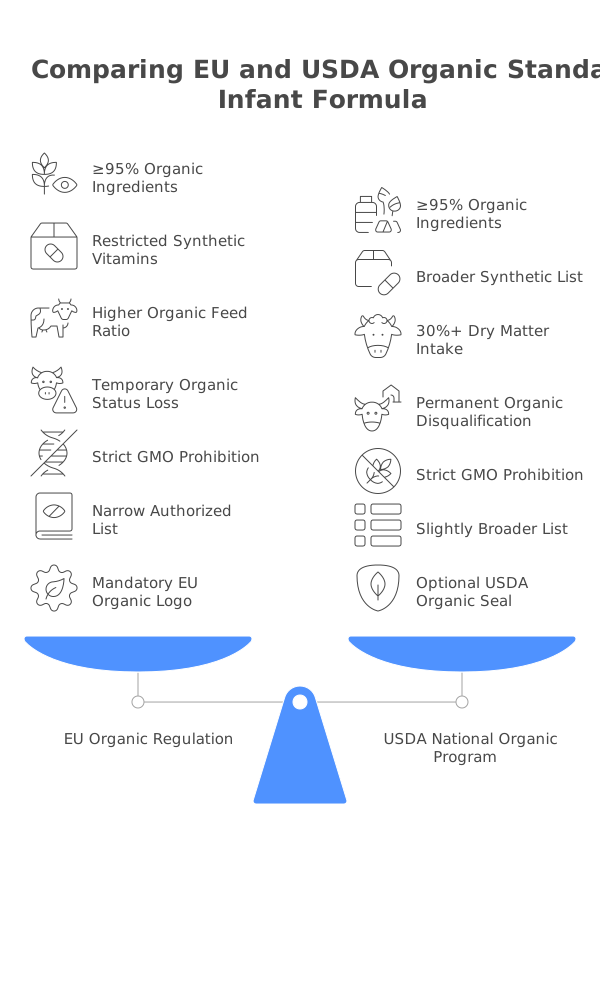
Visual generated with Napkin AI, editorial review by María López Botín. See methodology for our use policy.
The two organic certification systems
USDA National Organic Program (NOP)
- Requires 95%+ organic ingredients by weight
- Prohibits synthetic pesticides, synthetic fertilizers, GMOs, ionizing radiation, sewage sludge, antibiotics for disease prevention
- Requires year-round outdoor access for dairy cattle, 100% organic feed for dairy cattle, grazing minimum 120 days
- Certified by USDA-accredited third-party certifiers
- Labeling, "USDA Organic" seal permitted on compliant products
EU Organic (Regulation 2018/848)
- Requires 95%+ organic ingredients by weight
- Prohibits synthetic pesticides, synthetic fertilizers, GMOs, ionizing radiation, sewage sludge
- Requires broader animal welfare standards (in some respects stricter than USDA)
- Country of origin labeling required
- Certified by national authorities or accredited private bodies
- Labeling. EU Organic leaf logo with control body number
Equivalency agreement
The EU-US equivalency agreement allows products certified in one jurisdiction to be sold as effectively organic in the other. Imported European organic infant formulas can be sold as organic in US retail, though they're not FDA-registered under 21 CFR 107 (infant formula regulation).
For detailed certification comparison, see our organic certifications compared pillar.
Formula regulation: EU vs US
This is where the biggest infant-formula-specific differences emerge, beyond the organic certification itself:
EU Regulation 2016/127 (infant formula)
- DHA is mandatory in all infant formulas (Stage 1)
- Lactose must be primary carbohydrate in Stage 1 (not just present, must be primary)
- Lower protein ceiling (2.5 g/100 kcal max vs FDA 4.5)
- Lower iron minimum (0.3 mg/100 kcal vs FDA 1.0-1.8)
- Stricter marketing claims regulation
- Stage-based regulation (Stage 1: 0-6 months; Stage 2: 6+)
FDA 21 CFR 107 (US infant formula)
- DHA is optional (most modern US formulas include it)
- No primary carbohydrate rule, some US organics use maltodextrin or glucose syrup solids as primary carb
- Higher iron minimum, clinical rationale of iron deficiency prevention
- Marketing claims more permissive
- Single 0-12 month age category
For detailed regulatory comparison:
The composition differences that matter
DHA mandatory (EU) vs optional (US)
All EU Stage 1 organic formulas include DHA at EU-mandated levels. Most US organic formulas include DHA voluntarily, but quantities vary:
- EU organic formulas: 20-50 mg/100 kcal DHA
- Bobbie Original (US): ~14 mg/100 ml (clinical-tier inclusion)
- Happy Baby (US): ~10 mg/100 ml
- Earth's Best (US): ~11 mg/100 ml
- Baby's Only (US): ~12 mg/100 ml
Check specific product labels for current levels.
Lactose-primary (EU) vs variable (US)
This is where some US organic brands fall short of EU conventions:
| Brand | Primary carbohydrate |
|---|---|
| HiPP Dutch Stage 1 | Organic lactose only |
| Holle Cow Stage 1 | Organic lactose only |
| Kendamil Organic Stage 1 | Organic lactose only |
| Lebenswert Stage 1 | Organic lactose only |
| Bobbie Original (US) | Organic lactose |
| Baby's Only Dairy Infant (US) | Organic lactose |
| Enfamil Simply Organic (US) | Organic lactose |
| Earth's Best Dairy (US) | Organic lactose |
| Gerber Nature's Select Organic (US) | Organic lactose |
| Happy Baby Organic (US) | Organic maltodextrin (primary) |
| Similac Organic (US) | Organic lactose and added sucrose |
Key insight: Not all US organic formulas preserve lactose-only composition. Happy Baby (maltodextrin-primary) and Similac Organic (added sucrose) deviate from the EU Stage 1 norm. Bobbie, Earth's Best, Baby's Only, Enfamil Simply Organic, and Gerber Nature's Select Organic preserve lactose-primary composition.
For the underlying carbohydrate context:
Iron levels
- EU organic formulas: 0.3-0.7 mg/100 ml (EU Regulation minimum)
- US organic formulas: ~0.8-1.2 mg/100 ml (FDA minimum)
For healthy term infants with no deficiency risk, both levels are adequate. For at-risk populations (preterm, low-birth-weight, specific medical conditions), the US higher iron is clinically relevant.
Fat composition differences
Whole milk fat and no palm oil (distinctive minority):
- Kendamil Organic Stage 1 (EU)
- Baby's Only Premium A2 (US, separate variant)
- Löwenzahn (EU, whole milk fat)
Vegetable oil blend with palm oil (most organic formulas):
- HiPP, Holle, Lebenswert, Jovie, most others (EU)
- Bobbie Original, Happy Baby, Earth's Best, Similac Organic, Enfamil Simply Organic, Gerber Nature's Select (US)
Probiotic/prebiotic additions
- HiPP Combiotik line: L. fermentum hereditum probiotic (breastmilk-derived proprietary strain)
- Most EU organics: GOS and FOS prebiotic
- Most US organics: varies; 2'-FL HMO in premium tiers
- Bobbie: no added prebiotics (minimalist philosophy)
Cost comparison
Approximate monthly cost for exclusive formula feeding at 4-5 months (32 oz/day):
| Category | Monthly cost |
|---|---|
| US conventional major brand | $240-320 |
| US private label | $150-200 |
| US organic | $280-360 |
| EU organic imports | $280-400 |
| Specialty (eHF, AAF) | $900-2,000+ |
EU organic imports cost approximately 20-40% more than US organic when including shipping, with meaningful variability by specific brand and retailer.
Supply and access
US organic advantages
- FDA-registered under 21 CFR 107, full regulatory framework
- Widely available at mainstream US retail
- Insurance-plan compatibility when applicable
- WIC-contracted in some states for select brands
- No import delays or customs considerations
European organic imports
- Via Organic's Best Shop (the primary US-facing reseller)
- FDA enforcement discretion pathway (not formal registration)
- Shipping from EU warehouses, typically 5-10 days
- Potential supply volatility during disruptions
- Not typically insurance-covered
The practical decision framework
Start with: Do you have specific requirements?
Choose EU organic if:
- Lactose-primary composition is important and your US options don't guarantee it
- You want mandatory DHA regulation
- Combiotik probiotic (L. fermentum hereditum) is specifically attractive
- Demeter biodynamic certification matters
- You value strict EU marketing claim regulations
- Budget accommodates 20-40% premium vs US organic
Choose US organic if:
- FDA-registered status is important (regulatory predictability)
- Mainstream retail access matters (Target, Whole Foods, Amazon)
- Budget is constrained (even within organic tier)
- Supply chain simplicity preferred
- Insurance or WIC coverage is relevant
- US-domestic manufacturing is a values priority
Specific matchups
Bobbie (US) vs HiPP Dutch (EU):
- Both lactose-primary
- HiPP includes L. fermentum hereditum probiotic; Bobbie does not
- Bobbie DHA higher (~14 mg/100 ml) than most US but below HiPP (~13 mg/100 ml actually similar)
- Bobbie US-made; HiPP Dutch imported
- Bobbie ~$30-36/tin; HiPP ~$34-40/tin delivered
Happy Baby (US) vs Holle Cow (EU):
- Holle lactose-only; Happy Baby maltodextrin-primary
- Holle Demeter biodynamic; Happy Baby USDA Organic only
- Both algal DHA
- Holle ~$35-40/tin; Happy Baby ~$30-35/tin
- Happy Baby widely available US retail; Holle imported
Earth's Best (US) vs Lebenswert (EU):
- Both lactose-primary organic
- Earth's Best Hain Celestial corporate; Lebenswert Holle- manufactured Bioland certification
- Lebenswert Bioland certification is stricter than EU Organic baseline
- Earth's Best widely retail-available; Lebenswert imported
- Similar price tier ($30-35/tin)
Baby's Only Organic (US) vs Kendamil Organic (EU):
- Baby's Only has A2 Premium variant; Kendamil Organic uses whole milk fat (both premium features)
- Baby's Only USDA Organic and Clean Label Project; Kendamil EU and UK Soil Association Organic
- Baby's Only US-made; Kendamil UK with some US retail access
- Similar price tiers
Editorial notes from María
The EU vs US organic decision is more often about values and budget than clinical outcomes. Both categories meet rigorous organic certification standards, both contain adequate nutrition for healthy term infants, and both can support normal infant growth and development.
For specific clinical considerations:
- If you specifically want lactose-only Stage 1 composition, Bobbie (US), Earth's Best Dairy (US), and any of the major EU organic imports deliver. Happy Baby (US) does not; Similac Organic (US) uses added sucrose.
- If you specifically want whole milk fat and no palm oil, Kendamil Organic (EU) and Baby's Only Premium A2 (US) are the primary options.
- If you specifically want probiotic-inclusive, HiPP Combiotik variants (EU) are the distinctive choice; most US organics lack proprietary probiotic strains.
For the typical healthy family with no specific clinical requirements, Bobbie, Earth's Best, or Happy Baby (US options) work perfectly well. The European premium is worth paying for specific compositional features or values alignment; otherwise, the US organic tier covers core needs.
For related content:
- Organic certifications compared
- FDA vs EFSA standards
- How to read a formula label
- Choosing your first formula
FAQ
Is EU organic baby formula better than US organic?
Do US organic formulas contain lactose as the primary carbohydrate?
How much more do European organic formulas cost vs US organic?
Is FDA enforcement discretion the same as FDA registration?
Can I use WIC for European organic imported formulas?
Which US organic formula is closest to European formulation standards?
Do European organic formulas include probiotics?
What if I can't decide between European and US organic?
Primary sources
- USDA National Organic Program. US organic certification standards. ams.usda.gov
- EU Regulation 2018/848: European organic production regulation. eur-lex.europa.eu
- EU Regulation 2016/127: Infant formula compositional requirements. eur-lex.europa.eu
- FDA: Infant formula regulation under 21 CFR 107. fda.gov
- WHO: International infant nutrition guidelines. who.int
- AAP / PubMed, peer-reviewed comparative literature on US vs EU infant formula. pubmed.ncbi.nlm.nih.gov
This site provides research and comparisons, not medical advice. Consult your pediatrician before changing your baby's formula.