

Most parents switch formula brands at some point during the first year, for practical reasons (supply shortages, price, WIC changes), medical reasons (CMPA diagnosis, reflux concerns), or perceived infant response issues (gas, fussiness, stool changes). Some switches are clinically warranted; others are unnecessary disruptions driven by normal infant variability being misinterpreted as formula intolerance. This guide walks through when to switch, when not to, how to do it correctly when needed, and what's genuinely abnormal versus just part of infant adjustment.
Formula brand switching is common and generally safe when done gradually over 5-7 days by mixing progressively higher proportions of the new formula with the old. Normal adjustment includes transient stool changes, mild gas, brief feeding pattern shifts — typically resolving within a week. Red flags requiring pediatric consultation (not another brand switch): persistent vomiting, blood in stool, rash within hours of feeds, severe eczema, or weight loss. Most FDA-registered standard formulas are interchangeable for healthy term infants; specialty formulas should only be switched with pediatric guidance.
Legitimate reasons to switch
Not all switching decisions are equally well-founded. Reasons that carry pediatric consensus include infant-specific reactions to current formula, supply disruption (see the formula shortage navigator for the shortage-specific playbook), and budget constraints that make the current brand unsustainable. Reasons that typically justify switching:
1. Supply or availability
- Brand discontinued or reformulated, manufacturer change requires choosing an alternative
- Regional shortage, 2022-style disruption forces temporary alternatives
- Moving between WIC state contracts, relocating may change covered brand
- Pediatrician practice changes, occasionally relevant
2. Medical indication
- CMPA diagnosis, transitioning to extensively hydrolyzed or amino-acid formula. See CMPA explained
- Preterm growth needs, transitioning from NICU preterm formula to post-discharge transitional. See formula for premature infants
- Severe GERD complications, anti-reflux formula trial under pediatric guidance
- Documented severe reaction, hives, blood in stool, projectile vomiting, warrants pediatric evaluation and possibly specialty switch
3. Budget or insurance
- Moving to private label from major brand for cost savings
- WIC approval changes what's covered
- Insurance benefit change affecting specialty formula coverage
4. stage transition
- Stage 1 to Stage 2 at 6 months (for EU-format stages), see when to switch formula stages
- Formula to whole cow milk at 12 months for non-CMPA infants
5. Values alignment
- Adding an organic option when initial choice was non-organic
- Trying a European import out of preference
- Moving to A2-only for family-specific interest
Reasons that are usually NOT switching-worthy
Most of these reflect normal infant variability being misattributed to formula:
Normal adjustment patterns
- Slightly smaller feeds for 2-3 days after starting any new formula
- Stool changes, color, consistency, frequency, in the first week
- Mild gas or fussiness during adjustment periods
- Minor spit-up unless persistent or projectile
- Feeding pattern shifts, one or two irregular days
These are normal in the first week of any formula and typically resolve without intervention.
Ambiguous symptoms
- Fussiness during the afternoon/evening, may be colic (unrelated to formula in most cases). See colic and formula choice
- Spit-up after feeds, physiological reflux (GER) is normal in the majority of infants. See reflux and GERD in formula-fed babies
- Variable intake day-to-day, typical of all infants
Social pressure
- Another parent's recommendation, their infant's response tells you nothing definitive about yours
- "Our baby sleeps better on...", formula type does not reliably affect sleep (see companion pillar)
- Online forum suggestions, anecdote, not clinical evidence
Visual generated with Napkin AI, editorial review by María López Botín. See methodology for our use policy.
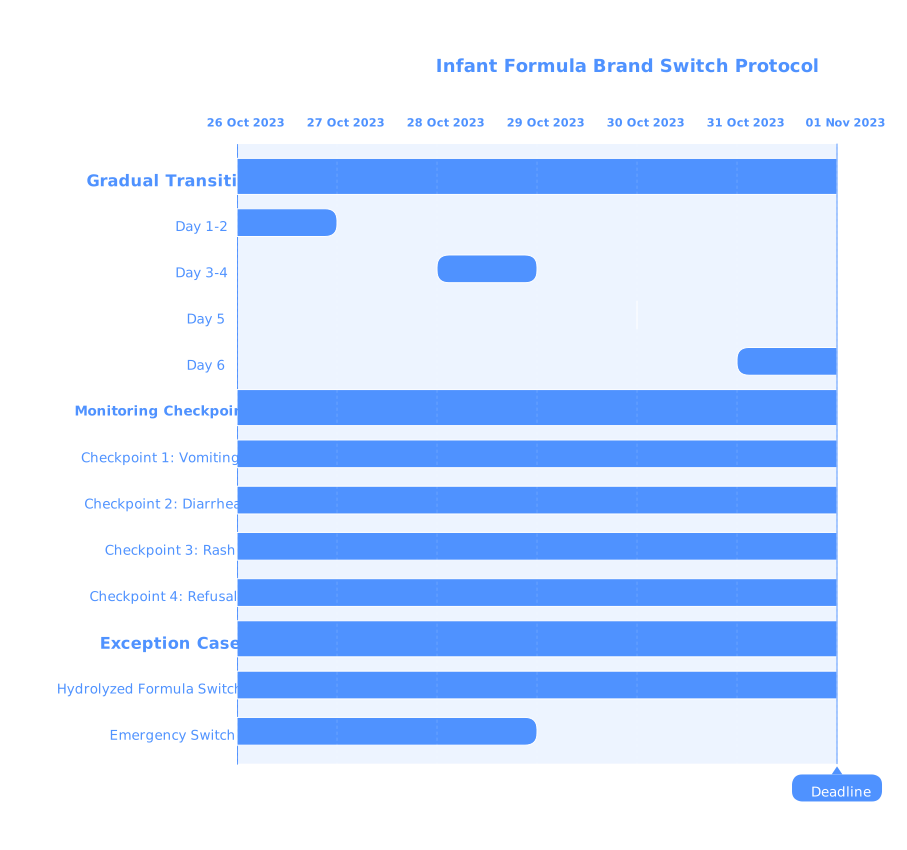
The gradual switching protocol
The standard approach for brand switching:
Step 1: Day 1-2: 75% old formula, 25% new
Mix bottles so each feed is 3/4 the current brand and 1/4 the new brand. Same total volume. Same preparation rules (preparation guide) apply, 70°C water, standard equipment sterilization.
Step 2: Day 3-4: 50% old, 50% new
Equal mixing. Monitor for unusual reactions.
Step 3: Day 5-6: 25% old, 75% new
Mostly new formula. Infant should be comfortable with the taste and texture by now.
Step 4: Day 7 onwards: 100% new
Complete transition. Continue monitoring feeding pattern, stool, growth.
Important: same preparation protocol
All formula switches use standard preparation protocols regardless of brand, 70°C water, sterilized equipment, standard water-to- powder ratios specific to each brand. Don't mix preparation methods. See how to prepare baby formula safely.
When to skip the gradual transition
- Medical emergency requiring immediate switch, with pediatric guidance
- Severe reaction to current formula, stop current formula, consult pediatrician before introducing replacement
- Supply-driven forced switch, you have no alternative; do the gradual transition retroactively if possible
Within same parent-company switching
Some switches are operationally simpler:
Easy switches (structurally similar)
- Parent's Choice → Up&Up → Mama Bear, same Perrigo manufacturer
- Similac Advance → Similac Pro-Advance, same Abbott parent
- Enfamil NeuroPro → Enfamil Enspire, same Reckitt parent
- HiPP Dutch Stage 1 → HiPP German Stage 1, same HiPP parent with minor variant differences
- Bobbie Original → Bobbie Organic, same Bobbie parent
Moderate switches (different manufacturer, same category)
- Similac Pro-Advance → Enfamil NeuroPro, different major brands, similar feature sets
- HiPP Dutch Stage 1 → Holle Cow Stage 1, different European organic brands
- Bobbie Original → Baby's Only Organic, different US organic brands
Higher-friction switches
- Standard formula → Gentle/Sensitive, different carbohydrate base (lactose → corn syrup solids); more infant adjustment
- Cow milk → Goat milk, different protein structure; taste shift
- Non-A2 → A2-only, same cow milk but different beta-casein profile
- Standard → Hydrolyzed (CMPA response), different taste profile, pediatric-supervised transition
When NOT to switch without pediatric guidance
Specialty formulas (CMPA, preterm)
- Nutramigen, Alimentum, Gerber Extensive HA, eHF products; switching between these for CMPA is pediatric-supervised
- Neocate, EleCare, Puramino: AAF products; pediatric specialty care required
- Similac NeoSure, Enfamil EnfaCare, preterm formulas; pediatric GI involvement for any transition
Soy-based formulas
- Enfamil ProSobee, Similac Soy Isomil, used for specific indications (galactosemia, CMPA where tolerated, religious vegan preference); pediatric guidance for introduction
Medical specialty
- Anti-reflux formulas (Enfamil A.R., HiPP AR), specific indications; reflux severity assessment before introduction
What to monitor during the switch
Days 1-3
- Feeding volume, minor reduction normal, significant refusal concerning
- Feeding fussiness, some is normal, inconsolable crying concerning
- Sleep pattern, slight disruption normal
Days 4-7
- Stool patterns stabilizing, typical formula stool patterns returning
- Feeding volume back to baseline
- Fussiness resolving
- No new symptoms (rash, vomiting, blood in stool)
Days 7-14
- Growth on track (weigh-in if possible)
- Feeding feeling "normal"
- Skin, breathing, overall wellbeing stable
Red flags: contact pediatrician
These warrant clinical assessment, not another brand switch:
- Blood or mucus in stool
- Projectile or persistent vomiting
- Rash or hives within hours of feeds
- Severe eczema development or worsening
- Weight loss or growth plateau
- Respiratory symptoms (wheezing, cough) associated with feeds
- Severe fussiness/crying inconsolable beyond 72 hours
These indicate potential CMPA, other allergies, or other medical concerns. The response is pediatric evaluation, not switching between standard brands.
Common switching scenarios
"My current formula is causing gas"
- First: verify normal gas from breastfeeding/formula feeding
- Second: check preparation technique (paced feeding, burping, upright positioning)
- Third: consider stage/brand if persistent and severe
Often the perceived "gas issue" resolves with feeding technique adjustments rather than formula switching.
"My baby prefers a different brand"
For healthy term infants, "preference" is usually normal adjustment variability. Most formulas taste different initially; within a week or so, most infants adapt. A reasonable switch is fine if the alternative is acceptable; don't chase perfection.
"WIC changed our brand"
Switching to WIC-contracted brand is a normal, supportable change. WIC-contracted brands meet identical FDA requirements as non- contracted versions. The gradual transition protocol applies.
"We're moving and losing Organic's Best access"
If imported European formula becomes unavailable, transition to US-made alternatives: Bobbie (US organic) or Similac Pro-Advance / Enfamil NeuroPro (major brands) are reasonable substitutes.
"My pediatrician recommends switching"
Follow the recommendation, typically. If the recommendation doesn't match your budget or values, discuss alternatives, your pediatric team can usually accommodate reasonable preferences within the clinical framework.
Mixing two brands on a single day
Occasionally parents ask whether a morning of one brand and evening of another is acceptable:
- For healthy term infants on standard formulas: generally acceptable, especially during transitions or supply issues
- For specialty formulas (CMPA, preterm): not without pediatric guidance, specialty formulas are designed for specific consistency in composition
- For different types (standard vs gentle vs goat vs hydrolyzed): generally avoid mixing types within the same day; pick one type per day
Returning to a previous brand
You can always switch back if the new brand doesn't work. Same gradual 5-7 day protocol applies. The infant's previous tolerance of the original brand is a known baseline.
FAQ
How do I switch between baby formula brands?
How long does it take for a baby to adjust to new formula?
Is it okay to switch formula brands multiple times?
Can I switch between organic and non-organic formula?
My baby hates the new formula. What should I do?
Can I mix two different brands of formula in the same bottle?
When should I consult my pediatrician about formula issues?
Is it bad to switch formula frequently?
Primary sources
- American Academy of Pediatrics: HealthyChildren.org infant feeding and formula transitions. aap.org
- CDC: Feeding transitions and formula preparation. cdc.gov
- FDA: Infant Formula regulation (framework for interchangeability of FDA-registered products). fda.gov
- WHO: Global Strategy for Infant and Young Child Feeding. who.int
- NASPGHAN: Clinical guidelines on pediatric nutrition. naspghan.org
Related reading
- HiPP brand hub
- Bobbie brand hub
- Formula shortage preparedness (stock buffers and what to do when the switch is forced)
- Formula volume by age (intake calibration during transitions)
- Paced bottle-feeding
This site provides research and comparisons, not medical advice. Consult your pediatrician before changing your baby's formula.
- Aptamil UK Stage 1 vs Enfamil NeuroPro - Palm-Free EU Import vs US Bioactive Stack with Palm
- Aptamil UK Stage 1 vs Similac Pro-Advance - Cheapest EU Import vs US Retail HMO
- ByHeart Whole Nutrition vs Earth's Best Organic Dairy - Premium Bioactive Whole-Milk (Recalled) vs Budget Supermarket Organic
- Happy Baby Organic Infant vs Similac Organic - Danone US vs Abbott USDA Organic
- HiPP Dutch Stage 1 vs Jovie Goat Stage 1 - EU Organic Cow with Combiotik vs EU Organic Goat
- HiPP Dutch Stage 1 vs Kabrita Stage 1 - EU Organic Cow Combiotik vs Dutch Goat with 2'-FL HMO
- Holle Cow Stage 1 vs Earth's Best Dairy - Demeter Biodynamic EU Organic vs USDA Organic Budget
- Holle Goat Stage 1 vs Kendamil Goat Stage 1 - Demeter Biodynamic Minimalist vs UK Whole-Milk-Fat Goat
- Jovie Goat Stage 1 vs Kendamil Goat Stage 1 - EU Organic Dutch Goat with GOS vs UK Whole-Milk-Fat Goat
- Jovie Goat Stage 1 vs Similac Pro-Advance - EU Organic Goat-Milk vs US 2'-FL HMO Cow-Milk
- Kabrita Stage 1 vs Similac Pro-Advance - Dutch Goat-Milk with sn-2 Palmitate vs US Cow-Milk Mainstream
- Kendamil Classic Stage 1 vs Lebenswert Stage 1 - UK Whole-Milk Fat vs German Bioland Organic
- Kendamil Organic Stage 1 vs Earth's Best Dairy - UK Organic Whole-Milk-Fat with HMO vs USDA Organic Budget
- Kendamil Organic Stage 1 vs Jovie Goat Stage 1 - UK Organic Cow with Whole-Milk Fat and 2'-FL HMO vs EU Organic Dutch Goat
- Lebenswert Stage 1 vs Similac Pro-Advance - Bioland Minimalist EU Organic vs US 2'-FL HMO
- Loulouka Stage 1 vs Similac Pro-Advance - Swiss EU Organic No-Palm No-Soy vs US 2'-FL HMO Mainstream
- Similac Pro-Advance vs Similac 360 Total Care - Abbott's Two Mainstream Flagships Compared
- Can I mix two different baby formulas in the same bottle?